
Whines from the front cover. Oil level drops again. Cold start feels rough and uneven. That’s how Nissan’s 3.5 V6 begins to show its cracks.
Since 2000, the VQ35 has powered everything from the 350Z and G35 to the Pathfinder, Maxima, and Murano. It won 14 Ward’s 10 Best Engine awards and built a reputation for strong, smooth power. Many run past 250,000 miles with steady maintenance.
But three versions tell three different stories. Early VQ35DE models fight oil control and timing guide wear. VQ35HR engines risk hidden oil pressure loss behind the front cover. Newer VQ35DD direct-injected units battle carbon buildup and sludge when service slips.
This guide lays out what actually fails, how it shows up behind the wheel, and when to fix fast before metal starts circulating.
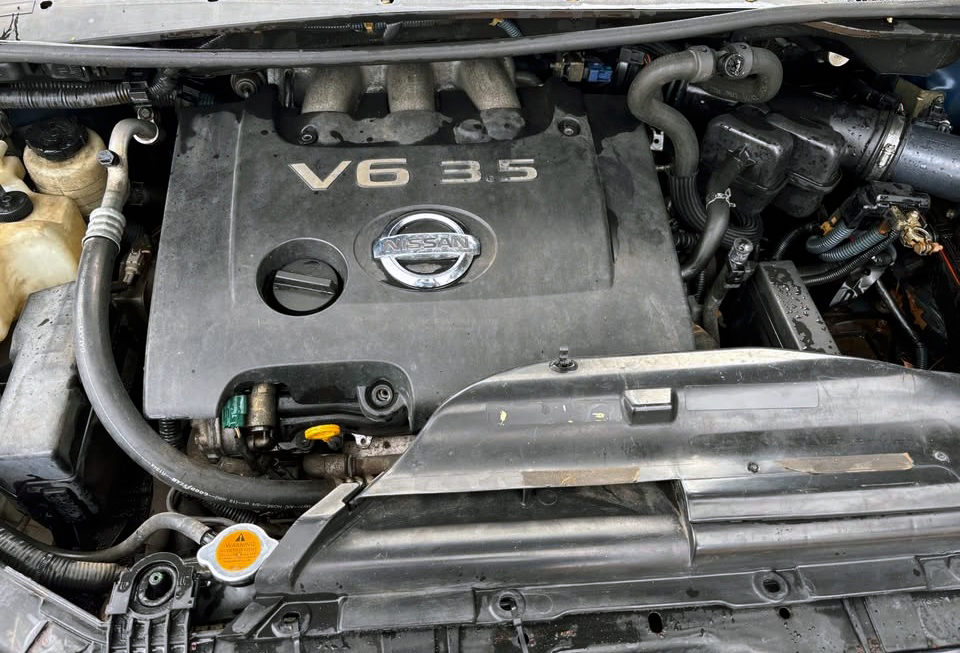
1. VQ35 architecture and why DE, HR, and DD fail differently
Core layout and built-in stress points
Runs a 60-degree aluminum V6 with dual overhead cams and timing chains. Bore and stroke stay fixed at 95.5 mm by 81.4 mm across DE, HR, and DD. Compression climbs from roughly 10.0:1 in early DE to 11.0:1 in DD.
All versions use chain-driven cams and variable timing. Oil pressure controls cam phasers and, on some HR variants, VVEL hardware. Low pressure doesn’t just rattle, it throws cam timing codes and can wipe bearings.
Open-deck aluminum blocks shed heat fast but hate overheating. One serious thermal spike can warp heads and crush head gaskets. Internal water pump sits behind the timing cover and runs off the chain, so access requires major disassembly.
Interference design means jumped timing equals valve contact. Bent valves and scarred pistons follow in seconds. No recovery once the chain skips teeth.
DE, HR, and DD, what changed inside
VQ35DE launched in 2000 with port injection and single or dual intake CVTC depending on year. Redline sits near 6,600 rpm. Oil control ring wear shows up most in 2005–2007 “Rev-Up” 350Z and G35 manuals.
VQ35HR arrived for 2007 with a raised deck height and longer rods. Redline jumps to 7,600 rpm. Ladder-frame lower block stiffens the bottom end, but oil gallery gaskets behind the front cover use weak paper material in early builds.
VQ35DD adds direct injection in 2017 Pathfinder and QX60 applications. Compression rises to 11.0:1. High-pressure fuel rail and injectors increase torque down low, but intake valves no longer get washed by fuel.
| Metric | VQ35DE | VQ35HR | VQ35DD |
|---|---|---|---|
| Fuel system | Port injection | Port injection | Direct injection |
| Compression ratio | 10.0:1–10.3:1 | 10.6:1 | 11.0:1 |
| Redline | ~6,600 rpm | 7,600 rpm | ~6,600 rpm |
| VVT control | Intake CVTC | Dual CVTC | Dual CVTC |
| Known weak point | Oil rings, guides | Gallery gaskets | Carbon, sludge |
Higher compression in DD raises cylinder pressure and heat load. HR’s higher redline increases oil demand at the top end. DE’s earlier ring design tolerates neglect poorly once consumption begins.
Packaging changes the repair math
Longitudinal layouts in 350Z and G35 offer better front-cover access. Transverse layouts in Maxima, Altima, and Pathfinder crowd the timing cover against the frame rail. Labor hours double on some FWD applications.
Sports cars run hotter oil and see sustained high rpm. Crossovers idle in traffic and run short trips. Sludge and carbon form faster in short-cycle use, especially on DD engines.
Same 3.5 badge. Very different stress patterns. Front cover removal for chains or gallery gaskets runs 8 to 15 labor hours, often $1,200 to $2,500 in labor alone.
2. VQ35DE oil consumption and catalyst damage that snowballs fast
Oil control ring wear on early and Rev-Up builds
Burns a quart every 1,000 miles. Blue haze on cold start. Dipstick keeps dropping. That’s classic VQ35DE oil ring wear.
The worst cases hit 2005–2007 “Rev-Up” 350Z and G35 manuals. Oil control rings lose tension and let oil pass into the chamber. Detonation on 87 octane fuels pounds ring lands and speeds the wear.
Many engines run fine while drinking oil. Owners top off and keep driving. Consumption above 1 quart per 1,000 miles meets most rebuild thresholds.
Catalyst poisoning and the debris feedback loop
Burned oil coats the catalytic converter substrate. Ash builds inside the ceramic brick and raises exhaust backpressure. Power drops at high rpm, and exhaust temps climb.
Once the brick cracks, debris can travel upstream during valve overlap. Scored cylinder walls follow. Compression drops and blow-by increases.
Restricted converters can push backpressure beyond 3 psi at 2,500 rpm. At that point, cat replacement and engine damage often arrive together.
What the data and plugs tell you
Spark plugs oil-foul on the worst cylinders first. Misfire codes like P0300 to P0306 stack up under load. Oil-soaked plugs and rising fuel trims point to oil burning, not weak coils.
Compression below 150 psi on one bank signals bore damage. Leakdown above 20 percent confirms ring sealing loss. Full rebuild on a VQ35DE runs $4,000 to $7,000 depending on machine work.
| Symptom | Likely mechanical cause | Next mechanical failure |
|---|---|---|
| 1 qt per 1,000 miles | Oil control ring wear | Catalyst clog, bore scoring |
| Blue smoke on start | Valve seals or ring blow-by | Plug fouling, misfire |
| High-rpm power loss | Cat restriction | Overheat, piston damage |
| P0420 code | Catalyst efficiency drop | Substrate breakup |
Converter replacement alone can run $800 to $1,800 per bank. Engine plus cats pushes total repair past $8,000 on many DE cars.
3. VQ35DE timing chains and the front-cover whine that turns violent
Sharp chain edges and plastic guide failure
Buzzing from the timing cover at 2,000 rpm. Pitch rises with engine speed. That’s secondary chain wear cutting into plastic guides.
Mid-2000s builds left the factory with chains that had sharp edges from worn cutting tools. Those edges shave the plastic tensioner shoes over 80,000 to 120,000 miles. Once the plastic thins out, the chain rides on the metal piston.
Metal-on-metal contact sheds fine debris into the oil. That debris feeds every bearing and cam journal in the engine.
Rattle on startup and cam timing faults
Cold start rattle for 1 to 2 seconds signals tensioner bleed-down. Oil pressure builds, noise fades, but wear continues. Ignore it long enough and cam correlation codes appear.
Common DTCs include P0011 and P0021 when cam timing drifts. In severe cases, the chain jumps one tooth. On an interference VQ, that means bent valves immediately.
Repair scope and why partial jobs fail
Front cover removal requires draining coolant and oil. On transverse models, engine mounts and accessories come off first. Labor runs 8 to 12 hours on RWD cars and more on FWD platforms.
Replacing guides alone leaves worn chains in place. Chain stretch and worn sprockets quickly destroy new guides. Full kit with primary chain, secondary chains, guides, and tensioners is the standard fix.
| Stage | Driver symptom | Mechanical condition | Failure endpoint |
|---|---|---|---|
| Early | 1–2 sec cold rattle | Tensioner bleed-down | Accelerated guide wear |
| Mid | RPM-dependent whine | Guide shaved thin | Metal debris in oil |
| Late | Constant rattle, P0011/P0021 | Chain slack or jump | Valve contact |
Complete timing service typically runs $1,500 to $3,000 depending on layout and parts quality. Ignored long enough, the repair becomes a cylinder head job with bent valves and $5,000-plus in damage.
4. Sensor and gasket failures that fake a dying engine
Crank and cam sensors that cut the engine mid-traffic
Stalls at a red light. Fires back up. Dies again on the highway. That pattern screams crank or cam position sensor.
Heat cooks these sensors over time. Many fail around 120,000 to 150,000 miles. The ECM loses engine speed signal and shuts fuel and spark instantly.
Common codes include P0335, P0340, and related circuit faults. Parts cost $40 to $120 each. Labor usually stays under 1 hour per sensor.
Valve cover leaks that drown the spark plugs
Misfire under load. Idle shakes at stoplights. Pull a coil and find oil pooled in the plug tube.
Valve cover gaskets harden near 100,000 to 130,000 miles. Oil seeps past the tube seals and soaks the plug boots. Coils overheat and fail in that oil bath.
Ignoring the leak cooks multiple coils and overloads the catalyst with raw fuel. Full valve cover job runs $400 to $900 depending on access.
Throttle body and fuel delivery faults that mimic engine wear
Hesitation off idle. Throttle feels delayed. Idle hunts up and down.
Dirty throttle plates skew airflow readings. Weak fuel pumps lose pressure under load near 100,000 miles. Rail pressure drops below spec and trims spike positive.
| Symptom | Common primary cause | DTCs often seen | Typical repair range |
|---|---|---|---|
| Sudden stall, restart | Crank sensor failure | P0335, P0340 | $150–$350 |
| Rough idle, misfire | Oil in plug wells | P0300–P0306 | $400–$900 |
| Hesitation, flat spot | Weak fuel pump | P0171, lean codes | $600–$1,200 |
Compression above 170 psi on all cylinders rules out bottom-end damage on most DE engines. Many “blown engine” diagnoses end as $300 sensor jobs.
5. VQ35HR oil gallery gasket failure and the silent oil pressure drop
Paper gaskets behind the timing cover
Revs clean to 7,600 rpm. Sounds strong. Oil pressure bleeds off where you can’t see it.
Early VQ35HR engines use paper-backed oil gallery gaskets. They sit behind the front timing cover and seal high-pressure oil passages. Over time, the material splits or shrinks under heat and pressure.
Oil dumps back into the sump instead of feeding the cam phasers. No external leak shows up. The failure hides until timing control falls apart.
Cam timing codes and limp mode at 3,000 rpm
Rattles at warm idle. Feels flat above 2,500 rpm. Then the dash lights up with P0011 or P0021.
Those codes flag over-advanced cam timing. Phasers can’t hold target angle without pressure. In severe cases, the ECM limits rpm to about 3,000 to protect the valvetrain.
Keep driving with low pressure and rod bearings start to starve. Journal scoring follows quickly once hot idle pressure drops under 15 psi.
Oil pressure numbers that decide engine survival
Dash warning lights trigger around 5 to 7 psi. Damage begins well before that. A mechanical gauge tells the real story.
Healthy HR engines show 30 psi or more at hot idle. Readings between 15 and 25 psi signal early seepage. Under 15 psi at full operating temp marks a stop-drive condition.
| Hot idle oil pressure | Mechanical condition | Risk level |
|---|---|---|
| 30+ psi | Normal sealing | Low |
| 15–25 psi | Gasket seepage or loose hardware | Rising |
| Under 15 psi | Gallery failure | Severe bearing risk |
Repair requires full front cover removal. Labor runs 8 to 15 hours depending on layout. Updated metal-backed gasket kits and hardware typically push total repair into the $1,800 to $3,500 range.
6. VQ35DD direct injection, carbon choke and sludge risk
Intake valves that coke up without warning
Cold start shakes. Idle hunts. Throttle tip-in feels lazy. That’s carbon stacking on the intake valves.
VQ35DD uses direct injection. Fuel sprays into the chamber, not over the valve. Oil vapor from the PCV system bakes onto hot valve stems and backs.
By 60,000 to 80,000 miles, deposits can thicken enough to disrupt airflow. Severe buildup triggers random misfires and rough cold starts.
Misfires that survive plugs and coils
Swap plugs. Replace coils. Misfire codes return under load.
Common DTCs include P0300 through P0306. Fuel trims drift positive as airflow drops. Black smoke on hard pulls points to incomplete burn.
Compression often tests fine. The issue sits upstream at the intake valves, not in the rings.
| Symptom | Likely primary cause | First hard check |
|---|---|---|
| Rough cold start | Carboned intake valves | Borescope inspection |
| Hesitation at WOT | Valve deposits, injector imbalance | Fuel trim data |
| Repeat P030X | Airflow disruption | Intake valve visual check |
Chemical cleaning can help early cases. Heavy buildup needs walnut blasting. That service typically runs $600 to $1,200 depending on labor rates.
Sludge and oil breakdown under short-trip use
Short trips leave oil cold and contaminated. Extended idling cooks oil in the heads. PCV flow struggles to vent vapor fast enough.
Sludge forms in small oil passages feeding VVT solenoids. Cam timing control gets sticky. Rattle at idle and cam timing faults follow.
Many techs cut oil intervals to 3,000 to 5,000 miles on DD engines. Neglect pushes timing component wear and VVT solenoid replacement into the $800 to $2,000 range.
7. Cooling system failures that wipe out healthy VQ engines
Internal water pump leaks that flood the oil
Coolant disappears. No puddle under the car. Oil level rises and turns milky. That’s the internal water pump seal failing.
The pump sits behind the timing cover and runs off the primary chain. A small weep hole vents minor leaks, but it hides behind accessories. When the seal fully fails, coolant can bypass the vent and enter the crankcase.
Coolant in oil removes bearing film strength fast. Rod bearings can seize within minutes once contamination spreads.
Bearing drag and chain stress from pump failure
Growling from the front cover signals bearing failure inside the pump. The added drag loads the timing chain. Chain tension spikes and guides take the hit.
If the pump locks, the chain can skip teeth. On an interference VQ, skipped timing bends valves instantly.
Water pump replacement requires major front cover access. On some transverse DD models, labor exceeds 10 hours.
Air pockets that fake head gasket failure
Temp gauge spikes, then drops suddenly. Heater blows cold at idle but warms with throttle. Gurgling sounds echo behind the dash.
Air gets trapped in high points of the cooling system. The heater core sits high in the firewall. Bleeding often requires a spill-free funnel and raising the front end.
Unbled systems overheat quickly under load. Repeated thermal spikes warp aluminum heads around 240°F.
Water pump replacement typically runs $1,200 to $2,500 depending on layout. Head gasket repair after overheating often exceeds $3,000 once machining and labor are included.
8. Platform-specific failures that get blamed on the engine
Radiator failures that destroy transmissions, not VQs
Pink sludge in the overflow tank. No forward drive. Engine still runs clean. That’s the radiator cooler cracking on 2005–2010 Pathfinder, Frontier, and Xterra.
The internal ATF cooler tube splits inside the radiator. Coolant and transmission fluid mix under pressure. The result is the so-called SMOD event.
The VQ35 survives. The automatic transmission does not. Full transmission replacement often lands between $3,500 and $5,000.
CVT limp mode that feels like engine failure
Shudder under light throttle. RPM flares. Power drops suddenly. Many drivers blame the engine.
JATCO CVTs overheat and trigger protection mode. The ECM cuts power to protect the belt and pulleys. Owners report limp mode near 40 to 60 mph in 2013–2015 Pathfinder models.
Engine codes often stay clear. Transmission temperature climbs past 250°F before power reduction hits.
Sources & References
- The V6 That Won Engine Of The Year More Times Than Any Other – CarBuzz
- Why the Nissan VQ V6 Engine is Still Being Sought After, 20 Years Later – YouTube
- Nissan VQ engine – Wikipedia
- VQ Engine Secrets: What Makes It One of the Best V6s Ever? – homeofengines.co.za
- Nissan VQ engine | Autopedia | Fandom
- Nissan VQ35HR – Engine Specs
- Nissan 3.5L V6 VQ35DD Engine | Specs & Pathfinder Trims – Ed Martin Nissan of Fishers
- VQ35HR Engine Performance Overview | PDF – Scribd
- New-Generation VQ Engine Briefing – Nissan Global
- VQ35 long term reliability? : r/Nissan – Reddit
- This Nissan Engine Outlasts Everything In Its Class – TopSpeed
- What Is a VQ Car? A Look at One of Nissan’s Most Popular Engines – CarParts.com
- Any VQ owners with over 200k miles? What’s the secret? : r/G35 – Reddit
- How do I know if my engine is a VQ35HR or a VQ35DE? trying to buy an o2 sensor for a 2007 rwd bank 2 sensor 1 : r/G35 – Reddit
- Common problems with the 3.5L VQ35DE V6? : r/Nissan – Reddit
- Diagnosing oil consumption on Nissan VQ35DE (350z / G35)
- HR vs DE 350 : r/350z – Reddit
- The Nissan VQ35 Engine: A Technical Breakdown of Performance and Reliability! – YouTube
- Nissan 3.5L VQ35DE V6 Engine Problems – The Living Legend Explained – YouTube
- Timing chain 2nd gen : r/XTerra – Reddit
- Signs That a Timing Chain Needs Replacement – eBay
- Nissan Pathfinder Reliability and Common Problems – In The …
- Pathfinder / Xterra / Frontier; Buzzing / Whining Noise from Timing Chain Area – Nissan TechInfo
- VQ Engine Timing Chain Noise Bulletin | PDF | Propulsion – Scribd
- Do you install timing chain guides on fwd VQ35DE? 2006 Nissan Altima V6 – YourMechanic
- Nissan dealer told the owner this amount of timing chain slack is normal. – Reddit
- Just wanted to replace the water pump. Thanks Nissan/Infiniti : r/Justrolledintotheshop
- How to Fix a P0021 OR P0011 Code – YouTube
- Vq35hr Gallery Gasket : r/infiniti – Reddit
- Another HR with failed oil gallery gasket – 350Z General
- Zed Owners MUST READ! P0011, P0021 Caused by “OIL Gallery GASKETS”
- EPS Tuning Oil Gallery Gasket [ P0524 P0011 P0021 Codes 2007-2014 Nissan/Infiniti VQ35HR, VQ37VHR ] – YouTube
- Engine Codes P0011 and P0021 – 350z-UK.com
- Average mileage before gallery gasket failure? – 350z-UK.com
- VQ35DE Gallery Gasket Failure? : r/350z – Reddit
- PSA for your gallery gaskets. Below is a great video explaining the what, why, and when this happens to our beloved Z’s.
- EPS Tuning Oil Gallery Gasket/Hardware Kit – NISformance.com
- VQ35DE Rear Timing Cover Oil Gallery Gasket Set – Z1 Motorsports
- 2016-2023 Nissan Maxima 3.5L V6 VQ35DE – Problems & Reliability Review – YouTube
- VQ35DD intake valve carbon build up : r/nissanpathfinder – Reddit
- SERVICE BULLETIN – nhtsa
- Carbon Buildup in Engines: Causes, Symptoms & Prevention – CarHub
- Carbon Buildup Symptoms: How to Tell When Your Engine Needs a Deep Clean
- How Often Should You Decarbonize Your Engine?
- Service Bulletin TECHNICAL – nhtsa
- SERVICE BULLETIN – nhtsa
- Is sludge inevitable? : r/nissanpathfinder – Reddit
- VQ38dd carbon build up on intake valves : r/nissanfrontier – Reddit
- Preventing Sludge on the VQ35DD Engine : r/Nissan – Reddit
- Is the VQ35DD still having sludge issues? – Nissan – Reddit
- How To Fix A Nissan Overheating Problem
- 5 Signs Your Water Pump Is Failing – Seacoast Mazda
- Water Pump Failure Signs: When Your Water Pump Needs Replacement (2026) – Rohnert Park Auto Repair
- How To Tackle Overheating In Your Nissan Car
- Common Water Pump Problems For Nissan Trucks | GMB Blog
- 2017 Nissan Pathfinder VQ35DD – Reddit
- Nissan Water Pump Replacement Prices & Cost Estimates | Kelley Blue Book
- Nissan NV3500 Water Pump Replacement Cost Estimate – RepairPal
- How to Bleed Coolant System Procedure Nissan 350Z & Infiniti G35 (Nissan 3.5L V6) | AnthonyJ350 – YouTube
- Nissan 350z added steps to help bleed stubborn cooling system – YouTube
- How To Bleed Your Nissan 350Z or G35 // VQ35DE – YouTube
- How Do Air Pockets in the Cooling System Cause Heater Failure And Engine Overheating?
- How to Get Air Out of a Cooling System – AutoZone.com
- Bad Heater Core Symptoms – In The Garage with CarParts.com
- Bubble Trouble… – 96-2004 R50 Pathfinders – NPORA Forums
- 5th Generation Pathfinder Reliability : r/nissanpathfinder – Reddit
- Has Your Nissan Radiator Malfunctioned?
- Found out my radiator is one of the models susceptible to SMOD. Which radiator is an affordable, reliable option to replace it with? : r/XTerra – Reddit
- Which Nissan Model Years to Look For and Avoid [Updated for 2025]
- 2025 Infiniti QX60 ditches V6, gains VC-turbo : r/cars – Reddit
- 2022-2025 VQ35 and Automatic Transmission Reliabilty : r/nissanpathfinder – Reddit
- Nissan recalls over 600000 SUVs due to engine, gear issues, NHTSA says
- Nissan recalls nearly 643,000 vehicles over engine and transmission risks – CBS News
- Nissan Recalls 640,000 Rogue SUVs for Two Separate Engine Issues – Autoblog
- Nissan Recalls 444K Models for Potential VC-Turbo Engine Failure – Car and Driver
- NHTSA Recalls 440,000+ Nissans with Variable Compression Engines – Hagerty Media
- Nissan issues massive recall as faulty part threatens engine failure – Fox Business
- Nissan recalls over 640000 vehicles for engine and gear issues – Fox Business
- Nissan Safety Recalls, VIN Lookup, & Service Info
- Consumer Alert: Nissan Issues “Do Not Drive” Warning for Certain 2002-2006 Models with Recalled Takata Air Bags | NHTSA
- Comprehensive Guide to Nissan Maintenance Care: Keeping Your Nissan Running Smoothly in Streetsboro, OH
- Nissan Maintenance Schedule: What to expect in the first 100000 miles
- DENSO SPARK PLUG CATALOG 2020
- Nissan Service Intervals | Auto Repair & Maintenance | Rio Rancho, NM
- Nissan Service 101: Comprehensive Guide for Routine Maintenance
- 10-18-01TT – Rattle Noise on Start Up, with Camshaft Timing Faults – nhtsa
- Nissan Fuel Pump Problems: Signs, Causes & Solutions
- How To Know If You Have A Nissan Fuel Pump Issue
- Common Fuel Pump Problems For The Nissan Pathfinder | GMB Blog