
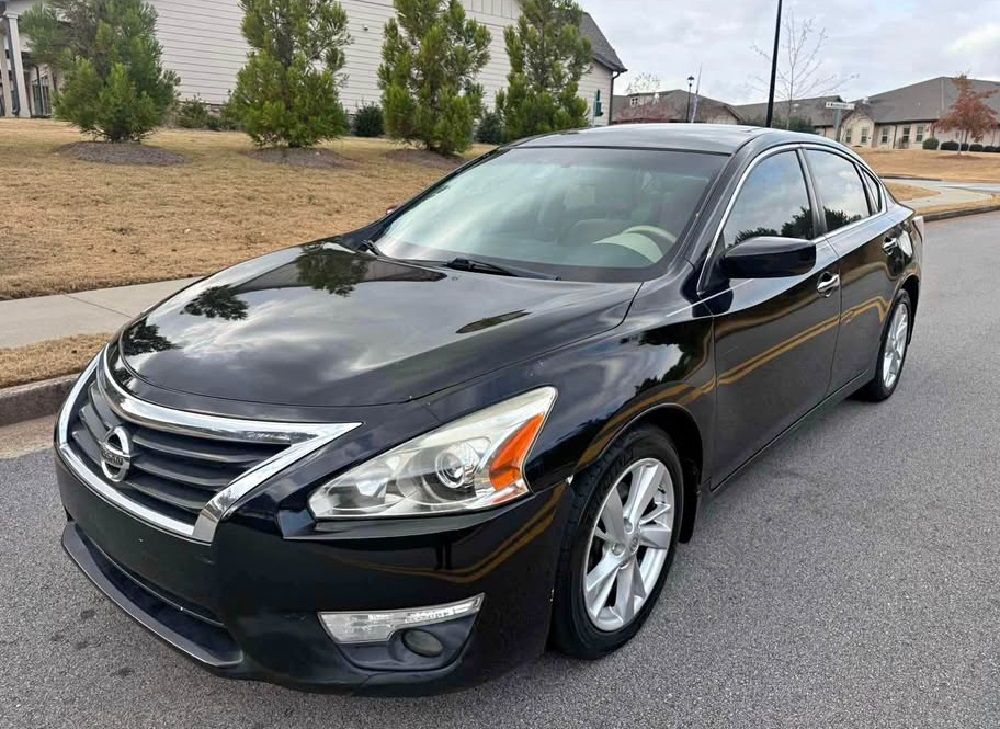
Low beams fire up, but the pavement stays dim. The Altima’s front end looks alive, yet the road ahead vanishes. You punch in “Altima headlight recall,” but the dealer checks your VIN and says there’s nothing. That gap? It’s no mistake; this failure never triggered a formal NHTSA recall.
The problem starts inside the halogen reflector. That bright chrome bowl that should direct the beam? It begins to peel from the inside out. Once the coating flakes, the light scatters, and the housing goes dark.
Nissan didn’t recall it; they launched PC861 and PC890, short-run service campaigns built to settle a lawsuit, not to cover every car long-term.
We’ll walk through what broke, how Nissan responded, who still qualifies, and what it’ll cost if you’re already out of luck.
1. What actually failed inside the Altima headlight
When the reflector turns from mirror to murk
Every halogen low beam starts with a coated bowl behind the bulb, a mirrored surface meant to shape and throw the light cleanly. On 2013–2018 Altimas, that layer doesn’t hold up.
Heat from the H11 bulb, moisture creeping in, and simple aging cause the coating to peel off the plastic shell. Once that reflective finish lifts, the light scatters. The beam loses its crisp shape and drops off fast.
Most drivers blame the bulb first. But the bulb keeps burning; it’s the bowl behind it that’s gone dim and patchy.
Beam pattern matters more than lens clarity
Altimas with yellowed or cloudy outer lenses are common, but that kind of wear wasn’t Nissan’s concern here. The PC861/PC890 campaigns and bulletin NTB22-024 focused strictly on internal delamination.
The outer lens could be hazy, but if the beam still projected a clean, even square, it passed. Only when the center of the pattern showed that telltale dark circle or warped output did it count as failed.
No bulb swap, no LED upgrade, and no polish job can fix that. Once the reflector bowl stops bouncing light cleanly, the housing’s toast.
The danger kicks in after dark
The trouble usually shows up first on back roads and in dim neighborhoods. The beam looks hollow in the middle. Lane lines disappear. Drivers start riding the high beams just to feel safe. Most complaints roll in five to seven years after build, right around the time the reflective coating gives up.
The drop in usable light isn’t just annoying; it stretches stopping distance and hides road hazards you should clearly see. Nissan kept it under a voluntary campaign, but the real-world visibility loss pushed into serious safety territory.
2. Which Altimas were covered and how dealers judged the lamps
Only one group made the cut
Nissan limited the campaign to a narrow group of 2013–2018 Altimas in the L33 generation, specifically those built with factory halogen headlights. Internal numbers show between 90,000 and 109,077 units were involved, selected by VIN, not broad model year.
Even U.S.-market cars shipped overseas could qualify under a special foreign-service process. Trim, mileage, and ownership didn’t matter; only the factory headlight type. LED and HID setups never entered the picture.
Why halogens got singled out
Halogen housings used the fragile coating that started peeling. HID and LED systems use a different optical setup with metal reflectors that don’t break down the same way. So even if an owner swapped in aftermarket LEDs, Nissan still judged eligibility by the original halogen build.
Assembly swaps were the only fix. The lens, shield, and reflector work as a matched unit, so dealers couldn’t just throw in a new bulb and call it done.
How techs called it pass or fail on the shop floor
Nissan laid out strict inspection steps in NTB22-024 to keep the judgments consistent. With the engine running and low beams on, techs cleaned the lens using water or Nissan-approved cleaner, then stood 3 to 3.5 feet in front of the bumper.
The only thing that mattered was the shape of the projected low-beam pattern. A solid square with bright center? Pass. Slight haze but no hollow? Still pass. But a weak or distorted square with a dark center? That was a fail, and both headlight assemblies got replaced.
What the beam tells the dealer: Pass or fail table
| Pattern type | Visual characteristics on lens / wall | Nissan judgment | Dealer action under NTB22-024 |
|---|---|---|---|
| OK | Bright, even low-beam square; no dark center; clear cutoff | Pass | No replacement; campaign closes |
| Borderline | Slight haze but defined square with no hollow center | Pass | No replacement; lens care advised |
| NG | Dark central circle, weak or misshapen square, patchy output | Fail | Replace both assemblies |
3. How Nissan Ran PC861 and PC890 Behind the Curtain
Why this never became a recall
Nissan kept this issue out of recall territory by filing it as a Voluntary Service Campaign. That move came straight from a class-action settlement, not from federal pressure.
A full NHTSA recall would’ve forced open-ended repair rights. But PC861 let Nissan set strict limits: VIN-based eligibility and a closing date baked in from the start.
You’ll still find campaign bulletins on NHTSA’s site, which adds to the confusion. The public VIN tool shows nothing, but owners spot the PDFs and assume a recall exists. That split wasn’t an accident; it was a legal workaround dressed in service campaign clothes.
PC861: The narrow window that slammed shut
PC861 handled all inspection and approval work tied to the reflector defect. Dealers followed NTB22-024, judged the beam pattern, then filed claims for NG results. The campaign launched in March 2022 and closed its doors to new inspections on September 23, 2022.
After that, no new cases could be opened. Plenty of lamps failed in 2023 and beyond, but the window to act had already closed. Only vehicles with a logged NG result before that cutoff moved forward.
PC890: The holding tank for approved cars waiting on parts
As soon as PC861 opened, headlamp supply got tight. Cars passed inspection, earned replacement approval, then sat waiting. To keep those jobs from falling through the cracks, Nissan created PC890.
Dealers moved qualifying cars into this holding group using OP code PC8612, a signal that the VIN had already cleared inspection and was now just waiting for parts. PC890 remains open, but only to fulfill those earlier promises. No new inspections, no new entries.
Campaign status at a glance
| Campaign ID | Linked TSB | Purpose | Active dates / status | Who it helps now |
|---|---|---|---|---|
| PC861 | NTB22-024 | Inspection and NG approval | Mar 2022 to Sept 23, 2022; now closed | Only past approvals |
| PC890 | NTB22-039 | Fulfillment for approved replacements | Still open, only for backlogged VINs | Cars already tagged NG |
4. The class action that sparked the “headlight recall” headlines
What the lawsuit alleged and how Nissan responded
The suit hit hard: 2013–2018 Altima halogen headlamps were failing as their internal reflector coating disintegrated. Drivers were forced to ride high beams just to see at night. The failure cut directly into nighttime safety and affected a wide swath of the L33 platform.
Nissan didn’t admit fault, but it settled. The agreement built a roadmap for warranty extensions, reimbursements, and limited-time replacements. Every dealer step, from inspections to deadlines, followed the legal framework hammered out in court.
The six-year extended coverage wasn’t open-ended
The settlement extended the headlamp warranty from 3 years/36,000 miles to 6 years with unlimited mileage, but only for confirmed delamination.
The clock started ticking from the vehicle’s in-service date in Nissan’s system. That means a late-2018 Altima might still qualify today, but a 2014 is long out.
To claim it, the headlamp had to fail the NTB22-024 beam test. Cloudy outer lenses didn’t count. The cutoff was strict; only a dim or distorted beam got through.
Refunds and one-shot replacements came with hard deadlines
If you paid out-of-pocket before October 25, 2021, you had until April 25, 2022 to request reimbursement; receipt required.
For older Altimas already outside warranty, there was one shot: file a claim by March 26, 2022, get approved by the settlement administrator, and finish the PC861 inspection before the September 23, 2022 cutoff.
Every one of those lanes is now shut. Today, the only active paths are the rolling six-year warranty for late-build cars and PC890 for vehicles already approved.
Legal timelines that shaped owner options
| Settlement benefit | What it covered | Deadline or duration | Status today |
|---|---|---|---|
| Headlamp warranty extension | 6 years from in-service date (parts + labor) | Rolling window | Still active on newer vehicles |
| One-time NG replacement | Free lamp swap for out-of-warranty cars | March 26, 2022 | Closed |
| Repair reimbursement | Refund for lamps replaced before 10/25/21 | April 25, 2022 | Closed |
| PC861 inspection/repair window | Settlement-based beam testing + replacements | September 23, 2022 | Closed |
5. What Altima owners can still do today
How to check a VIN for any remaining coverage
Start with the VIN lookup tools on Nissan’s official site and NHTSA.gov. They’ll show if any active campaigns are open, but that’s only part of the story. Those public tools don’t show whether a car has the six-year headlamp extension or if it was moved into PC890 after a failed inspection.
That information lives inside the dealership’s internal system, in a file called the National Service History. It shows whether the car was ever processed under PC861, whether it was approved, and whether it’s now waiting for fulfillment.
If you’ve got anything from the original settlement: emails, inspection results, approval codes, bring it with you. Dealers often use that documentation to back up service when the VIN record looks incomplete.
Where each owner stands now
Most 2013–2018 Altimas fall into one of three categories. Some are still covered under the six-year warranty extension, based on the vehicle’s original in-service date. Those cars can still be inspected under the same rules used during the campaign.
Others went through PC861, failed the beam test, and got transferred into PC890. They’re just waiting on parts. As long as that transfer was logged, the dealership still owes those assemblies.
The last group missed both windows. They’re outside the warranty period, never went through the inspection process, and will be treated as customer-pay jobs.
Nissan’s system doesn’t allow dealers to reopen closed claims, and any argument over eligibility usually ends with a referral back to the original settlement administrator.
Beam pattern matters more than lens clarity
The only thing that decides if Nissan covers the repair is the beam itself. If the low-beam pattern is clean, even with yellowed lenses, it still passes. If it’s distorted, hollow, or faded at the center, and the car is still within the extension period, the fix is on Nissan.
The same goes for vehicles already marked NG and logged in PC890. Everything else becomes the owner’s responsibility, no matter how clear the defect looks. Dealers can’t override the inspection results or bend the claim rules.
Even if the campaigns are closed, the need for working headlights hasn’t gone anywhere. Whether it’s passing inspection, avoiding a ticket, or just seeing the road, a solid low-beam pattern still matters.
6. Paying out-of-pocket: real repair costs, labor, and aftermarket options
Replacing Altima headlamps means pulling the whole face off
Swapping headlamp assemblies on a 2013–2018 Altima isn’t a quick bulb job. The bumper has to come off. That means peeling back clips, easing the corners off the fenders, and working the bumper cover free without snapping the tabs. Once off, the lamp bolts are easier to reach, but clearance is still tight.
Shops often quote the job as a pair. Aiming both units after install takes less time than aligning one, and mismatched output can throw off visibility. Most of the bill goes to labor, especially if fasteners are rusted or clips snap during teardown.
Real-world cost breakdowns for owner-paid repairs
| Repair path | What’s included | Parts (pair) | Labor (pair) | Approx. total | Notes |
|---|---|---|---|---|---|
| OEM Nissan assemblies via dealer | New factory housings, reuse or replace bulbs | $700–$1,100+ | $200–$350 | $900–$1,450+ | Best quality, tight fit, highest price |
| OEM-style aftermarket housings | Aftermarket parts, new bulbs, aim check | $250–$500 | $200–$350 | $450–$850 | Quality varies, watch for DOT markings and beam pattern |
| Refurb/upgrade service on originals | Rebuilt housings with reseal and beam test | $300–$600 (service) | $150–$250 (labor) | $450–$850+ | Some outperform stock, but sealing/warranty varies |
| Bulb-only “upgrade” | Brighter halogens or plug-in LEDs in bad housing | $40–$200 | $0–$100 | $40–$300 | No fix for reflector issues, beam stays scattered |
Picking the right fix: new, used, or rebuilt?
OEM housings give you the cleanest beam, best cutoff, and perfect fit around the bumper lines. They’re built for the Altima’s exact aiming specs and stay stable long-term.
Aftermarket units are hit-or-miss. Some hold a proper pattern and aim well, others scatter light, flicker, or shift out of spec after a few months.
Rebuilders take your original housing, open it, restore or replace the reflector, reseal the lens, and test the beam. Some shops even install aftermarket projectors that beat OEM performance. Just know: sealing, condensation resistance, and warranty support depend heavily on who does the work.
Bright bulbs can’t fix a broken bowl
Swapping in high-output halogens or cheap LEDs throws more light into the housing, but that doesn’t help if the reflector’s shot. Once the surface peels, the beam falls apart. No amount of brightness brings it back into focus.
Plug-in LED kits can also cause headaches: flickering, melted sockets, or CAN-bus warning lights. Even the good ones only shine properly if the housing is solid and the aim is correct. Without that, all you’re doing is wasting lumens and cash.
7. How dim Altima headlights should change buying and selling
A quick beam check beats guessing at the lens
Start at dusk, find a flat wall, and flip on the low beams. Park straight and close, then look at the beam pattern, not the lens. A good set throws two sharp blocks of light with clear upper edges and bright, even centers.
If the reflector’s failing, the pattern tells on it. The square sags or warps, the center fades to gray, and the beam falls short of the road.
Don’t get fooled by shiny lenses; a clear outer shell means nothing if the bowl behind it has gone dull. That washed-out gray inside the housing is a stronger red flag than surface haze, which a polish can usually clean up.
Why service records can flip the value
When a car’s had real headlamp work, the paperwork shows it. Look for full assembly replacements, not just bulb swaps. Nissan dealer records, Carfax entries, or printed repair invoices may list PC861 or PC890, proof that the car got replacement housings under the settlement.
Even if public VIN tools show nothing, the National Service History file at the dealership will confirm it. A recent pair of OEM lamps means better beam output, newer reflectors, and fewer surprises after the sale.
But if the Altima’s still running original housings and has no mention of headlamp work, you’re likely staring down a full replacement job soon.
Real lighting condition, real money on the table
Treat bad headlights like worn tires or weak brakes; they move the price. A bright pair of recent OEM lamps is a value-add. Dim, delaminated beams with no repair history? That’s money off the top.
Buyers can show written estimates from a shop for factory or solid aftermarket housings to get the number down. Sellers who know the lamps are cooked and bring a recent quote to the table earn credibility, and get ahead of haggling over “cheap bulbs” or sketchy eBay parts.
What headlamp condition says at the negotiating table
| Vehicle condition | Headlamp status | Likely repair path | Reasonable buyer adjustment |
|---|---|---|---|
| Late-model Altima, clean history | Fresh OEM lamps, PC861/PC890 confirmed | None | No discount, lights are a strong point |
| Mid-mileage 2013–2018, dim beams | Clear delamination, no records | OEM or solid aftermarket housings | $400–$900 off, tied to local shop quote |
| High-mileage with cheap aftermarket | Glare, poor pattern, no paperwork | Replace with better housings and aiming | $500–$1,000 off depending on parts |
| Still inside six-year extension window | Dim beams, VIN may still qualify | Try for Nissan-covered replacement | Adjust only if dealer denies coverage |
Sources & References
- Campaign ID: PC861 – nhtsa
- Halogen Headlamp Warranty Extension – nhtsa
- Campaign ID: PC861 – nhtsa
- voluntary service campaign 2013-2018 altima; front … – nhtsa
- Campaign ID: PC861/PC890 – nhtsa
- NISSAN RECALL CAMPAIGN BULLETIN – nhtsa
- Campaign ID: PC861/PC890 – nhtsa
- ‘Defect’ Can Cause 2013-2018 Nissan Altima Headlights to Get Dimmer Over Time, Class Action Says
- headlights : r/altima – Reddit
- 2013-2018 altima; front combination lamps (headlamps … – nhtsa
- Nissan Altima Headlights Defect Class Action Settlement
- Nissan Altima Headlight Defect Class Action Settlement – MyCarVoice – Reddit
- Nissan Safety Recalls, VIN Lookup, & Service Info
- Nissan Recall Lookup
- 2013-2018 Nissan Altima Headlight Lawsuit – Reddit
- How to Replace the Headlight Assembly for a Nissan Altima (2013-2015) – YouTube
- 2023 – 2024 Nissan Altima Headlight Repair service – Circuit Board Medics
Was This Article Helpful?