
Hook up the trailer. Hit Tow Mode. Numbers start flying; 3,500 lbs here, 6,000 lbs there. So which one actually sticks?
Pathfinder brochures flash that 6,000-lb badge like a trophy. But unless the right cooler’s bolted on and the build sheet shows the tow package, that number’s fantasy. Most trims don’t come maxed from the factory. And a hitch alone won’t raise the limit.
This guide cuts through the spec sheet fog. Trim-by-trim tow ratings, what the hardware actually does, why the nine-speed matters, and how to run real-world weight math before you torch a transmission trying to haul a 6,000-lb camper.
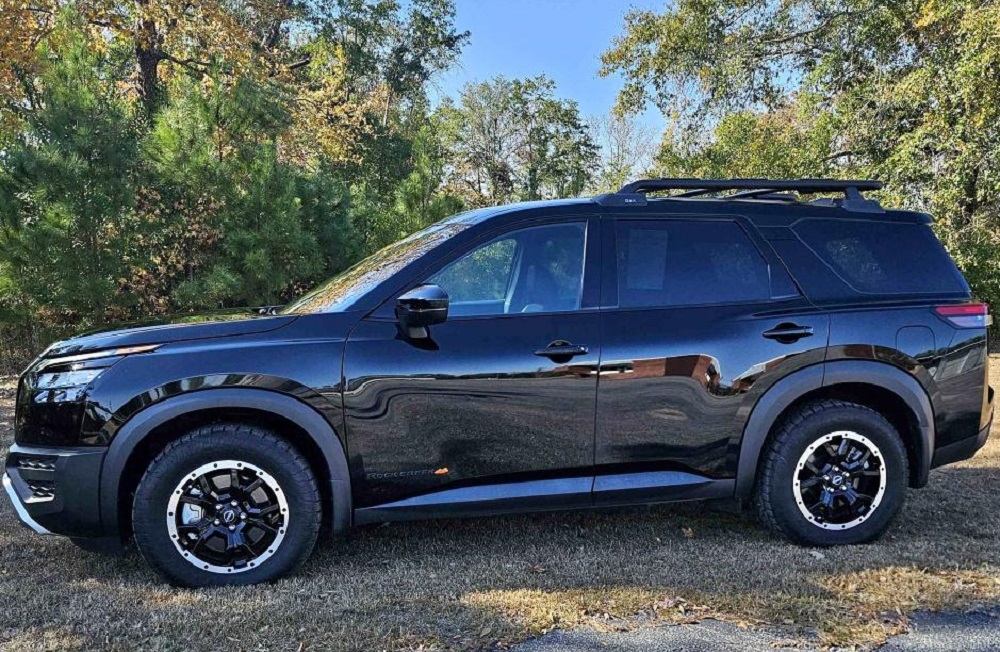
1. Pathfinder tow guts: what changed, what holds
CVT stretch vs 9-speed strength
The R52-generation Pathfinder chased 6,000 lbs with a CVT. Nissan reinforced the unit with metal chains and programming tweaks, but the limit wasn’t torque; it was heat.
Slip-heavy launches, saggy converter lockup, and marginal ATF cooling made it fragile under real load. Steep climbs, headwinds, and long grades pushed the transmission past its comfort zone. The tow rating was earned on paper, not in practice.
The R53 changed the game. A full 9-speed planetary automatic replaced the CVT, bringing hard gearsets, proper torque multiplication, and better thermal control. That gearbox, mated to the same basic 3.5L DIG V6, gave the R53 a true tow foundation.
Nissan also stiffened the unibody, refined the suspension tuning, and added a standard transmission cooler on key trims. Now the 6,000-lb rating isn’t borrowed; it’s built in.
What trims tow what, and why the rating shifts
Every R53 Pathfinder runs the same 284-hp V6, except Rock Creek, which gets a 295-hp bump. But power doesn’t set the tow rating. The hardware does. Base trims without the enhanced cooler top out at 3,500 lbs. Add the tow package, and that same drivetrain gets greenlit for 6,000.
SV and SL trims need the Premium Package to qualify. Platinum and Rock Creek include it out of the box. FWD or 4×4 doesn’t matter for the number; only the cooling and hitch package matter.
R53 Pathfinder trims, output, and max tow rating (when properly equipped)
| Trim | Engine | Output (hp / lb-ft) | Drivetrain options | Factory max tow* | Notes |
|---|---|---|---|---|---|
| S | 3.5L DIG V6 | 284 / 259 | FWD or 4×4 | 3,500 lbs | No enhanced trans cooler; hitch can be dealer-added. |
| SV | 3.5L DIG V6 | 284 / 259 | FWD or 4×4 | 6,000 lbs | Needs SV Premium/tow package for 6,000-lb rating. |
| SL | 3.5L DIG V6 | 284 / 259 | FWD or 4×4 | 6,000 lbs | 6,000-lb rating when equipped w/ SL Premium cooler. |
| Platinum | 3.5L DIG V6 | 284 / 259 | 4×4 (most) | 6,000 lbs | Enhanced cooling and hitch typically standard. |
| Rock Creek | 3.5L DIG V6 (HO) | 295 / 270 | 4×4 | 6,000 lbs | Off-road tune; tow hardware standard. |
Why Rock Creek pulls harder than it looks
Rock Creek doesn’t just lift the ride height and black out the trim. Its extra 11 hp and 11 lb-ft of torque sharpen throttle response at the exact moment the trailer tries to hold you back, starting on an incline, backing into soft dirt, or climbing a loose grade.
The torque curve hits earlier, the 4×4 system kicks in faster, and the full tow hardware comes standard. That means no guesswork on build sheets, no dealer-add extras, no cooking ATF on a hot summer pull. For buyers planning to run close to the 6,000-lb limit, it’s the most confidence Nissan offers off the showroom floor.
2. Cooling decides the number, not the badge
Transmission heat draws the real line
Tow ratings don’t fail on hills; they fail in the transmission. Add trailer weight, and the torque converter stays in slip mode longer. More slip, more heat. That heat cooks fluid, shaves clutch material, and eats into the gearbox’s margin for survival.
On the R53 Pathfinder, the 3,500-lb limit isn’t about engine grunt; it’s about how much heat the transmission can shed. Base trims use a radiator-integrated cooler that’s fine for commuting and light loads.
But once the trailer weight climbs, the system runs out of room fast. Nissan won’t greenlight 6,000 lbs unless that heat has somewhere to go lap after lap, not just for a one-time haul.
The tow-package cooling stack that makes 6,000 legal
Towing trims add a dedicated external transmission cooler that bolts in after the radiator exchanger. Hot fluid leaves the transmission, dumps bulk heat through a separate plate cooler, then returns stable, ready for another climb, not another temp spike.
This isn’t a bolt-on upgrade. The lines, pressure specs, and ECU calibration all expect the full setup. Without it, fluid temps stack, lockup control pulls back, and wear snowballs long before you hit 100K.
Transmission cooling hardware on tow-package Pathfinders
| Part number | Component | Role in tow package |
|---|---|---|
| 21606-6SV0A | Trans cooler assembly | External plate cooler, primary added heat capacity |
| 21606-6SA0A | Trans cooler (radiator side) | Base heat exchanger used on all trims |
| 21623-6SA0A | Oil cooler tube (upper) | Routes hot ATF to external cooler |
| 21621-6SA0A | Oil cooler tube (lower) | Returns cooled ATF to transmission |
| 21636-6SA3A | Oil cooler line (inlet) | High-pressure feed on 7-seat tow builds |
| 21635-6SA3A | Oil cooler line (outlet) | Return line completing the external circuit |
Why a hitch never upgrades a 3,500-lb Pathfinder
A Class III hitch doesn’t change how much heat your transmission can handle. Slap one on a base S or non-tow SV, and all you’ve added is an attachment point, not extra cooling. The transmission loop stays short, the shift logic stays soft, and the warranty sticks to the original spec.
Plenty of owners learn this the hard way. The hitch fits. The trailer rolls. A few months later, fluid’s scorched, shifts are delayed, and the converter shudders. Nissan’s 6,000-lb rating only applies when the extra cooling stack was built in, not when someone bolts a hitch to the bumper.
3. What holds the load: hitch, frame, and stress paths
Where Nissan’s factory hitch ties into the bones
The factory Class III receiver bolts into reinforced steel at the rear subframe, not just the bumper skin. It grabs multiple crossmembers, ties into boxed sections, and spreads tongue force through crush zones built to handle it.
Tongue weight doesn’t just press down; it rocks, pivots, and pulses under braking. That stress needs structure, not just steel.
Aftermarket hitches often cut corners here. Some skip critical frame tie-ins or use thinner mounts to fit more models. Others hang low, chewing into departure angle. They’ll pass Class III specs, but under a real trailer, the flex shows fast, especially on uneven roads or off-camber turns.
When the weight calls for a WDH, not just a stronger tongue
A 6,000-lb trailer puts 600–900 lbs on the hitch. That lifts the nose, drops the tail, and shifts weight off the front tires. Steering gets vague. Brake bias swings rearward. Headlights blind traffic.
A proper weight-distribution hitch (WDH) pushes tongue weight forward, restoring balance across both axles. On any unibody pulling past 4,500 lbs, it’s not optional. It protects the chassis, flattens ride height, and keeps braking predictable. The difference shows up in the first panic stop.
What factory hitches get right that bolt-ons don’t always match
Nissan’s factory hitch clears the bumper fascia, keeps tow wiring protected, and lands higher off the ground than most bolt-ons. Corrosion protection holds up better too; powder coating backed by underbody sealant at factory contact points.
That matters in rust belt states or anywhere winter salt rides high. More important, the factory hitch is part of a system. It comes with the right cooler, the correct sub-harnesses, and an ECU that knows what’s plugged in. Bolt-on setups can match the pull, but not the integration.
Core towing hardware on a tow-equipped Pathfinder
| Component | Spec / rating | What it does under load |
|---|---|---|
| Tow hitch receiver | Class III, 2″ receiver | Primary structural link to trailer frame |
| Hitch ball mount | Class III, drop/rise | Levels trailer tongue with vehicle hitch height |
| Hitch ball | 2″ or 2-5/16″ | Couples to trailer; must match coupler size |
| Tow hitch finisher | Model-specific fascia | Cleans up bumper cutout, protects receiver edges |
| Trailer tow harness | 4-pin or 7-pin | Feeds lights, brakes, and 12V to the trailer |
| Brake jumper harness | Under-dash sub-harness | Plug-in feed for electric brake controller |
4. Trailer wiring, brake signals, and what Tow Mode really does
What a 4-pin skips and a 7-pin supports
A 4-flat harness runs the basics, turn, brake, and tail lights. That’s fine for a small open trailer or lightweight boat with no brakes.
But once trailer weight climbs past 2,000–3,000 lbs, brake laws kick in and you’ll need full 7-pin wiring. That adds a feed for electric trailer brakes, 12V aux power for trailer batteries, and reverse lights for backup assist.
Most tow-package Pathfinders ship with a 7-pin plug at the bumper. Base trims or aftermarket hitches often get a 4-pin unless upgraded. The plug shape tells you what you’re working with, round 7-pin or flat 4-blade, and what that trailer should legally and safely carry.
Capability split: 4-pin vs 7-pin on the Pathfinder
| Function | 4-pin harness | 7-pin harness |
|---|---|---|
| Ground | ✔ | ✔ |
| Tail / running lights | ✔ | ✔ |
| Left turn / brake | ✔ | ✔ |
| Right turn / brake | ✔ | ✔ |
| Electric trailer brakes | ✘ | ✔ |
| 12V auxiliary power | ✘ | ✔ |
| Reverse lights | ✘ | ✔ |
Where the brake controller wiring hides
Nissan wires the R53 for a brake controller from the factory, if it’s tow-equipped. Look under the dash, near the driver kick panel or emergency brake, for the plug location (BH1 or BH3). A short jumper harness bridges that plug to most aftermarket brake controllers like Tekonsha or Redarc without cutting or splicing.
That connection pulls clean voltage from the pedal sensor and sends it to the controller’s brain. Set the gain, test in an empty lot, and use the manual override before hauling through traffic.
When the trailer weighs half as much as the Pathfinder, those trailer brakes aren’t a bonus; they’re the difference between a safe stop and wrecked rear glass.
What Tow Mode really tweaks in shift logic
Tap Tow Mode and the Pathfinder locks out lazy upshifts. The torque converter hangs tighter, gear changes come earlier on throttle, and the transmission holds ratios longer during climbs.
The system reads brake pressure and incline to decide how far to push engine braking on downhills. It’s not just a higher rev curve; it’s active grade logic that pulls downshifts when you stab the pedal to slow the rig.
Downhill Speed Control ties in here, too. If the cruise is set and a grade steepens, the transmission downshifts automatically to hold speed without riding the brakes. No beep. No drama. Just engine compression doing the work before the pads get smoked.
5. Electronic systems that step in when the trailer swings
How sway control clamps down before the wreck
Trailer sway starts with a gust, a rut, or a weight shift, and builds fast. The Pathfinder watches yaw rate and steering angle. When the trailer kicks out of line, the system triggers individual brake pulses to the SUV’s wheels and trims throttle until the sway straightens.
This doesn’t save a bad setup. Wrong tongue weight, soft rear springs, underinflated trailer tires, those still ruin control. But when things start to go sideways, sway control hits back harder and faster than most drivers can.
Around View cameras that lock onto the hitch
The Pathfinder’s 360° camera grid isn’t just for parking lots. Switch to the dedicated hitch view and the system centers the coupler, giving you a clean line when backing toward a trailer solo. No spotter needed. The gridlines help thread a tight ball-drop in one shot.
Once hooked up, those same cameras help thread the trailer through narrow campground loops or ramps with bad lighting. You don’t see through the trailer, but you do see around it, and that’s enough to avoid a crunch.
Rear radar doesn’t always play nice with a trailer
Plug in a trailer and the rear radar starts to lose its mind. Blind Spot Warning can read the trailer itself as a vehicle and trigger false alerts. Rear Cross Traffic Alert and Rear Auto Brake may throw “Unavailable” warnings, or worse, slam the brakes mid-hitch.
Nissan’s manual flags this. The system doesn’t reprogram itself to trailer length or offset. Some features get partially disabled. Some don’t work at all with the harness plugged in.
Best move is to treat rear sensors as blind and use mirrors and camera views instead. Anything electric back there is on a short leash once the trailer’s wired in.
6. Weight numbers that end trips early
Tow rating lives inside bigger limits
That 6,000-lb tow rating doesn’t stand alone; it sits on top of stricter numbers that trip up real-world towing. GCWR covers the full load: SUV, trailer, people, and cargo combined.
GVWR limits just the vehicle, no trailer. And payload is the real bottleneck; it includes passengers, gear, tongue weight, and hitch hardware all in one.
Payload is where most setups break down. Tongue weight hits it pound for pound. So even if your trailer sits under the tow limit, you can still overload the rear axle before leaving the driveway.
Weight ratings that control towing on a tow-package Pathfinder
| Rating type | What it controls | Approx. R53 value* |
|---|---|---|
| Max tow capacity | Trailer weight limit | 6,000 lbs |
| GCWR | Vehicle + trailer + all cargo | ~11,100 lbs |
| GVWR | Max loaded vehicle weight | Trim-dependent |
| Payload | People + cargo + tongue weight | ~1,324–1,693 lbs |
| Tongue weight range | 10–15% of trailer’s loaded weight | ~600–900 lbs |
| *Always check the door jamb sticker and owner’s manual for the actual build. | ||
A family-and-camper math problem that fails quietly
Hook up a 6,000-lb trailer with 12% tongue weight and the hitch takes on 720 lbs. Subtract that from a 1,500-lb payload and you’ve got just 780 lbs left. That disappears fast with five people and a cooler.
The Pathfinder won’t scream. It’ll pull like normal. But the signs creep in, sagging rear end, longer stops, hot tires. That’s how you blow past safe margins without knowing it. Scales don’t lie. Guesswork does.
Why experienced towers stop at about 5,100 lbs
Veteran towers rarely aim for the max. The 85% rule drops the real-world target to around 5,000–5,100 lbs for repeat towing. That leaves breathing room, for brake fade, crosswinds, grades, and summer heat, without pushing every spec to the edge.
Running the full 6,000 can work for short trips and flat roads. But stretch that across mountain passes or triple-digit days, and the gap between “legal” and “safe” disappears. It’s not horsepower that runs out first; it’s payload.
7. How the Pathfinder’s tow package stacks up in a crowded field
The only midsize crossover that breaks 6,000 lbs
Most three-row crossovers hover in the 5,000–5,500‑lb range, even when optioned to tow. The Pathfinder hits 6,000 with the full tow package, and the number matches the hardware.
The 9-speed automatic doesn’t hunt for gears. The factory cooler isn’t an afterthought. And the Class III hitch isn’t bolted to thin rails or hidden behind an upcharge.
Plenty of issues talk tough in marketing, but fade under real trailers. Nissan built this rating into the platform instead of tacking it on later.
Mid-size crossover tow rating comparison (2024–2025)
| Vehicle | Max tow rating | Engine | Transmission |
|---|---|---|---|
| Nissan Pathfinder | 6,000 lbs | 3.5L V6 NA | 9-speed automatic |
| Ford Explorer | 5,600 lbs | 2.3L I4 turbo | 10-speed automatic |
| Kia Telluride | 5,500 lbs | 3.8L V6 NA | 8-speed automatic |
| Honda Pilot | 5,000 lbs | 3.5L V6 NA | 10-speed automatic |
| Toyota Highlander | 5,000 lbs | 2.4L I4 turbo | 8-speed automatic |
| Chevy Traverse | 5,000 lbs | 2.5L I4 turbo | 8-speed automatic |
Naturally aspirated V6s hold torque without the thermal spikes
Boosted four-cylinders deliver torque early, but lean on oil temps and cooling systems that don’t always scale well with trailer load.
The Pathfinder’s V6 hits peak torque without pressurizing the intake tract or cooking the charge air cooler. That pays off in desert climbs and long uphill pulls, where thermal load decides whether a tow ends with power or limp mode.
Smaller engines need higher RPMs and tighter gear spacing to keep up. The V6 holds grade without dropping three gears just to breathe.
Why a body-on-frame rig still has the last word
Once trailer weight pushes 7,000 lbs or tongue weight stacks past 900, a crossover’s limits show fast. Payload evaporates. Suspension squats. Rear cooling runs hot. The Pathfinder won’t melt down pulling 6,000, but it wasn’t built to yank a 9,000-lb toy hauler through mountain switchbacks.
At that level, the conversation shifts to half-ton trucks. Armada, Sequoia, Tahoe, those carry heavier loads without walking the edge of every spec. The Pathfinder maxes out cleanly, but asking it to punch above its class guarantees the penalty shows up in the axle, the brakes, or the warranty line.
8. What towing does to your service clock and what it costs if you ignore it
Maintenance intervals cut in half under load
Towing’s not a weekend chore for your fluids. It speeds up oxidation, thins viscosity, and stacks heat cycles that shorten parts’ lives. Nissan’s severe-use schedule trims intervals across the board.
Oil drops every 5,000 miles. Transmission fluid needs inspection by 30,000. Diff and transfer case fluid swaps move up too, especially with 4WD pulling full trailer weight.
Miss a service and it won’t fail today. But the next fluid test smells burned, and warranty claims start running uphill. The onboard computer tracks Tow Mode use; it’s not guessing.
Standard vs towing-use maintenance cadence
| Mileage milestone | Normal-use baseline | Severe use (regular towing) |
|---|---|---|
| 5,000 miles | Basic inspection, rotate tires | Engine oil + filter change |
| 10,000 miles | Oil change, rotate tires | Brake fluid check/replace as needed |
| 20,000 miles | Inspections, cabin filter | Diff & transfer case fluid service on 4×4 models |
| 30,000 miles | Engine air filter, general checks | Detailed trans fluid inspection; early drain/refill |
| 60,000 miles | Major fluid checks | Full ATF, driveline, and coolant service if towing |
Fluids and wear parts that can’t fake it under trailer load
Start with the oil; good additive packs matter more than marketing labels. Cheap blends shear fast under heat. Use full synthetic, swap early. Transmission fluid can’t run dark or it’s already failing.
Brake fluid boils quicker with a loaded trailer. Old pads, worn rotors, or soft shocks don’t just feel bad; they blow out under a fast stop or off-camber dip.
Even tires go faster. Sidewalls flex harder, heat builds deeper, and trailer sway punishes soft shoulders. Maintenance here isn’t polish; it’s load survival.
Long-haul habits that keep the drivetrain alive
Tow Mode isn’t just for steep grades. Use it any time the trailer’s on. It locks torque converter earlier and helps shed heat. Let the powertrain idle after big climbs to let fluid temps stabilize before shutdown. Glovebox fuses won’t tell you when a cooler line’s weeping, so check it by eye, lines, clamps, and the cooler face.
Weigh the full rig once. Don’t trust trailer stickers or gut feel. The Pathfinder can pull strong, but only if the numbers stay in its favor. Every overloaded trip takes a bite.
Sources & References
- What is the 2024 Nissan Pathfinder Towing Capacity?
- Nissan Pathfinder Towing Capacity
- 2025 Nissan Pathfinder Features: Towing, Cargo Space & More
- 2025 Nissan Pathfinder Towing Guide: Maximize Your Adventure Potential
- SL Premium Package : r/nissanpathfinder – Reddit
- Towing with a Pathfinder: Capacity and Safety Tips – I-90 Nissan
- 2023 Nissan Pathfinder | Modern Nissan of Concord
- 2024 Nissan Pathfinder Press Kit – Nissan USA Newsroom
- What Can The Nissan Pathfinder Tow? [2025]
- What is the 2024 Nissan Pathfinder Towing Capacity? | Five Star Nissan of Albany
- Nissan Pathfinder Towing Capacity
- 2025 Nissan Pathfinder Medford MA
- Nissan Pathfinder Service Intervals & Schedule (2025 Guide) – Recharged
- For Nissan Pathfinder 22-24 Engine Coolant Radiator with Transmission Oil Cooler | eBay
- 21606-6SV0A – Trans Cooler 2022-2025 Nissan Pathfinder | Official …
- 2023 Nissan Pathfinder Trans Oil Cooler | Official Nissan Parts Store
- Trans Oil Cooler for 2024 Nissan Pathfinder
- Nissan Pathfinder Hitch | Official Nissan Parts Store
- OEM 2022+ Nissan Pathfinder Tow Hitch Receiver – Class II – Z1 Off-Road
- For Nissan Pathfinder Trailer Hitch + Brake Control Curt Assure 7 Way Wiring
- How Much Can a Nissan Pathfinder Tow?
- Factory Hitch vs Aftermarket: Performance, Cost, and Installation Compared – Torklift Central
- Need advice from Tow Police – Nissan Pathfinder : r/GoRVing
- Nissan Pathfinder Camper Towing: Recommendations and Tips
- What is the 2024 Nissan Pathfinder Towing Capacity?
- What is the 2024 Nissan Pathfinder Towing Capacity?
- 2022-2023 Nissan Pathfinder Towing Kit
- Pros and cons of factory hitch vs. aftermarket? – Bronco6G
- Genuine Trailer Tow Harness Wiring Kit (4-pin) (r53 Pathfinder) – T99T8-6TA0A | NissanParts.cc
- Wiring 101: 4-Pin vs. 7-Pin, Brake Controllers, and Troubleshooting – GEN-Y Hitch
- Nissan Pathfinder Towing Capacity New Castle | Sheridan
- Recommended 4-Way and 7-Way Wiring Harness and Brake Controller for a 2018 Nissan Pathfinder | etrailer.com
- Brake Controller Installation on 2015 Nissan Pathfinder with Tow Package – etrailer.com
- Trailer Brake Controller Installation How-To – 5 Easy Steps! – CURT
- Tekonsha Brake Controller + 7 Pin Trailer Wiring for 2005–2012 Pathfinder | TrailerJacks.com
- 2018 Nissan Pathfinder – Blind Spot Warning (BSW) (if so equipped) – YouTube
- OWNER’S MANUAL AND MAINTENANCE … – Nissan USA
- Nissan Pathfinder vs. The Competition
- 2024 Honda Pilot Performance Specs – Honda of Mentor
- Honda Pilot Towing Capacity
- 2024 Ford Explorer vs. 2024 Nissan Pathfinder Comparison – Kelley Blue Book
- 2022 NISSAN Towing Guide
- Nissan Pathfinder Service Schedule
- Recommended service and maintenance schedule for Nissan Pathfinder
- Expert Q&A on Nissan Maintenance Schedules and Essential Vehicle Care
Was This Article Helpful?