
Snap the throttle. Hear a sharper bark. Feel a real shifter in your palm. That’s the Ram 1500 G/T package in motion.
Since 2022, this option has lived on the Ram 1500 Laramie and Ram 1500 Rebel. It pulls paddle shifters, a console-mounted floor shifter, Performance Pages, and a Mopar exhaust into trucks that normally lean luxury or off-road. Early trucks centered on the 5.7L HEMI V8 eTorque and old-school rumble.
Then 2025 flipped the script. The 3.0L Hurricane twin-turbo six replaced the Hemi, pushing output to 420 hp and 469 lb-ft in SO form.
For 2026, the Hemi came back as an option, reopening the V8 versus turbo debate inside the same G/T shell. Some buyers chase sound. Others chase stopwatch numbers.
Time to sort what G/T actually changes, where it sits between standard trims and the RHO, and when it earns its keep.
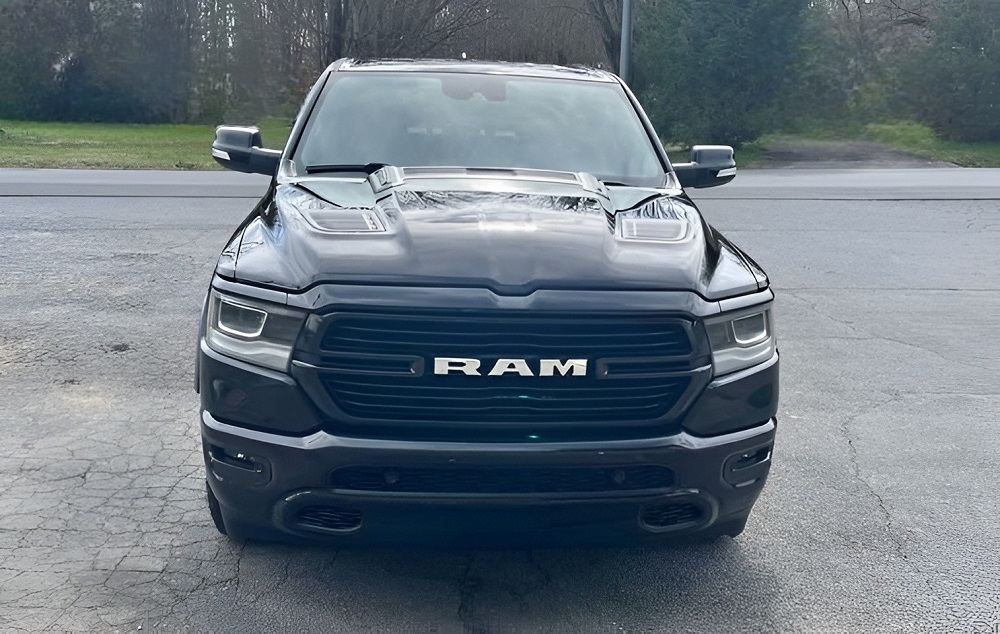
1. G/T reshapes the truck’s feel without jumping into RHO territory
Ram built G/T to fill the gap between daily trim and halo truck
Split the lineup and the gap becomes obvious. Standard Ram 1500 trims focus on comfort, towing, and broad appeal. The Ram 1500 RHO chases 540 hp and full halo status. G/T drops between them on Laramie and Rebel, adding driver hardware without wide-body suspension or HO output.
Launched for 2022, G/T centered on the 5.7L HEMI eTorque in Crew Cab form. Factory build sheets list the console floor shifter, paddle shifters, Performance Pages, Mopar cold air intake, and passive cold-end exhaust as core equipment. Production happens at Sterling Heights, so every component carries full factory warranty.
Base 2026 pricing places Laramie around $61,075 and Rebel around $64,740. The G/T line item runs roughly $3,095 before required equipment groups stack on top.
Engine change rewired the package’s personality
Bolt G/T to a Hemi and the identity leans old-school. The 5.7L HEMI V8 returns for 2026 at 395 hp and 410 lb-ft. Zero turbos. Peak torque lands higher in the rev range. Throttle feel tracks pedal input in a linear, mechanical way.
Pair G/T with the 3.0L Hurricane SO and output jumps to 420 hp and 469 lb-ft. Twin low-inertia turbos build torque early. Car and Driver clocked the SO truck to 60 mph in 4.8 seconds. Hemi trucks land closer to 6.0 seconds in similar tests.
The power jump changes how the 3.92 axle behaves. Hurricane torque hits harder at midrange RPM, loading the rear gear sooner and pulling through passing maneuvers with less downshift drama.
The package stacks under strict trim and equipment rules
Tick G/T on a 2026 Rebel and the X2 Level 2 Equipment Group becomes mandatory. That group adds the 14.5-inch Uconnect 5 screen, Harman Kardon audio, memory seats, and advanced safety layers. The hardware supports Performance Pages but drives price upward.
Crew Cab configuration remains required. The floor console and bucket seats demand full cabin width. Four-wheel drive commonly pairs with G/T builds, especially with the 3.92 axle ratio.
Stack a Rebel G/T with X2 and common options and sticker prices push past $70,000. The RHO starts at $69,995 before options. The overlap compresses quickly at the top end.
2. Hardware changes that alter response, airflow, and sound
Cold air intake and sport hood reshape induction flow
Bolt on the Mopar Ram Airflow cold air intake and intake temps drop. Denser air packs more oxygen into each cylinder. Throttle response sharpens, especially on the 5.7L HEMI. The factory sport performance hood feeds cooler outside air toward the intake box.
Hurricane trucks benefit under sustained boost. Intake air temperature climbs fast during towing or back-to-back pulls. Lower IAT reduces timing pull and helps maintain commanded boost. On hard grades, that can mean the difference between steady pull and heat-soaked torque fade.
Passive cold-end exhaust tunes tone and backpressure
Swap in the Mopar passive cold-end exhaust and the rear section changes. The system runs from muffler to tips. Flow improves slightly. Drone stays controlled at highway speeds.
On Hemi trucks, the note deepens at idle and under load. Low-frequency rumble carries through the cabin. Hurricane trucks gain a sharper, mechanical growl that masks inline-six rasp. Exhaust tips finish in bright or black, dual-outlet layout.
3.92 rear axle ratio drives the off-the-line punch
Lock G/T to the 3.92:1 rear axle and mechanical advantage increases. The engine reaches its power band sooner. Off-the-line acceleration improves. Towing response tightens under load.
Lower ratios like 3.21 focus on highway economy. They’re not offered on G/T. The 3.92 spins higher RPM at cruising speed and trims fuel efficiency in real use. Spirited driving or towing often drops combined mileage to 14 to 15 mpg.
3. The cockpit changes how the truck communicates with you
Floor shifter replaces the rotary dial and restores mechanical feedback
Rip out the dash dial and drop in a console-mounted shifter. G/T swaps the rotary e-shifter for a leather-wrapped floor lever with a manual gate. Hand movement becomes deliberate. Gear selection feels physical instead of digital.
The 8-speed TorqueFlite keeps its internals. Calibration sharpens response to manual inputs. Downshifts hit quicker under throttle. The lever sits in a full center console that only fits Crew Cab layouts.
Paddle shifters add real control over the 8-speed
Pull the aluminum paddles and the transmission obeys. The steering wheel integrates left and right paddles behind the rim. Upshifts and downshifts happen without lifting your hands. Tow mode and manual control can overlap during heavy pulls.
The Hurricane SO makes 469 lb-ft. That torque arrives early and can push through gears fast. Manual input helps hold lower ratios on grades. The system still upshifts at redline to protect the driveline.
Performance Pages turn the screen into a live data feed
Open Performance Pages and the truck starts talking numbers. Timers track 0–60, 0–100, 1/8-mile, and 1/4-mile runs. Gauges display oil temp, coolant temp, oil pressure, and transmission temp. Hurricane trucks add boost pressure and intake air temperature.
G-Force screens log lateral and longitudinal load. Engine and Dyno pages graph horsepower and torque curves in real time. Data can export to USB for later review.
The 14.5-inch Uconnect 5 screen runs on Atlantis architecture with five-times faster processing than older systems. Early 2025 trucks still reported screen freezes and warning lights within the first 1,000 miles.
4. Hurricane power rewrote the performance math
Twin turbos changed how torque arrives
Spin up the 3.0L Hurricane SO and torque hits early. Peak output lands at 420 hp and 469 lb-ft. Twin low-inertia turbos build boost fast and hold it flat through the midrange. The truck pulls hard from 2,000 rpm without waiting for revs.
The old 5.7L HEMI V8 in 2026 trim makes 395 hp and 410 lb-ft. Torque climbs in a smoother arc. No boost. No wastegates. Real-world 0–60 runs land near 6.0 seconds for Hemi trucks and 4.8 seconds for Hurricane SO models.
| Engine | Horsepower | Torque | 0–60 mph | Fuel Requirement |
|---|---|---|---|---|
| 5.7L HEMI V8 | 395 hp | 410 lb-ft | ~6.0 sec | 87 octane, 89 recommended |
| 3.0L Hurricane SO | 420 hp | 469 lb-ft | 4.8 sec | 87 octane, 91 recommended |
| 3.0L Hurricane HO | 540 hp | 521 lb-ft | 4.2 sec | 91+ required |
Hurricane HO output belongs to RHO territory at 540 hp and 521 lb-ft. G/T trims center on the SO variant.
Heat management matters more under boost
Push a Hurricane hard and intake temps climb fast. Performance Pages show boost pressure and IAT in real time. High IAT forces the ECU to trim timing. That cuts power under sustained load.
Towing uphill with the 3.92 axle keeps RPM high. Boost stays active longer. Transmission temps can exceed 220°F in heavy pulls. Oil temps follow close behind. Factory cooling handles it, but long climbs test the system harder than a Hemi ever did.
Fuel cost and octane shape real ownership math
Run regular in a Hurricane and it works. Run premium and timing stays more aggressive. The SO engine recommends 91 octane for peak output. HO requires 91 or higher.
Spirited driving or towing drops real-world economy to 14 to 15 mpg. Premium fuel raises per-mile cost. Over 15,000 miles a year, that gap can add $600 to $900 depending on fuel spread.
5. Reliability and tech maturity shape the real ownership risk
Early Hurricane trucks logged electrical and sensor faults
Launch a 2025 build and watch the dash for lights. First-year trucks reported check engine lights within the first 500 to 1,000 miles. Owners cited cam position sensor faults and cooling valve errors. Three-way cooling valve failures triggered performance complaints and dealer visits.
Some trucks logged intermittent misfire codes like P0300 alongside sensor faults. Software updates cleared many cases. Others required hardware replacement. Screen freezes on the 12-inch and 14.5-inch Uconnect units forced module resets or full screen swaps.
Atlantis electrical architecture adds speed and complexity
The new Atlantis backbone runs the 14.5-inch Uconnect 5 screen. Processing speed increased roughly fivefold over prior systems. Performance Pages load faster and multitasking improves. Digital gauge clusters sync more tightly with infotainment data.
More modules mean more integration points. A single glitch can cascade through warning systems. Early long-term tests documented warning lights and infotainment resets during break-in mileage. Dealer reflash procedures resolved most cases under warranty.
Mechanical hardware in G/T remains low-risk
Floor shifters and paddle assemblies carry simple hardware. No added boost, no higher compression, no internal engine mods. Mopar intake and passive exhaust stay within factory tolerances. The 8-speed TorqueFlite remains the same core unit used across the lineup.
Long-term cost risk sits with engine and electronics, not the G/T components. Turbo hardware replacement outside warranty can exceed $3,000 per side. Full infotainment screen replacement can run $1,500 to $2,500 out of coverage.
6. Laramie G/T and Rebel G/T deliver two different personalities
Laramie G/T leans street, speed, and cabin polish
Spec a Laramie G/T and the truck skews road-focused. Leather-trimmed bucket seats come heated and ventilated. Driver memory ties into seat, mirror, and pedal position. The 14.5-inch screen and 19-speaker Harman Kardon system often stack with Level 2 groups.
Ride quality stays tuned for pavement. Air suspension, when equipped, lowers at highway speed to reduce drag. The 3.92 axle keeps throttle response sharp. Base Laramie G/T pricing starts near $61,075 before options.
Rebel G/T blends trail stance with paddle control
Order a Rebel G/T and the visual tone shifts tougher. Factory lift, skid plates, and off-road tires remain part of the Rebel identity. G/T layers in the floor shifter, paddles, bright pedals, and Performance Pages. The same 420 hp Hurricane SO sits under the hood.
Rebel G/T requires the X2 Level 2 Equipment Group for 2026 builds. That pushes pricing higher than a base Rebel. Add common options and the sticker clears $70,000 quickly. RHO starts at $69,995 before destination and extras.
Air suspension and towing tech affect daily use
Equip air suspension and the truck self-levels under load. Trailer tongue weight drops the rear, and the system compensates. Blind-spot monitoring can extend detection for trailers up to about 20 feet. Performance Pages display transmission temps during heavy pulls.
Tow Mode does not auto-engage on restart. Shut the truck off mid-trip and the driver must reselect it. Forgetting that step changes shift logic and throttle mapping under load.
7. The real cost curve: resale, fuel burn, and repair exposure
G/T trucks hold value better than standard trims
Scan used listings and G/T models stand out. Production numbers trail standard Laramie and Rebel builds. Buyers hunting paddles and the floor shifter pay more on the secondary market. Kelley Blue Book data shows upper-trim 1500 Crew Cabs retaining stronger percentages than lower trims.
Condition and mileage still rule the outcome. Hurricane trucks with early electrical issues can see value dips. Clean history, no warning lights, and documented service keep resale stronger. Expect several thousand dollars spread between a base Rebel and a Rebel G/T after three years.
Fuel and wear costs track with how hard you drive
Run the Hurricane gently and it returns around 20 to 21 mpg combined. Lean into boost and the number drops to 14 or 15 mpg. Premium fuel at a $0.60 per gallon spread adds roughly $900 per 15,000 miles. The 3.92 axle keeps engine speed higher on the highway.
Brake wear climbs with added mass and speed. Hurricane trucks weigh over 5,500 pounds in Crew Cab 4×4 form. Aggressive driving chews through pads faster than a base V6 truck. Front brake jobs can run $500 to $900 at dealer rates.
Turbo hardware and electronics define the long-term risk window
Turbos spin at extreme speed under load. Oil quality and change intervals matter. Neglect raises bearing wear risk. Out-of-warranty turbo replacement can exceed $3,000 per unit.
Infotainment and digital clusters cost real money once coverage ends. Full 14.5-inch screen replacement can land between $1,500 and $2,500. Extended warranty pricing varies, but factory-backed plans often add $2,000 to $3,500 to the purchase price.
8. Decide by driving feel, not brochure numbers
G/T rewards drivers who want constant input
Grab the shifter and the truck answers back. Paddles let you hold 3rd on a grade instead of hunting gears. The 3.92 axle keeps the engine in its torque band. Performance Pages show oil and trans temps when you push it.
Hurricane SO torque hits at 469 lb-ft. That midrange shove feels strong in daily traffic. The exhaust and intake sharpen response without touching internal engine parts. The experience shows up every commute.
Raw speed alone doesn’t justify the price
Spec a standard Hurricane SO and it already runs 4.8 seconds to 60 mph. The engine output doesn’t change with G/T. The 8-speed remains the same core unit. Straight-line numbers stay identical between G/T and non-G/T trucks with the same engine and axle.
The package runs about $3,095 before required groups. On Rebel builds, stacked equipment pushes real cost closer to $5,000 to $7,000 above a base configuration.
The cutoff is simple
Buy G/T for control feel, cabin hardware, and factory-backed sport tuning. Skip it if stopwatch data alone drives the decision. The Hurricane SO already delivers the speed. The HO and RHO step into another league at 540 hp and 4.2 seconds to 60 mph.
A well-optioned Rebel G/T can clear $70,000. At that price, cross-shop against RHO and upper F-150 trims before signing.
Sources & References
- Ram Officially Announces G/T Package For 2022 Ram 1500 Laramie & Rebel!
- 2026 RAM 1500 Trim Level Guide – Jim Browne Chrysler Jeep Dodge Ram Dade City
- 2025 Ram 1500 Rebel vs. Laramie: Which One Should You Buy? – Jeep Dealership in Carmel, NY
- Ram’s Hurricane Turbo Six Storms Past the Hemi V-8 in Our Testing – Car and Driver
- 2026 Ram 1500 vs 2025 Ram 1500 | Honesdale Chrysler Dodge Jeep Ram
- RAM 1500 Performance Upgrades (More Horsepower for 5.7 HEMI) – RealTruck
- Dodge Ram Exhaust & Performance Parts
- Ram 1500 Engine Options & Performance Specs in Centennial
- 2023 Ram 1500 Laramie® G/T & Rebel® G/T | Special Editions
- RAM 1500 Sport | MBRP Cat-Back Dual Rear Exit Exhaust vs Stock Exhaust Sound
- Should You Buy a 2026 RAM 1500 V8? Thorough Review By A Mechanic – YouTube
- The Ram 1500 Isn’t Better With A V8, But It Is Charming: Review – Motor1.com
- Exhaust upgrade suggestions? On the hurricane! : r/ram_trucks – Reddit
- Honest opinion on the 2025 1500 : r/ram_trucks – Reddit
- 2025 Ram 1500 Trims: Big Horn® vs. Laramie® vs. Rebel® | Tom Kelley CDJR
- Ram 1500 Engine and Gear Ratios Made Simple for Towing in Columbus, Ohio
- 2026 Ram 1500 vs. 2025 Models: What’s Changed?
- The 2026 Ram 1500 | Towing, Engine Options & More
- Comparing the 2025 vs 2026 Ram 1500: What Buyers in Bradenton Should Know
- 2026 vs 2025 Ram 1500: What’s the Difference?
- Package Options for 2026 Ram 1500 Rebel | Star Chrysler Dodge Jeep RAM of Big Spring
- 2026 RAM 1500 Buyers Guide
- 2025 Ram 1500 Crew Cab Price, Reviews, Pictures & More – Kelley Blue Book
- 2025 Ram 1500 Long-Term Road Test – Car and Driver
- 2026 Ram 1500 Prices, Reviews, and Pictures | Edmunds
Was This Article Helpful?