
Spot 3 Camrys on a used lot. One looks clean. One has a sticky dash. One may burn oil before Friday.
That’s the Camry trap. The badge helps. The wrong year can still cost you an engine, a torque converter, or a bad shift you feel on the first drive.
The roughest years are 2007–2009. Those cars can stack 2AZ-FE oil burning, dash glare, and brake complaints. 2002 also needs care. Watch for head-bolt trouble, throttle surge, tired shifts, and V6 sludge signs.
Newer cars have narrower risks. 2012–2014 need a 25–50 mph shudder test for the U760E converter. 2018 needs a cold Reverse check. Early 2025–2026 Camry Hybrid builds need a VIN check for the inverter-bolt recall.
The better buys sit outside those traps. Clean 1997–2001, 2015–2017, and 2021–2024 cars make more sense. No piston-ring invoice, no ZE5 proof, no clean test drive, no deal.
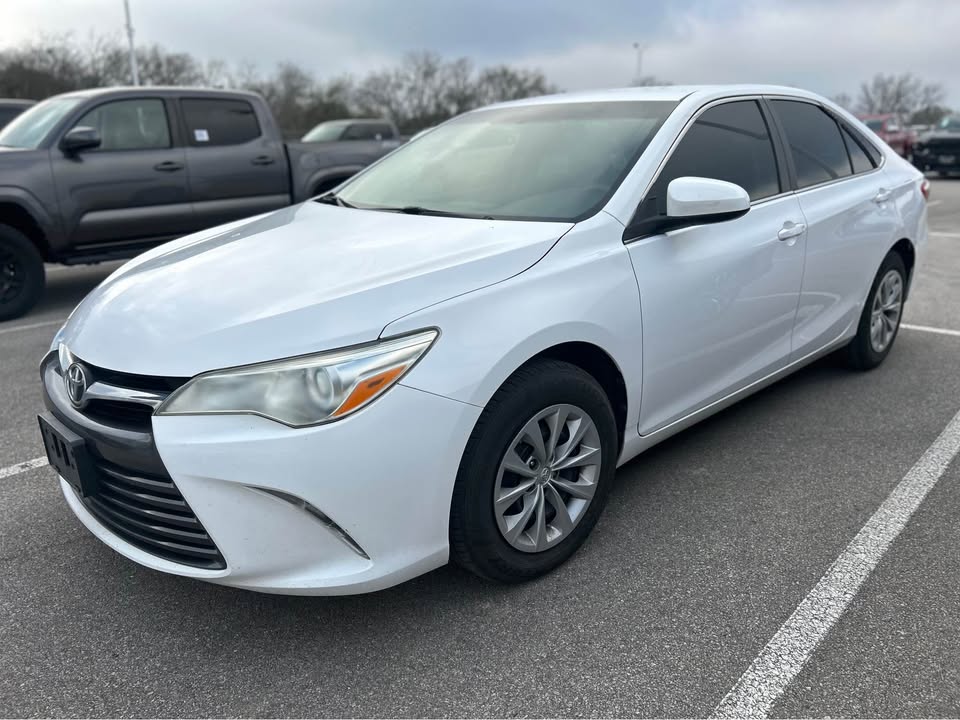
1. Start with the avoid list
Name the risky years first
The Camry years that need the most caution are 2002, 2007–2009, 2012–2014, 2018, and early 2025 builds.
The worst cluster is 2007–2009. Those cars can stack 2AZ-FE oil use, sticky dash glare, brake complaints, and high owner complaint volume in one used sedan.
The other years need a different kind of filter. A 2014 with ZE5 torque-converter work can be a decent buy. A 2008 with no piston and ring repair invoice can become a $2,400 to $2,700 engine job.
Where each risky Camry bites
| Camry year or range | Risk level | Main failure pattern | Buy only if |
|---|---|---|---|
| 2002 | High | 2AZ-FE head-bolt risk, throttle surge complaints, early XV30 wear | Clean cooling history, no overheating, smooth shifts |
| 2007–2009 | Very high | 2AZ-FE oil consumption, sticky dash, brake complaints | Piston and ring repair plus dash replacement are documented |
| 2010–2011 Hybrid | Moderate | 2AZ-FXE oil consumption exposure | Oil-use test is clean or repair is documented |
| 2012–2014 | Moderate | U760E torque-converter shudder | ZE5 repair or updated converter and software proof |
| 2018 | Moderate | 8-speed shift shock and reacceleration delay | PCM update is done and test drive is clean |
| 2025 early builds | Caution | First-year assembly complaints plus hybrid recall exposure | VIN recall check is clear or remedy is complete |
Separate the money pit from the inspection car
A risky Camry doesn’t always deserve the same decision. A 2008 with original oil-control rings can run fine during a 10-minute test drive, then drop oil between fuel stops. If the owner never checks the dipstick, rod knock becomes the next warning.
A 2012–2014 car carries a narrower risk. The U760E torque converter can shudder under light throttle at 25–50 mph. Toyota’s ZE5 path used software first, then converter replacement when the shudder checked out.
That difference matters at the price table. Missing piston-ring proof on a 2007–2009 Camry changes the value of the whole car. Missing ZE5 proof on a 2014 means you test harder at 45 mph and price the converter risk before the bill lands.
2. The 2007–2009 Camry is the danger zone
The oil burner lives inside the 2AZ-FE
The 2007–2009 Camry carries the worst used-market risk. The weak point sits inside the 2AZ-FE four-cylinder. Toyota’s T-SB-0030-15 covers 2007–2009 Camry models with this engine and calls for piston and piston-ring replacement after the oil-use test fails.
The failure starts with the oil-control rings. They can clog and stop scraping oil off the cylinder wall. Some pistons also lack enough drain-back area, so oil stays near the rings and burns in the chamber.
Owners have reported oil use as high as 1 quart every 1,200 miles. That can slip past a buyer during a short test drive. It shows up later as a falling dipstick, blue-white startup smoke, or low oil between fuel stops.
Toyota’s repair path was not a quick seal job. The engine had to come apart for pistons, rings, gaskets, seals, and related parts. Reported repair costs sit around $2,400 to $2,700 on the worst 2007–2008 cars.
Low oil turns an issue into rod knock
Oil consumption often starts quietly. You may see no smoke, no warning light, and no rough idle. The dipstick tells the story before the dash does.
The damage starts when the owner treats oil use like normal Camry age. Low oil removes film from the rod bearings. The timing chain and cam journals also lose clean lubrication.
Once the engine runs low enough, the knock starts under load or on cold start. By then, the repair no longer stops at rings. Cylinder wall scoring and bearing damage can push the car toward engine replacement.
The warning light comes late. On these cars, the oil-pressure light means pressure has already dropped, not that the oil level needs a casual top-off.
Paperwork beats mileage every time
Mileage can lie on a 2007–2009 Camry. A 160,000-mile car with piston and ring paperwork may be safer than an 88,000-mile car still running original oil-control rings. The invoice matters more than the seller’s cold-start story.
Ask for proof that Toyota’s oil-consumption repair was done. The record should show pistons, piston rings, related gaskets, and engine teardown labor. A vague “engine serviced” line does not prove the fix.
No paperwork changes the price. You have to assume the repair is still waiting. A clean idle does not erase a known 2AZ-FE oil-control-ring defect.
Check the dipstick before startup, after the drive, and again after a few minutes. Pull the oil cap and look for heavy varnish. Walk away from any 2007–2009 Camry sold with “just add oil” as maintenance advice.
3. The sticky dash can blind the windshield
The shine matters on 2007–2011 cars
The sticky dash problem hits the same Camry years buyers already watch. Heat and humidity can break down the dash material on 2007–2011 cars. The surface turns soft, glossy, and tacky.
That shine throws glare into the windshield. You feel it most in bright sun, when the defroster area reflects forward. A dash mat can hide the surface, but it can’t prove the material underneath stayed solid.
The danger sits at eye level. A melted dash can turn a cheap 2008 Camry into a car you hate driving at noon.
ZE6 helped, but the clock ran out
Toyota handled the sticky dash through Warranty Enhancement Program ZE6. The program covered melting or sticky dashboards on several Toyota and Lexus models. Camry-era cars sat inside that heat-damaged interior group.
ZE6 had a reimbursement phase and a replacement phase. Primary coverage expired on May 31, 2017 for many owners. Secondary coverage ran 10 years from first use, so most used Camrys now sit outside free replacement.
That leaves today’s buyer with the bill. A dash replacement can reach thousands at retail once the campaign window is gone. A shiny original dash should lower the offer before the test drive starts.
Touch the dash, then check the glare
Press lightly near the passenger side and defroster vents. A bad dash can feel gummy, soft, or sticky. Look for finger drag, shine, cracks, and dark residue.
Check the windshield in direct sunlight. Glare near the lower glass points to a degraded surface, not normal aging. A dash cover blocks your view of the problem during inspection.
Ask for ZE6 replacement proof if the dash looks new. The invoice should show dashboard replacement, not trim cleaning or a cover install. No proof, sticky surface, or hard windshield glare means the dash repair is on you.
4. The 2002 Camry needs extra suspicion
One launch year, several weak spots
The 2002 Camry sits at the start of the XV30 generation. First-year cars often carry early calibration, trim, and supplier problems. This one adds engine, brake, and transmission complaints to the pile.
CarComplaints lists 1,373 reported problems for the 2002 model year. The main trouble areas are engine, transmission, and brakes. That makes 2002 a poor blind buy, even when the body looks clean.
The risk spreads across both engines. The 2AZ-FE four-cylinder can suffer head-bolt thread failure. The 1MZ-FE V6 can sludge badly when oil changes stretch too long.
Pulled head bolts turn a gasket job ugly
The early 2AZ-FE has a known head-bolt weakness. The aluminum block threads can pull out. Once that happens, the cylinder head loses clamp load.
Loss of clamp load lets coolant leak past the head gasket. The engine may overheat, push coolant, or show bubbles in the reservoir. A normal head-gasket quote can miss the damaged block threads.
The repair needs thread inserts such as Time-Sert or Helicoil. That means extra machine work and more labor. If the car has an overheating history, the block may already be hurt.
Throttle surge needs a real road test
The 2002 and 2003 cars drew throttle-control complaints. NHTSA received reports of surging, lunging, and poor engine-speed control. Toyota issued EG017-02 and EG008-03 for ECM calibration changes.
The complaint pattern often shows up at light throttle. The TSB work targeted a surge around 38–42 mph. A short drive around the block may never hit that range.
Test the car at steady light throttle on a flat road. Watch for a small lunge, a hanging rpm, or a nervous pedal feel. A clean idle does not prove the ECM calibration or throttle behavior is right.
The V6 rewards records and punishes neglect
The 1MZ-FE V6 can last a long time with short oil intervals. Neglect changes the story fast. Sludge can thicken inside the valve covers and clog oil passages.
The danger rises when owners stretch oil changes past 3,000–5,000 miles on old oil. Heat cooks the oil into varnish and sludge. The top end gets dirty before the engine seizes.
Pull the oil cap and look inside with a light. Heavy brown crust, black deposits, or a plugged PCV history should lower the offer. Milky oil, overheating history, harsh shifts, or coolant loss means no deal.
5. The 2012–2014 Camry shudders through the converter
ZE5 gives the shudder a paper trail
The 2012–2014 Camry has a narrower drivetrain risk. The weak spot sits in the U760E automatic. Toyota covered certain cars under Warranty Enhancement Program ZE5 for torque-converter shudder.
Toyota described the symptom as a brief shudder during flex lock-up. It usually shows under light throttle between 25–50 mph. The converter clutch slips and grabs when it should blend cleanly.
This failure does not start like a broken gear. The car may shift fine around town. Then it shakes on a steady cruise, right when the converter tries to lock.
The shake feels like rumble strips
You feel the shudder through the seat and floor. It can feel like rumble strips, a faint vibration, or a quick driveline shake. The tach may stay calm while the body buzzes.
The test needs steady throttle. Hold the car around 35–45 mph on flat road. A bad converter can shake when the lock-up clutch starts to drag.
Dirty fluid can make the symptom worse. Converter clutch material can shed into the pan. Toyota’s repair path added pan magnets to catch debris when the condition checked out.
Software came first, then hardware
ZE5 did not jump straight to a converter swap. Toyota first updated the engine control software. The update changed converter lock-up control.
If the shudder stayed after the update, dealers moved deeper. The repair path included torque-converter replacement. Toyota also added transmission pan magnets to trap metal in the fluid.
The secondary coverage ran 8 years or 150,000 miles from first use. Many 2012–2014 cars now sit outside that window. A seller with no ZE5 record moves the risk back to your wallet.
The 45-mph test decides the buy
A clean test drive needs light throttle, not hard acceleration. Hard throttle can hide converter shudder because the clutch unlocks. The test should hold steady speed where flex lock-up happens.
Ask for ZE5 paperwork before trusting the odometer. The record should show software work, converter replacement if needed, or dealer verification. A vague “transmission serviced” line does not prove the campaign work.
Walk away if the car shakes at 25–50 mph after warmup. Price hard if the seller has no ZE5 proof. Converter shudder ignored long enough can put clutch material through the U760E fluid.
6. The 2018 Camry shifts like a first-year 8-speed
The trouble starts in the shift logic
The 2018 Camry moved to the UB80E 8-speed automatic. Many owners noticed rough shift behavior early. The most common complaints were harsh Reverse engagement, low-speed lurching, and delayed reacceleration.
Toyota addressed the pattern through T-SB-0330-17. The bulletin applied to 2018 Camry models with shift shock from Park to Reverse on initial startup. It also covered delay or shock after slowing to a stop or near stop.
The fix centered on ECM/PCM calibration. Toyota did not call for a full transmission replacement. The repair updated the control logic that manages gear changes and throttle response.
A harsh 8-speed needs proof, not guesses
The UB80E can feel busier than the older 6-speed. More gears mean more shifts at low speed. Bad calibration makes those shifts feel late, sharp, or confused.
A problem car may pause after a rolling stop. Then it can bump hard when you press the throttle. Some owners described the feel as hesitation followed by a lurch.
That behavior matters in traffic. A delay during reacceleration can make a normal gap feel tight. A hard 2-1 or 3-2 downshift can feel like driveline slack when the car slows.
Drive it cold, then drive it in traffic
Start with a cold Reverse test. Shift from Park to Reverse and feel for a hard bang. A healthy car should engage without a sharp hit through the body.
Next, drive stop-and-go. Roll down to near zero, then press the throttle. The car should pick a gear cleanly without a dead pause or harsh bump.
Ask for proof of the PCM update. A seller saying “they all do that” doesn’t fix shift shock. If the 2018 still hesitates or bangs after the update, price in dealer diagnosis or keep walking.
7. The 2025 Camry needs VIN-first caution
The new hybrid Camry has first-year risk
The 2025 Camry starts the XV80 generation in the U.S. Toyota sells it here as a hybrid-only sedan. Front-wheel-drive models make 225 net combined hp, while all-wheel-drive models make 232 net combined hp.
This powertrain is still too new for old-Camry judgment. The concern sits in first-year assembly, early owner complaints, and recall exposure. It does not belong in the same bucket as a 2008 2AZ-FE oil burner.
Early owner reports mention bumper misalignment, paint chips, cabin rattles, and driver-assist sensitivity. Some cars have shown noises from the dash, sunroof, or driver’s door trim below 5,000 miles. Those faults hurt value before they threaten the hybrid drive unit.
Recall 25V869 puts the inverter under the spotlight
NHTSA recall 25V869 changed the risk picture for some 2025–2026 Camry Hybrid cars. Toyota’s Part 573 report lists 51,644 potentially involved Camry Hybrid vehicles. The affected Camry production window runs from August 26, 2025, to November 18, 2025.
The defect sits inside the hybrid inverter. A bolt can become loose inside the inverter assembly. Toyota says that can cause loss of motive power or fire when the vehicle is on.
The recall also carries Toyota campaign numbers 25TB15 and 25TA15. NHTSA lists the total affected Toyota hybrid population at 55,405 vehicles, including 3,761 Corolla Cross Hybrid units. Toyota entered the defect percentage as 1% because the portal required an integer, while the report states the true percentage is unknown.
The VIN decides the deal
Do not judge every 2025 Camry the same way. Check the VIN through Toyota or NHTSA before talking price. A clean VIN changes the risk much more than trim, color, or mileage.
Inspect the first-year stuff with your hands and ears. Check bumper fit at the headlights. Look for paint chips on the nose, cabin rattles over rough pavement, and harsh lane-centering behavior on a road test.
A recall-exposed car needs remedy proof before purchase. Warning lights, limp mode, or open 25V869 status should stop the deal until Toyota’s repair is complete. A loose inverter bolt can cut drive power, and no used-car discount fixes that on the shoulder.
8. The safe Camry years earn their money quietly
The 1997–2001 cars are old but tough
The 1997–2001 Camry sits in the old-school safe window. These cars use simple engines, basic electronics, and cheap service parts. Rust matters more than screen glitches or driver-assist faults.
The 5S-FE 2.2L four-cylinder is the budget pick. It can leak from the oil pump or distributor seal, but those are normal aging faults. A clean cooling system and dry timing area matter more than mileage alone.
The V6 cars need oil records. The 1MZ-FE runs smooth, but sludge can build when owners stretch oil changes. A clean valve cover area and steady idle beat a low odometer with black crust under the oil cap.
These cars lack modern safety gear. Many do not have standard stability control, side-curtain airbags, or current crash tech. Rusted subframes, soft brake lines, or oil sludge should end the inspection.
The 2015–2017 cars hit the used-market sweet spot
The 2015–2017 Camry is the cleanest modern used window. Toyota had moved past the worst 2AZ-FE oil-burning years. The refreshed XV50 also came after the main 2012–2014 U760E shudder campaign.
The 2.5L 2AR-FE four-cylinder is the best fit for most buyers. It does not carry the same piston-ring history as the old 2AZ. It also avoids the extra service cost of the V6.
These years still use a proven 6-speed automatic. The transmission feels simpler than the 2018 8-speed. A good one should shift cleanly hot and cold, with no 25–50 mph rumble-strip shake.
The 2015 refresh also brought better cabin tech and standard backup cameras. That matters for daily use, not just resale. Walk away if the car has harsh shifts, poor oil records, or collision repairs near the radiator support.
The 2021–2024 cars are the newer safe bet
The 2021–2024 Camry sits late in the XV70 run. By then, the 8-speed calibration story had settled down. These cars also avoid the debut-year 2018 shift-shock pattern.
The newer cabin and safety gear help daily driving. Toyota Safety Sense equipment is stronger here than on older XV50 cars. The higher repair cost comes when sensors, cameras, or radar parts get hit.
Fuel-pump recall history still needs a VIN check. The late-2010s and early-2020s Toyota recall wave touched many models. A completed recall record matters more than a clean sales ad.
A good 2021–2024 car should feel boring on purpose. Cold Reverse should engage cleanly. Stop-and-go reacceleration should not pause, bump, or hunt through the 8-speed.
9. Inspect the risky year before you buy it
Match the test to the bad year
A used Camry inspection needs to follow the failure year. A 2007–2009 car needs oil history and piston-ring proof. A 2012–2014 car needs a light-throttle shudder test.
The 2018 car needs a cold Reverse check first. Then it needs stop-and-go driving with rolling stops. A harsh bump after reacceleration points back to the 8-speed calibration story.
The 2025–2026 Hybrid needs a VIN check before the road test. Recall 25V869 covers a loose inverter bolt risk on certain builds. Open recall status should stop the sale until Toyota shows a completed remedy.
The final inspection line
| Year range | Hard test before buying | Walk-away sign |
|---|---|---|
| 2002 | Cooling pressure test, smooth shifts, sludge check | Overheating history or milky oil |
| 2007–2009 | Oil level history, piston and ring repair invoice | Seller says “just add oil” |
| 2012–2014 | Light-throttle cruise at 25–50 mph | Rumble-strip shudder |
| 2018 | Cold Reverse and rolling-stop reacceleration | Harsh delay still present after update |
| 2025–2026 Hybrid | VIN recall check for inverter campaign | Open recall with no remedy proof |
No records, no clean test, no deal
The Camry badge gives you a head start. It does not erase bad oil-control rings, pulled head-bolt threads, or a tired torque converter. The failure pattern still follows the year.
A clean 2015–2017 car usually beats a cheaper 2008 with no piston paperwork. A smooth 2021–2024 car usually beats a rough 2018 that still bangs into gear. Price follows proof, not the Toyota badge.
Skip any Camry with missing oil-consumption records, 25–50 mph shudder, harsh low-speed 8-speed behavior, open hybrid inverter recall, coolant loss, milky oil, or a seller who can’t show service records.
Sources & References
- Microsoft Word – Toyota – ZE5 Region Dealer Letter Approved
- 2025 CAMRY
- Toyota Recalls Certain Toyota Camry and Corolla Cross Hybrid Vehicles – Toyota USA Newsroom
- 3 of the Worst Toyota Camry Model Years, According to CarComplaints – MotorBiscuit
- The Most Reliable Years For The Toyota Camry: Which Generations Are The Best? – CoPilot
- Toyota Camry Generations Ranked By Reliability – CarBuzz
- The Best & Worst Years Of Toyota Camry – YouTube
- 2AZ Engine Oil Consumption Repair Procedure – nhtsa
- 2007-2009 Toyota Camry (2AZ-FE engine) Oil Consumption Problem – Reddit
- Toyota Problems Overview | CarComplaints.com
- Toyota Camry Problems and Common Complaints | Toyota Parts Center Blog
- 2AZ-FE Engine Oil Consumption Repair Procedure – nhtsa
- Here Are The Toyota Camry Years To Avoid – Paulette Auto
- Warranty Enhancement Program (Phase 1 Reimbursement) – Fixed-Ops
- Warranty Enhancement Program (Phase 1 Reimbursement) – ZE6 – nhtsa
- Melting Sticky Dashboard Class Action Lawsuits – Gibbs Law Group
- Warranty Enhancement Program – ZE6 (Part Replacement Available for ALL Phases) – nhtsa
- STATEMENT AND Q&A REGARDING – PRELIMINARY NHTSA INVESTIGATION OF REPORTS OF CAMRY, CAMRY SOLARA AND ES 300 THROTTLE CONTROL SYSTEM (information as of 3/9/04 at 9:00 PM v4)
- Toyota Sudden Acceleration Timeline – Safety Research & Strategies, Inc.
- Toyota 2AZFE – Worst Engine Or Not? – Powertrain Products
- Best Toyota Camry Years to Buy: Expert Guide with Market Data
- Torque Converter Flex Lock-up Shudder – nhtsa
- 2012-2014 Toyota Camry Transmission Issue – Cars.com
- Toyota Camry Repair Guide (2007-2024) | Transmission, Engine & Common Problems
- IMPORTANT UPDATE – nhtsa
- IMPORTANT UPDATE – nhtsa
- Toyota Dealer Principals, Service Managers, Parts Managers Subject: Warranty Enhancement Program – ZE5 Certain 2012 E – nhtsa
- Here Are The Toyota Camry Years To Avoid – CoPilot
- Shift Shock on Initial Startup or Reacceleration – nhtsa
- 2019 Toyota Camry Transmission Problems: TSB Guide – Ftp
- ’18 Camry Transmission : r/Toyota – Reddit
- 2025 Toyota Camry Consumer Reviews | Kelley Blue Book
- 2026 Toyota Camry Review, Pricing, and Specs – Car and Driver
- Toyota Camry (XV80) – Wikipedia
- Does the 2025 Camry suck? : r/Camry – Reddit
- Pros and Cons of the 9th Gen Toyota Camry – Reddit
- Why are people here saying 2025 not reliable? : r/Camry – Reddit
- 6 Months In, I Love My 2025 Toyota Camry, But 5 Things About It Absolutely Drive Me Crazy
- Thinking about a ’09-’12 Rav4 for work (2AR-FE vs 2AZ-FE oil burn question) – Reddit
- Common Toyota 2GR-FE V6 Engine Problems Explained
- Toyota Camry (XV10) – Wikipedia
- 13 Cars Powered By Toyota’s 2GR-FE V6 Engine – SlashGear
- How good is the 2GR-FE engine? : r/Toyota – Reddit
- Toyota Camry Reliability – 2026 Ratings | RepairPal
- Toyota Camry Maintenance Cost and Common Problems – CarBuzz
- Common Toyota Camry problems | Peddle®