
Hook 14,000 lbs to an F-250 and the first grade tells on the engine. The 7.3L Godzilla keeps it simple. Big gas V8. No turbo. No DEF tank. It makes 430 hp and 485 lb-ft, but it needs rpm when the trailer gets heavy.
The 6.7L Power Stroke brings the pull. The High Output diesel makes 1,200 lb-ft at 1,600 rpm, so grades feel calmer. You pay for that with diesel upkeep, fuel filters, and aftertreatment risk.
Pick the 7.3 for payload, short trips, and local towing. Pick the 6.7 for mountains, fifth wheels, and long hauls. Miss the payload sticker, and the first grade exposes it.
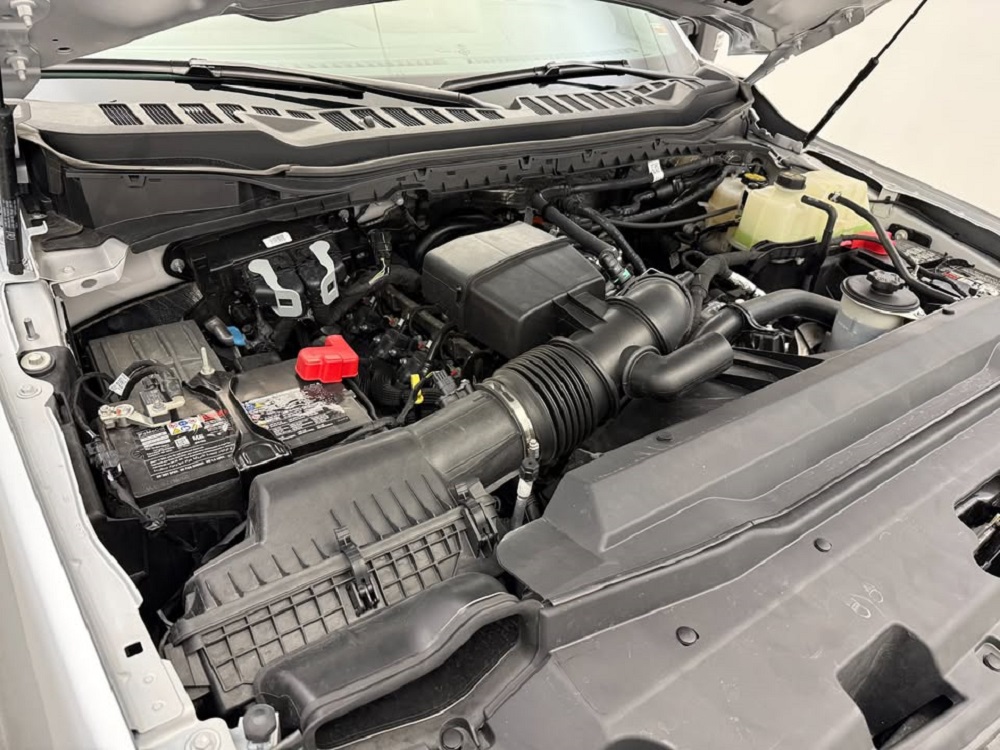
1. Godzilla keeps it simple, Power Stroke packs the heavy pull
Ford’s big gas V8 leaves wrench room
The 7.3L Godzilla is old-school in the good way. It uses a pushrod layout, port fuel injection, an iron block, and 2 valves per cylinder. In the current Super Duty pickup, Ford rates it at 430 hp and 485 lb-ft.
That simple layout matters once the truck gets old. No turbo sits in the valley. No high-pressure diesel fuel system waits for bad fuel. No DEF tank or DPF turns short trips into a warning-light problem.
The block is built for work, not brochure flash. It uses a deep-skirt casting with 4-bolt main caps and lateral cross bolts. The crank is forged steel, and piston oil jets cool the crowns when the truck stays loaded.
The 7.3 still has real hardware inside it. Bore and stroke measure 4.22 by 3.98 inches, with a 10.5:1 compression ratio. That lets it run on 87-octane gas, but the 485 lb-ft peak lands at 4,000 rpm.
Diesel torque comes from pressure and boost
The 6.7L Power Stroke plays a harder game. The High Output version makes up to 500 hp and 1,200 lb-ft. Peak torque lands at 1,600 rpm, before the gas engine has even started working hard.
Ford builds the diesel block from compacted graphite iron. That matters because diesel cylinder pressure beats harder than a spark-ignition gas burn. The heads use 4 valves per cylinder and 6 head bolts per hole to clamp the fire down.
The reverse-flow layout puts the exhaust side in the valley. That lets the turbo sit close to the exhaust stream, so boost builds fast under load. The 2023-up High Output diesel adds a water-cooled turbo and upgraded fuel hardware.
That strength brings expensive parts. Glow plugs, dual 12-volt batteries, high-pressure injection, turbo hardware, and aftertreatment all stack into the engine bay. One contaminated diesel fuel event can turn torque into a four-figure shop ticket fast.
Specs explain the road feel
| Core point | 7.3L Godzilla gas V8 | 6.7L Power Stroke diesel V8 | Why it matters |
|---|---|---|---|
| Peak output | 430 hp, 485 lb-ft | Up to 500 hp, 1,200 lb-ft | Diesel owns the heavy pull |
| Torque peak | 4,000 rpm | 1,600 rpm | Diesel moves weight sooner |
| Aspiration | Naturally aspirated | Variable-geometry turbocharged | Diesel holds power better under load |
| Fuel system | Port fuel injection | High-pressure diesel injection | Gas is cheaper to service |
| Block material | Cast iron | Compacted graphite iron | Diesel block handles higher cylinder pressure |
| Valvetrain | OHV, 2 valves per cylinder | OHV, 4 valves per cylinder | Diesel breathes harder under boost |
| Oil capacity | 8.0 qt, 5W-30 | 13.1 qt to 15 qt, depending on model year | Diesel oil service costs more |
| Best natural job | Payload, local towing, short trips | Heavy towing, long grades, high miles | Duty cycle decides the engine |
2. The 10-speed works both engines, but not the same way
Godzilla has to spin when weight stacks up
The 10R140 gives the 7.3L Godzilla plenty of gears to work with. It needs them. The gas V8 makes 485 lb-ft at 4,000 rpm and 430 hp at 5,500 rpm, so heavy trailer pull lives higher in the tach than diesel owners expect.
On a grade, the truck downshifts and lets the 7.3 breathe. You hear more rpm, more fan, and more gear change. That doesn’t mean the engine is failing. It means the 10-speed is keeping the gas V8 near its power band.
The wrong driver reads that as strain. The right driver watches coolant temp, transmission temp, and speed loss. A loaded 7.3 that keeps downshifting on long climbs needs rpm, not a taller gear.
Power Stroke holds gears with low-rpm shove
The 6.7L Power Stroke does its work lower. Standard and High Output versions make 1,050 to 1,200 lb-ft at 1,600 rpm, so the 10R140 doesn’t need to chase gears as often. Boost comes in early, and the truck can stay calm with a heavy trailer behind it.
That changes the cabin feel. You hear less engine speed and feel fewer shift events when wind, grade, and trailer weight pile on. The boost gauge moves more than the tach.
This is where diesel torque earns real money. Less gear hunting means less heat cycling through the transmission on long pulls. The 10R140 still works hard, but it isn’t forced to keep the engine near 4,000 rpm.
Axle ratio can wake up or choke the gas truck
Axle ratio matters more on the 7.3. Ford often pairs towing-focused Godzilla trucks with a 4.30:1 axle ratio, which helps the gas V8 reach its power band sooner. That shorter gear also gives the truck more bite when starting a heavy load from a stop.
A taller gas axle can make the same engine feel lazy. The engine has the power, but the gearing may keep it below the useful rpm range too long. Then the 10-speed has to fix the mismatch with deeper downshifts.
The 6.7 can live with taller 3.31:1 or 3.55:1 gearing because torque arrives early. That keeps cruise rpm lower in many SRW setups. Put a tall axle behind the 7.3 with a heavy trailer, and the transmission does the covering up.
3. Payload is where Godzilla can beat the diesel
Diesel weight spends payload first
The 6.7L Power Stroke brings more than torque. It brings a CGI block, turbo, intercooler, aftertreatment, larger cooling hardware, and heavier support parts. That diesel package can add roughly 800 to 1,000 lbs over the 7.3L Godzilla.
GVWR doesn’t grow just because the engine gets heavier. On an F-250 with a 10,000-lb GVWR, diesel weight comes off the same payload number that carries people, hitch weight, tools, and tongue load. That’s why a diesel badge can cost you usable bed capacity before the tailgate drops.
This shows up fastest on single-rear-wheel trucks. A loaded family, fifth-wheel hitch, generator, and bed box can eat the sticker fast. The door-jamb payload label beats any engine argument.
Bed weight favors the gas truck
The 7.3L Godzilla makes more sense when weight sits in the bed. Slide-in campers, service bodies, welding rigs, transfer tanks, and tool drawers all hit payload before they ask for 1,200 lb-ft. In that job, lighter engine weight can matter more than diesel pull.
A gas F-250 may also fit local work better. Short trips, long idle time, and stop-start routes don’t help a diesel DPF stay clean. The 7.3 avoids DEF, SCR, EGR cooler, and DPF hardware, so fewer emissions parts can derate the truck on a Monday morning.
Pin weight can still bury either truck. A fifth-wheel can put 15% to 25% of trailer weight on the bed. At 14,000 lbs, that can mean 2,100 to 3,500 lbs before passengers or tools.
Payload math beats engine pride
| Super Duty job | 7.3 Godzilla edge | 6.7 Power Stroke edge | Check before buying |
|---|---|---|---|
| F-250 payload | Lower engine weight helps usable payload | Diesel hardware spends payload early | Door-jamb payload sticker |
| Conventional towing | Strong for moderate heavy trailers | Higher tow ceiling | Cab, axle, drivetrain, GVWR |
| Gooseneck and fifth-wheel | Works for many RV setups | Better for heavy commercial loads | Pin weight, GCWR, payload |
| F-450 maximum towing | Not the main player | Diesel-only max-tow territory | Ford tow guide and package codes |
| Slide-in camper | Often the cleaner fit | Payload can get tight | Wet camper weight plus passengers |
4. Mountain towing gives Power Stroke its cleanest win
Thin air makes Godzilla work harder
The 7.3L Godzilla breathes whatever air the mountain gives it. At sea level, that means 430 hp and 485 lb-ft. At elevation, thinner air cuts oxygen, and a naturally aspirated gas engine loses about 3% power per 1,000 feet.
That loss gets ugly above 8,000 feet. A gas truck can feel strong in town, then start hunting gears on a long western grade. The 10R140 downshifts, rpm climbs, fan noise rises, and speed starts falling off.
A 7.3 can still tow in the mountains. It just does the work higher in the rev range. On a high pass, the missing air shows up as heat, throttle angle, and more downshifts.
Boost keeps the diesel pulling at elevation
The 6.7L Power Stroke fights thin air with a variable-geometry turbo. The turbo can change vane position to build boost sooner and keep airflow moving under load. That helps the diesel hold power where the 7.3 starts giving it away.
This is why the diesel feels calmer on long grades. Peak torque lands at 1,600 rpm, and the truck doesn’t need 4,000 rpm to stay alive. The tach stays lower while boost and exhaust heat do the heavy work.
The difference grows with trailer weight. A 10,000-lb trailer may not expose much on flat ground. Put 14,000 lbs behind the truck on a 7% grade, and the diesel starts walking away.
Downhill control saves brakes, heat, and nerves
Climbing shows power. Descending shows control. The 6.7L Power Stroke uses an integrated exhaust brake through the turbo, and the driver can call it up from the dash.
That exhaust brake creates backpressure and slows the engine. Tow/haul mode then works with the 10-speed to hold speed on long descents. With a heavy fifth-wheel, that means fewer brake stabs and less heat in the rotors.
The 7.3 relies on downshifts and gas-engine compression braking. It helps, and the 10R140 can get aggressive in tow/haul. It still can’t match a diesel exhaust brake once trailer weight climbs past 15,000 lbs.
5. Fuel range favors diesel, but payback takes work
Power Stroke stretches the tank under load
The 6.7L Power Stroke burns less fuel when the truck works. Reported highway numbers often sit around 17 to 20 mpg unloaded. With 10,000 lbs or more behind it, the diesel often lands around 11 to 14 mpg.
The 7.3L Godzilla drinks harder. Unloaded highway use often falls around 13 to 16 mpg, then drops near 8 to 10 mpg with a heavy trailer. A gas V8 towing into wind can empty a tank fast.
Range matters more than the mpg brag. A long-bed Super Duty with a 48-gallon tank can push a diesel near 900 unloaded miles at 19 mpg. A 7.3 truck at 14 mpg lands closer to 670 miles before the pump.
Cheap gas doesn’t erase diesel buy-in
The 6.7L Power Stroke costs much more up front. Typical diesel-option math runs about $10,000 to $13,000 over the 7.3L Godzilla. That gap buys torque, range, exhaust braking, and stronger resale potential.
Fuel savings alone don’t close it for many owners. At 15,000 miles per year, diesel fuel savings can land around $200 to $600 per year. At that pace, fuel math can take decades to cover the option price.
Diesel service also eats into the spread. Many 2011–2022 6.7L trucks take 13.1 quarts of oil, while 2023-up Super Duty diesels list 15 quarts. The 7.3 holds 8.0 quarts of 5W-30 and skips DEF, DPF, SCR, and diesel fuel filters.
Long trailers make fuel stops part of the job
A diesel Super Duty can use truck lanes at many travel centers. That matters with a fifth-wheel hanging off the hitch. Wide lanes, straight pull-through pumps, and high-flow diesel cut the parking-lot wrestling.
A gas Super Duty often has to fit into car islands. Add a long RV, tight curbs, parked crossovers, and a bad pump angle. The fuel stop can turn into a 3-point mess before the nozzle clicks.
This doesn’t make diesel cheaper. It makes diesel easier to live with on long routes. Put a 35-foot fifth-wheel behind a gas truck, and the next fuel island may decide where you stop.
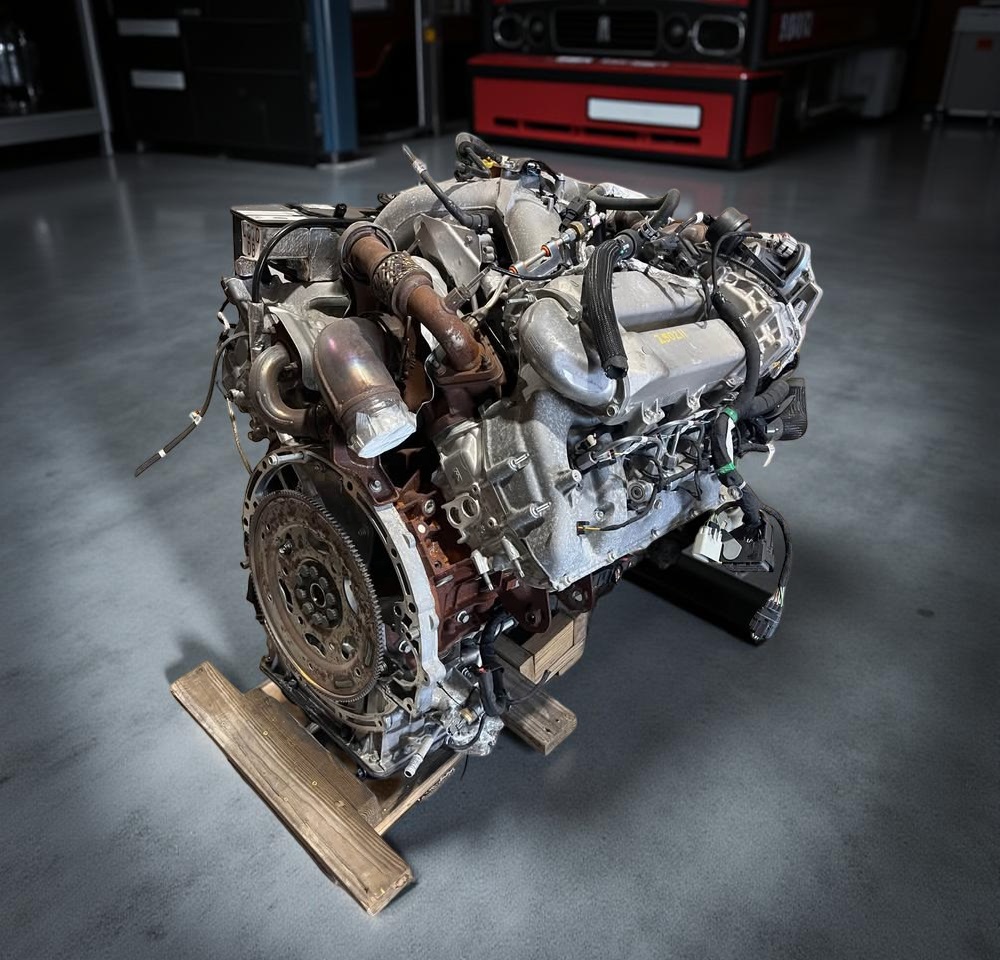
6. Maintenance cost and repair risk split these engines hard
Godzilla cuts parts count, not all risk
The 7.3L Godzilla keeps service simple. It holds 8.0 quarts of 5W-30, uses port fuel injection, and runs 8 coils with spark plugs due around 100,000 miles. No DEF tank, DPF, SCR, EGR cooler, or diesel fuel filters sit in the maintenance path.
That lower parts count matters for owners who keep trucks past warranty. A gas pushrod V8 gives shops familiar access to ignition coils, plugs, belts, and front-drive parts. The engine bay has fewer heat-soaked diesel parts packed around the turbo and aftertreatment.
Godzilla still has failure points. Owner reports have flagged lifter and camshaft wear on some trucks. A top-end repair on a pushrod gas V8 hurts, but it usually doesn’t hit like a contaminated diesel fuel system.
Power Stroke service stays routine until one part turns ugly
The 6.7L Power Stroke needs more care from day 1. Many 2011–2022 trucks take 13.1 quarts of oil, while 2023-up Super Duty diesels use 15 quarts. Fuel-filter service also comes faster, often around 15,000 to 22,500 miles.
DEF adds another service habit. Refills can land around every 5,000 to 7,500 miles, depending on load, idle time, and route. The truck also carries a DPF, SCR, EGR cooler, turbo hardware, glow plugs, and more sensors.
The CP4 high-pressure fuel pump is the scary bill. Fuel contamination can send metal through the injection system. Reported repair costs can run $8,000 to $10,000 when the pump sheds debris.
Short trips punish diesel emissions hardware
A diesel wants heat, load, and road time. The DPF needs enough exhaust temperature to burn soot during regeneration. Short commutes, idle-heavy jobs, and cold low-speed routes keep that system dirty.
When soot loads up, the truck starts asking for a proper drive cycle. Ignore it long enough, and regeneration problems can lead to derate or limp mode. Repair can mean sensors, cleaning, forced regen work, or DPF replacement.
The 7.3 fits ugly local use better. It still wastes fuel while idling, but it doesn’t need a DPF regen to stay happy. Use a 6.7 for 10-minute trips and idle time, and the aftertreatment system becomes the weak link.
7. Resale helps the diesel, but it can’t fix a bad match
Diesel torque keeps used prices strong
The 6.7L Power Stroke carries real used-market pull. Heavy-duty buyers still pay for torque, range, exhaust braking, and higher tow ratings. A clean diesel Super Duty can retain roughly $10,000 to $20,000 more than a comparable gas truck after several years, depending on trim, mileage, region, fuel prices, and service history.
That resale can recover much of the diesel option price. The 6.7 often costs $10,000 to $13,000 more up front, so the spread matters. It matters most when the truck sells before major diesel repairs land.
Mileage changes the risk fast. A 6.7 with clean fuel-filter records, no aftertreatment trouble, and no derate history holds better money. CP4 debris, DPF faults, or missing DEF records can shrink the diesel premium in one repair order.
Godzilla works for long keepers
The 7.3L Godzilla looks better when resale matters less. If you keep the truck 12 to 15 years, the diesel’s stronger 5-year value may not save much. Age, rust, interior wear, and repair history start dragging both trucks down.
Low-mile owners feel this most. A driver running 8,000 miles a year may never earn back a $10,000-plus diesel option through fuel savings. The gas truck also avoids diesel fuel filters, DEF refills, DPF repairs, and high-pressure injection risk.
The 7.3 still needs records. Oil changes, coolant service, spark plugs, and any lifter or cam noise matter on a used truck. No clean cold start, no service trail, no easy deal.
Duty cycle beats mpg math
Fuel math alone can lie. At 15,000 miles per year, diesel fuel savings may land around $200 to $600 per year. That doesn’t move fast against a $10,000 to $13,000 diesel buy-in.
The diesel starts making sense when more pieces line up. Heavy trailer miles, mountain routes, business use, resale timing, and exhaust-brake use all help the 6.7 case. A homeowner towing 8,000 lbs a few weekends a year won’t use enough diesel strength.
The gas truck wins when use stays local and moderate. Short trips, bed weight, long use, and lower repair exposure favor the 7.3. Buy the 6.7 for light weekend towing, and one $8,000 fuel-system failure can erase years of mpg savings.
8. Commercial buyers should care about uptime, PTO, and idle life
Godzilla fits fleets that hate diesel downtime
The 7.3L Godzilla makes sense in trucks that start, idle, stop, and repeat all day. Municipal crews, landscapers, delivery bodies, and utility trucks often rack up hours faster than miles. That use can punish a diesel DPF before the odometer looks scary.
Ford also uses the 7.3 in E-Series and chassis-cab work. In E-Series use, Ford commonly lists the Premium tune at 350 hp and 468 lb-ft, with the Economy tune at 300 hp and 425 lb-ft. Super Duty chassis-cab ratings can vary by year and configuration, so the VIN and order guide matter.
That detuned option tells you what Ford built it for. Long idle time. Route work. Bodies that weigh more than the trailer. A gas service truck that starts every morning beats a diesel sitting in derate with a soot-loaded DPF.
Power Stroke earns its keep with hydraulic work
The 6.7L Power Stroke fits heavier production work. Dump bodies, cranes, augers, and compressors need steady torque, not just peak horsepower. PTO output matters when the truck runs equipment while parked or loaded.
The diesel brings the stronger PTO number. Ford commercial data puts diesel PTO torque at up to 300 lb-ft, while the gas engine sits at 250 lb-ft. That gap matters when a hydraulic pump works against weight all day.
A diesel also makes sense when the truck tows heavy and runs high annual miles. The engine likes heat, load, and road time. Give it short trips, cold idle, and light work, and the emissions hardware takes the abuse.
Chassis choice beats engine pride
An F-250 gas service truck and an F-450 diesel hauler do different jobs. The badge doesn’t settle the build. GVWR, GCWR, axle ratio, rear tires, cab length, and body weight set the real limit.
Single-rear-wheel trucks can run out of payload before they run out of engine. A service body, welder, transfer tank, compressor, and crew can eat the sticker fast. A diesel adds engine weight before the first drawer gets loaded.
Chassis-cab and dually trucks change the math. Heavy pin weight, PTO load, and long grades can justify the 6.7. Build the wrong chassis around the right engine, and the door sticker still says no.
9. Which Super Duty engine fits which owner
Godzilla fits owners who hate needless complexity
Pick the 7.3L Godzilla if the truck lives close to home. Local towing, bed weight, short trips, jobsite idle time, and low annual miles all favor the gas V8. It makes 430 hp and 485 lb-ft without DEF, DPF, SCR, turbo plumbing, or diesel fuel filters.
This is the better fit for many private Super Duty buyers. A boat, equipment trailer, dump run, flatbed, or moderate RV doesn’t always justify diesel cost. The 7.3 works hardest when the trailer stays under about 14,000 lbs and payload still pencils out.
Long use pushes the gas case even harder. A 12- to 15-year keeper may never recover the diesel option through fuel savings or resale. Lifter and cam wear reports still matter, so listen cold and check oil records before buying.
Power Stroke fits owners who use diesel muscle every week
Pick the 6.7L Power Stroke when the truck pulls heavy often. Fifth-wheels over 15,000 lbs, mountain grades, hot-shot miles, and commercial hauling all lean diesel. The High Output version makes up to 500 hp and 1,200 lb-ft at 1,600 rpm.
That low-rpm torque changes the whole tow feel. The truck holds gears better, runs calmer on grades, and uses its exhaust brake on long descents. A gas engine can pull hard, but it can’t fake diesel backpressure downhill.
The diesel only earns its cost when the work is real. Budget for 13.1 quarts of oil, diesel fuel filters, DEF, aftertreatment sensors, and high-pressure fuel-system risk. One CP4 fuel-system failure can run $8,000 to $10,000.
Match the engine to the job
| Owner or use case | Better pick | Why |
|---|---|---|
| Daily Super Duty with light towing | 7.3 Godzilla | Lower cost, simpler service, fewer diesel parts |
| Slide-in camper or heavy bed load | 7.3 Godzilla | Better payload logic in many SRW setups |
| Local contractor with short trips | 7.3 Godzilla | Avoids DPF and DEF headaches |
| RV trailer under about 14,000 lbs | 7.3 Godzilla, if payload works | Enough pull without diesel buy-in |
| Fifth-wheel over 15,000 lbs | 6.7 Power Stroke | Torque, range, and exhaust braking matter |
| Mountain towing | 6.7 Power Stroke | Turbo boost and exhaust brake win |
| Hot-shot or high-mile hauling | 6.7 Power Stroke | Fuel range and resale help the math |
| F-450 maximum tow buyer | 6.7 Power Stroke | Diesel owns the top tow ratings |
| Long-term low-mile owner | 7.3 Godzilla | Simpler repairs can beat resale math |
| Commercial hydraulic/PTO work | 6.7 Power Stroke | Higher PTO torque suits heavy equipment |
Sources & References
- What’s The Difference Between Ford’s 6.8 And 7.3 Godzilla V8 Engines? – Jalopnik
- Ford Superduty 7.3L V8 “Godzilla” Gas Engine Specs & Information – Truck Insiders
- What Are The Differences Between Ford’s Super Duty 7.3 Godzilla And 6.7 Power Stroke?
- Ford 7.3L “Godzilla” Engine Specs – Help Center – Summit Racing
- Ford Super Duty Godzilla vs. Ford Super Duty Power Stroke: Which Engine Is Best for You?
- 7.3L vs. 6.7L: Which Power Stroke Is Really Better? | DrivingLine
- How Does the Engine-Exhaust Brake Work? – Sherwood Ford
- Engine Specifications – 7.3L
- Video: Gas vs Diesel MPG Battle – These Two 2024 Ford F-250s Are …
- 6.7 powerstroke. Silly question do I need to plug it in or will the anti gel fluid allow for just cold start? – Reddit
- Standard vs. High-Output Ford Diesel Engine Comparison
- Ford Super Duty: Complete Service and Maintenance Guide
- 7.3l godzilla vs 6.7 powerstroke for ~14,000 GVWR travel trailer : r/GoRVing – Reddit
- Ford 7.3 gas vs 6.7 Turbo Diesel – Reddit
- 2020 Ford F-250 Godzilla 7.3L V8 Gets Maxed Out on the World’s Toughest Test! Here Is How It Did! (Video) – The Fast Lane Truck
- Tow Vehicle: Diesel or Gas Engine? – PopUpBackpacker
- 2025 Ford Super Duty Pickup Towing Information
- 7.3L Godzilla Gas V8 vs 6.7L PowerStroke Diesel V8 | Ford Super Duty Pickup Engines
- We’ve owned both- 7.3 Godzilla vs 6.7 PowerStroke- Super Duty Regrets? – Mini maxx tuner
- Ford F-350 Towing And Payload Explained (With Charts!)
- F250 7.3 vs 6.7 cost to own – Reddit
- 7.3 gas vs 6.7 diesel : r/superduty – Reddit
- Everything You Need to Know About Diesel Exhaust Brakes – Mechanic Matt Goes In-Depth
- Engine brake vs exhaust brake : r/Diesel – Reddit
- Does the 7.3L gasser have an engine brake? : r/FordTrucks – Reddit
- 7.3L Godzilla vs 6.7 power stroke : r/F250 – Reddit
- 2026 Ford Super Duty Towing Capability: F-250, F-350, F-450 | Up to 40000 lbs Gooseneck
- Should Your F-250 Be Powered by Gas or Diesel? – DePaula Ford
- 2026 Ford Super Duty® Engines & Towing | Imlay City Ford
- What Are the Differences Between the F-250, F-350, and F-450? – Reineke Ford of Findlay
- Thoughts On Ford’s 7.3 liter “Godzilla”? : r/GoRVing – Reddit
- Diesel vs Gas more Data : r/F250 – Reddit
- How many miles is too many miles for a used 7.3L Gasser? : r/F250 – Reddit
- 2024 Ford F-350 Super Duty Maintenance Schedule – Parks Area Ford Dealer – Winslow Ford
- Recommended service and maintenance schedule for Ford Super Duty F-250
- M-12029-SD73 Fits 7.3L Engine Family Ignition Coils and Wire Set – Ford Performance
- Ford Diesel Maintenance Guide: 6.7L Powerstroke Critical Tasks
- 2025 Ford F-350 XL Maintenance Guide | Performance Ford Truck Country
- Ford 7.3 Gas vs. 6.7 Diesel: Everything You Need to Know – Bostech Auto
- The Real Cost of Owning a Diesel vs Gas Truck in 2025
- Top Power Stroke Diesel Engines: A Breakdown by Generation – Hot Shot’s Secret
- 6.7L Powerstroke – Most Common Issues Guide – Sinister Diesel