
Pull into traffic. Press the pedal. Then feel 2 trucks with the same 400 hp act nothing alike. Ford made this matchup look simple. The 3.5 EcoBoost and 5.0 Coyote both show 400 hp on paper. That hides the part that matters. The 3.5 makes 500 lb-ft. The 5.0 makes 410.
That gap changes the whole truck. The EcoBoost hits hard early. The Coyote pulls in a smoother climb and likes more rpm. Same headline number, very different feel.
This guide sorts where each one wins, where each one costs more, and which one fits your work, fuel budget, and repair risk.
1. Same 400 hp, very different muscle
Same horsepower hides where the work really happens
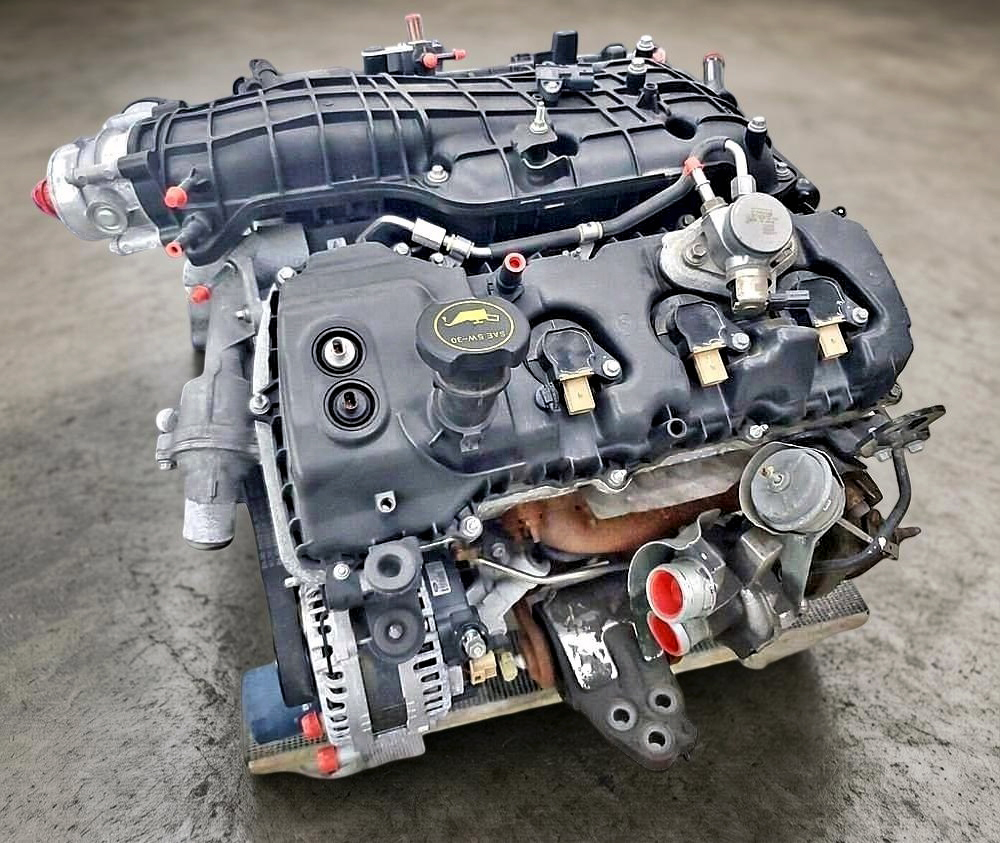
Ford gives both engines the same 400-hp headline in the F-150. That number lands high in the rev range. The part that changes truck behavior sits lower, in torque output and where that torque shows up. The 3.5 EcoBoost makes 500 lb-ft, while the 5.0 Coyote makes 410 lb-ft.
That 90 lb-ft gap is only half the story. The EcoBoost reaches its massive 500 lb-ft of peak torque at 3,100 rpm, providing a stout hit of power early in the rev range.
The 5.0 Coyote reaches its 410 lb-ft peak at 4,250 rpm, requiring more engine speed to feel fully awake. That later hit is why the V8 asks for more revs before it feels fully awake.
Under light throttle, the difference starts before the tach climbs. The EcoBoost builds a harder midrange surge once boost comes in. The Coyote answers with a smoother sweep and less of that shove-in-the-back feel.
Those two power shapes change passing, merging, grade climbing, and how often the 10-speed has to hunt for the right gear.
| Foundational comparison | 3.5 EcoBoost | 5.0 Coyote |
|---|---|---|
| Aspiration | Twin intercooled turbochargers | Naturally aspirated |
| Injection | Port and direct injection | Port and direct injection |
| Horsepower | 400 hp | 400 hp |
| Torque | 500 lb-ft | 410 lb-ft |
| Peak torque rpm | 3,100 RPM | 4,250 rpm |
| Basic feel | Early punch | Revvier pull |
The hardware split starts under the hood
The 3.5 EcoBoost is a twin-turbo V6 built to make a small engine act bigger under load. Ford pairs the 3.5 with twin intercooled turbos and port-plus-direct injection. The goal is simple, make strong torque without waiting for big displacement and high rpm.
The 5.0 Coyote takes the opposite path. It stays naturally aspirated and uses Ti-VCT, Ford’s twin independent variable cam timing, plus port and direct injection. It does not rely on boost pressure to make torque. It leans on breathing, valve timing, and rpm.
That matters because each engine loads parts in a different way. The EcoBoost puts more heat into the oil, exhaust side, charge air system, and turbo hardware.
The Coyote avoids turbo heat and plumbing, but it needs more engine speed to reach the fat part of its curve. Ford’s published torque numbers put that gap at 500 lb-ft versus 410 lb-ft, with the V8 still waiting until 4,250 rpm.
Injection no longer separates simple from complex
Older V8-versus-turbo arguments still hang around like shop gossip. They miss one big update. Both of these engines now use port and direct injection in F-150 form.
That dual-injection setup matters for more than power. It helps fuel atomization across different loads and cuts some of the intake-valve carbon trouble older direct-injected engines saw. The V8 no longer wins this comparison by default on fuel-system simplicity. The V6 does not lose it by default either.
The split now sits elsewhere, turbo hardware and low-rpm torque on one side, extra displacement and higher-rpm airflow on the other. Ford’s own spec pages confirm both engines share the modern injection layout, but they do not share the same power curve, torque timing, or load feel.
2. Once the truck moves, the gap gets obvious
In traffic, the EcoBoost feels stronger sooner
The 3.5 EcoBoost usually feels quicker in normal driving. It reaches its big torque earlier and hits harder in the middle of the tach. That shows up in merges, short passes, and rolling traffic where the truck needs shove right now, not 1,000 rpm later.
Dyno testing backs up that seat feel. Cars.com measured the EcoBoost with more than 400 lb-ft at the rear wheels under load. That helps explain why the truck often feels stout from 20 to 60 mph, even before the V8 has climbed into its better range.
The 5.0 Coyote answers with a smoother pedal and a cleaner rise in power. It does not hit with the same midrange punch. It pulls in a more linear sweep and keeps building as rpm climbs, which many drivers read as calmer and more predictable.
Under a trailer, torque timing matters more than brochure swagger
Ford still gives the 3.5 EcoBoost the higher ceiling in current F-150 form. Max towing reaches 13,500 lbs with the right cab, bed, axle, drivetrain, and tow package. The 5.0 Coyote stays close at 12,900 lbs, but the way it gets there feels different on the road.
With a trailer hooked up, the EcoBoost usually needs fewer dramatic downshifts on grades. The turbos add cylinder fill without waiting for the engine to spin as hard. The truck feels like it leans into the load earlier, which cuts some of the gear hunting and noise during hill pulls.
The Coyote can still tow hard, but it often has to rev and drop more gears to stay in the fat part of its curve. Owners describe it as needing to scream more under load. That tracks with Ford’s torque peak at 4,250 rpm, not the low-3,000 range where the EcoBoost makes its big hit.
Thin air hurts the V8 first
Altitude is one of the cleanest dividing lines in this whole matchup. A naturally aspirated engine loses power as air gets thinner. A common rule is about 3% per 1,000 feet of elevation, which adds up fast on mountain grades.
The 3.5 EcoBoost has a built-in answer for that. Its wastegate-controlled turbos can spin harder to hold manifold pressure closer to target. That does not make it immune to heat or load, but it does help the truck keep far more of its punch at elevation than the 5.0 Coyote can.
That changes towing in the real world. At 7,000 feet, a naturally aspirated engine can give away roughly 21% of its sea-level power. A V8 that felt fine near sea level can turn noisy and busy on a long climb at that height.
3. The fuel economy fight gets messy once load and boost show up
Empty-truck MPG and towing MPG tell two different stories
The 3.5 EcoBoost can look efficient when the truck is empty and the driver stays out of boost. EPA figures in the source set put it around 17 to 18 city and 24 to 25 highway. The 5.0 Coyote sits close, at 16 to 17 city and 24 to 25 highway. The gap on paper is small enough to disappear fast in real use.
Owner averages tighten it more. The EcoBoost commonly lands around 16 to 19 mpg. The Coyote often lands around 17 to 20 mpg. That flips the usual assumption that the turbo V6 always saves more fuel.
Towing blows the gap open. The EcoBoost often drops into the 8 to 11 mpg range with a trailer. The Coyote more often lands around 10 to 14 mpg in the same kind of work. A truck that looks thrifty on the commute can drink like a big-block once the trailer turns the air into a wall.
Boost makes power fast, then fuel goes with it
The EcoBoost wins torque by packing more air into the cylinders. Under heavy load, that takes more boost, more heat control, and more fuel. Once cylinder pressure and exhaust heat climb, the engine can move into enrichment to protect the turbos and catalysts.
That is where the “Eco” badge starts lying to people. Pull a grade, fight a headwind, or tow a tall camper, and the V6 can burn fuel fast. Some mechanics and owners report the 5.0 beating the 3.5 by as much as 20% under sustained load.
The V8 does not have to manage boost pressure or turbo heat. It still burns fuel when rpm climbs, but the swing is usually less violent. That steadier pattern is why some highway and moderate-load owners end up happier with the 5.0 pump bill than they expected.
Driving style changes the EcoBoost more than the Coyote
Throttle habits matter more in the turbo truck. A short stab of pedal can wake the turbos and pull the fuel number down fast. The same move in the 5.0 Coyote usually feels more linear and less dramatic at the pump.
That makes the EcoBoost more sensitive to driver behavior, trailer shape, and terrain. A low, light utility trailer is one thing. A tall travel trailer at interstate speed is another, because aero drag keeps the turbos working and the fuel flow high. The towing average in the source set bottoms at 8 mpg for the 3.5.
4. Reliability gets expensive in different places
The EcoBoost’s weak spot starts at the cam phasers
Cold-start rattle is the noise most owners know first. The issue centers on cam phasers and timing control hardware in the 3.5 EcoBoost, especially on earlier trucks before Ford’s later revisions.
Ford’s own program notices for the 3.5L GTDI phaser issue describe startup rattle after the truck sits, then tie coverage to software reflash and later phaser replacement programs.
That problem costs real money once the truck is out of help from Ford. The repair usually means opening the front of the engine and dealing with timing components, not swapping a simple bolt-on part.
Cost figures in the research set put cam phaser work around $3,500 to $4,500 on the EcoBoost, with turbo-related service adding another $2,500 to $3,500 when that hardware ages badly.
Oil quality matters more here than many owners want to admit. The 3.5 uses that oil to protect both the engine and the turbochargers. Stretch intervals too far, and sludge, heat, and phaser control problems get a better chance to add up.
The Coyote quit being the simple bet
The 5.0 Coyote still skips turbos, but newer F-150 versions carry their own baggage. The big one is the wet oil-pump belt used in the F-150 application, not the old dry-drive layout many V8 loyalists still picture. The source set places that service in the 10 to 18 hour range, with replacement cost commonly around $2,000 to $3,500.
That belt sits in oil and lives deep in the engine. If it degrades, belt material can contaminate the oil pickup and start a lubrication problem instead of a simple noise problem. That is why this service scares long-term owners, because it is buried labor with ugly failure potential.
Cylinder deactivation added another layer. AERA’s technical note for 2021–2024 Gen III 5.0L Coyote engines says the engine uses cylinder deactivation hardware and warns that rocker arms and lifters must stay in the correct cylinder locations during teardown.
That is not old-school pushrod-V8 simplicity, and it is not a backyard shrug-off repair.
| Long-term risk area | 3.5 EcoBoost | 5.0 Coyote |
|---|---|---|
| Signature trouble spot | Cam phasers, timing complexity, turbo heat | Wet oil-pump belt, cylinder deactivation hardware |
| 2021-up change that matters | Later phaser revisions improved the known rattle pattern | Wet-belt and deactivation-era risk applies to newer F-150s |
| Typical big repair range | $3,500 to $4,500 for cam phasers | $2,000 to $3,500 for wet-belt service |
| Extra exposure | Turbo service can add $2,500 to $3,500 | No turbocharger service bill |
The shared 10R80 muddies the blame
Both engines sit in front of Ford’s 10R80 10-speed automatic. That matters because some complaints that feel like engine trouble start in the transmission. The research set flags the known CDF clutch drum issue and notes that later Ford revisions aimed to address it.
The engine still changes how the gearbox feels. The EcoBoost hits with more torque earlier, which can make bad calibration or weak internal parts feel harsher. The Coyote’s smoother power rise can mask some of that shock, but it does not make the 10R80 immune to clutch-drum or shift-quality trouble.
A truck with flare shifts, gear hunting, or harsh engagement can send an owner chasing the wrong issue. On these F-150s, the engine and transmission have to be read together, because both still feed the same 10-speed case.
5. Cost shows up in service rhythm and repair bills
Both engines punish long oil intervals
Ford’s long drain logic looks fine on a brochure. It looks worse at 120,000 miles. Both engines want shorter oil service if the goal is 200,000 miles with fewer surprises.
The 3.5 EcoBoost uses oil in a harsher job. That oil cools and lubricates the engine and the turbochargers. Leave it in too long, and heat, shear, and deposits start working against phasers, chains, and turbo bearings.
The 5.0 Coyote is not a free pass. Clean oil matters for the valvetrain, variable cam timing, and the wet oil-pump belt used in newer F-150 versions. Skip oil quality here, and you are risking a buried belt that can turn into a front-end engine job.
The research set points to 5,000-mile synthetic oil intervals as the safer rhythm for long life on both engines. That is much shorter than the casual 10,000-mile mindset many owners still follow. The gap between those two habits can be one cold-start rattle or one belt-service bill.
The big bills hit in different places
The EcoBoost’s expensive years usually come from timing and boost hardware. Cam phaser repair commonly lands around $3,500 to $4,500. Turbocharger service can add another $2,500 to $3,500 when seals, bearings, or related parts give up.
The Coyote’s ugly bill is shaped differently. Wet-belt and oil-pump service often lands around $2,000 to $3,500. The labor is the part that stings, not a fancy turbo assembly.
Both engines can still rack up carbon-related service, though dual injection helps more than older direct-only layouts did. The source set places valve carbon cleaning around $600 to $900 when it becomes necessary. That is not the headline failure, but it is still money out of pocket.
| Post-warranty pain point | 3.5 EcoBoost | 5.0 Coyote |
|---|---|---|
| Cam phaser repair | $3,500 to $4,500 | $3,000 to $4,000 |
| Turbocharger service | $2,500 to $3,500 | Not applicable |
| Wet belt / oil pump service | Not applicable | $2,000 to $3,500 |
| Carbon cleaning | $600 to $900 | $600 to $900 |
Resale math still favors the V8, but that gap can shrink
The 5.0 Coyote still carries the cleaner reputation in a lot of used-truck circles. That reputation matters at resale. The research set projects a possible $2,000 premium by 2030 for a 100,000-mile 5.0 truck over a similar 3.5 EcoBoost.
That premium is not locked in stone. Wet-belt concern on newer V8 trucks has started to chip at the old “simple V8” story. A buyer who knows about that belt may not pay the same premium a casual shopper would.
Service records swing this harder than badges do. A 3.5 with short oil intervals and no rattle can beat a neglected 5.0 on paper and in the driveway. A missed maintenance history can wipe out that $2,000 reputation edge fast.
6. The mod path splits into easy torque or big-noise theater
The EcoBoost gives up power fast
The 3.5 EcoBoost is the easier engine to wake up with software. A basic tune can add about 65 hp and 90 lb-ft in the research set. That is why so many owners call it the cheap-speed choice.
Those gains come from boost, timing, and fuel changes, not a special trick. The truck already has forced induction, so the tuner is leaning harder on hardware Ford put there from day one. That makes the first jump easier than it is on the 5.0 Coyote, but it also raises heat load and cylinder pressure.
Bolt-ons follow the same pattern. Charge pipes, intakes, and intercoolers matter more on the EcoBoost because boost heat can add up fast. Once the stock intercooler heat-soaks, power falls off, especially in summer towing or repeat pulls.
The Coyote sells sound first, then goes big with boost
The 5.0 Coyote does not hand over big gains from simple bolt-ons the way the EcoBoost can. Intake and exhaust parts sharpen sound and response, but the power jump is usually smaller.
That is the compromise with a naturally aspirated engine that starts at 400 hp and needs airflow and rpm, not turbo pressure, to climb.
Sound is part of the reason people buy this engine in the first place. Cat-back systems from brands like Borla, Corsa, and Magnaflow are common because the V8 note is part of the pitch. The EcoBoost can get quicker cheap, but it cannot fake V8 sound.
The Coyote’s real aftermarket ceiling shows up once a supercharger goes on. Roush and Whipple-style kits can push these trucks into the 650 to 700-plus hp range. At that point, the build stops being a mild street tweak and starts turning into drivetrain math, tire grip, and transmission survival.
Cheap power and durable power are not the same job
The EcoBoost can feel like the better bargain early. Tune it, add supporting airflow parts, and the truck gets fast in a hurry. That path works well for owners who want strong midrange shove without tearing deep into the engine on day one.
The Coyote usually asks for more money before the build feels dramatic. Bolt-ons alone rarely deliver the same punch-per-dollar. The big jump comes with forced induction, and that means a much higher parts bill than a flash tune and intercooler.
Both paths can find the weak link fast. More boost on the EcoBoost raises charge heat and fuel demand. Big blower power on the Coyote pushes the truck toward 700 hp, where the engine is not the only part on the hook. The shared 10R80 still sits behind both.
7. Pick by job, budget, and what kind of trouble you can live with
Heavy towing still points at the EcoBoost
The 3.5 EcoBoost fits the driver who tows often and hates waiting on rpm. Its 500 lb-ft comes earlier, and that changes how the truck climbs, passes, and holds speed with a trailer. Ford still gives it the top towing number at 13,500 lbs in the right configuration, against 12,900 lbs for the 5.0 Coyote.
It also makes more sense in the mountains. Thin air knocks power out of a naturally aspirated engine fast, often around 3% per 1,000 feet. The turbo V6 can hold onto more of its output at elevation because boost control can make up part of that loss.
Choose the EcoBoost if the truck spends real time under load, at altitude, or pulling a tall trailer that acts like a sail. Choose it if early torque matters more than engine sound. Towing fuel economy can still drop into the 8 to 11 mpg range.
The Coyote fits the buyer who wants steadier manners
The 5.0 Coyote fits the driver who likes a cleaner pedal, a smoother climb in power, and less turbo hardware under the hood. It usually feels calmer in light-throttle driving and less jumpy at part throttle. That can make daily use feel more natural, even when it gives up midrange shove.
It also fits the buyer who values V8 sound and plans to keep the truck mostly empty or lightly loaded. Highway and moderate-load fuel use can be steadier than the EcoBoost’s, especially when the V6 would be dipping into boost more often.
Owner-reported towing averages in the research set put the 5.0 around 10 to 14 mpg, against 8 to 11 mpg for the 3.5.
Choose the Coyote if smoother delivery, sound, and steadier fuel swing matter more than low-rpm punch. Do not choose it because of the old “simple V8” story alone. Newer F-150 versions still carry wet-belt service exposure in the $2,000 to $3,500 range.
| Owner type | Better fit | Why |
|---|---|---|
| Heavy, frequent tower | 3.5 EcoBoost | Earlier torque and easier grade work |
| High-altitude driver | 3.5 EcoBoost | Boost helps hold power in thin air |
| Long-term traditional truck buyer | 5.0 Coyote | Smoother delivery and no turbochargers |
| Driver who values sound and highway feel | 5.0 Coyote | The V8 character is the reason to buy it |
| Budget-minded modifier | 3.5 EcoBoost | Tuning gains come cheaper and faster |
| Max-effort performance builder | 5.0 Coyote | Supercharged builds push 650 to 700-plus hp |
| Buyer worried about cam phasers | 5.0 Coyote | Skips the EcoBoost’s best-known repair story |
| Buyer worried about wet-belt service | 3.5 EcoBoost | Skips the Gen 4 Coyote’s buried oil-pump belt |
The wrong pick usually starts with the wrong fear
A lot of buyers pick between these engines by chasing one scary story. That can backfire. Fear cam phasers only, and you may walk into a wet-belt V8 bill. Fear wet belts only, and you may buy the turbo truck without accepting its heat, timing, and boost-related repair path.
The better filter is duty cycle. Frequent towing, mountain use, and easy tuning point at the 3.5 EcoBoost. Light-load use, V8 feel, and a calmer throttle point at the 5.0 Coyote. Both still share the 10R80, and both can turn expensive after 100,000 miles if maintenance gets lazy.
Sources & References
- V8 or Turbo? Ford’s 3.5 EcoBoost V6 vs 5.0 Coyote for Horsepower, Value & Aftermarket Potential – Driving Line
- Ford EcoBoost engine – Wikipedia
- Ford F-150’s 5.0L vs. 3.5L, and Why This 2026 Buyer Should …
- 3.5 Eco owner drives 5.0 : r/f150 – Reddit
- F150 5.0 : r/f150 – Reddit
- 5.0 Coyote Engine Problems And What To Look Out For – CarBuzz
- 2024 Ford F-150 Towing Capacity
- 2024 Ford F-150® Engine Options & Towing Capacity
- 2026 Ford F-150 Engine Comparison: Efficiency, Torque, Power – Germain Ford of Beavercreek
- How We Dyno Tested Ford’s 3.5-liter EcoBoost V-6 and 5.0-liter V-8 Engines | Cars.com
- 5.0 vs 3.5 (excluding 0-60 and butt dyno) : r/f150 – Reddit
- Op/Ed: Owner’s Perspective – Ford F-150 5.0L Coyote vs. EcoBoost – The Fast Lane Truck
- 3.5 Ecoboost vs. 5.0 V8. : r/f150 – Reddit
- 3.5 vs 5.0 is very noticeable : r/f150 – Reddit
- 2025 Ford F-150 Towing Capacity | Grappone Ford
- 2025 Ford F-150 Towing Capacity
- 2024 Ford F-150® Towing Guide
- How Much Can The 2025 Ford F-150 Tow?
- Ford F150 5L COYOTE V8 Engine Vs 3.5L ECOBOOST *Heavy Mechanic Review
- Is a 5.0 really worth 5 grand more than a 3.5 : r/f150 – Reddit
- 5.0 vs 3.5 : r/f150 – Reddit
- Current Gen 5.0 Reliability vs. 3.5 EcoBoost : r/f150 – Reddit
- 5.0 vs 3.5 pros and cons : r/f150 – Reddit
- 2021 3.5L or 5.0 : r/f150 – Reddit
- 2025/2024 Motors? : r/f150 – Reddit
- 2024+ 3.5L reliability : r/f150 – Reddit
- Ford 5.0L V8 vs EcoBoost: High mileage experience? | Rokslide Forum
- F150 Oil Pump Belt question – Reddit
- Will this cost Ford customers? 2021 Ford F-150 5.0L V-8 oil pump change
- Ford Wet Belt Replacement Cost: What Owners Should Expect in 2025 – Approved Engines
- Rubber Belt Meets Oil: Because Who Needs Durability in Engine Design? – Reddit
- 4th Gen Coyote Cylinder-Deactivation. What’s the verdict (If any)? : r/f150
- Cylinder Deactivation Caution on 2021-24 Ford GEN III 5.0L Coyote …
- Is the 5.0 still king? : r/f150 – Reddit
- Texas F-150 Buyer “Second Guessing” 2026 Ford Order Over $9,000 Transmission Failure Reports – Torque News
- Tuned 3.5 vs Tuned 5.0 : r/f150 – Reddit
- Top 2024 F150 Performance Upgrades for Power and Efficiency – Stage 3 Motorsports
- 2024-2026 F150 3.5L EcoBoost Performance Parts & Accessories – Stage 3 Motorsports
- Top 6 Modifications For 3.5L Ecoboost and 5.0L Coyote Engines in …
- The Ultimate Guide to the Best Ford F-150 Mods & Upgrades
- Curious to what everyone’s opinions are of the 3.5 vs the 5.0. I’ve always went with the 3.5 because of better all around specs but and thinking of going with the 5.0 purely for sound. What are more upsides of the 5.0? : r/f150 – Reddit
- Which f150 is best 3.5 or 5.0 in terms of reliability and longevity? – Reddit