
Roll into the first long grade and the truck tells on itself. The 6.4 HEMI is the cheaper, lighter Ram HD engine. It burns gas, skips DEF, and keeps diesel filters and DPF trouble out of the truck. The 6.7 Cummins costs more, but its HO tune brings 1,075 lb-ft at 1,800 rpm.
That torque changes the job. HEMI makes sense with tools in the bed, short trips, and medium trailers. Cummins makes sense with a fifth wheel, long grades, and heavy 3500 work.
Choose wrong, and you pay for it in lost payload, diesel service, fuel burn, or a truck that screams up every hill.
1. Where the truck first shows its hand
HEMI saves weight and skips diesel hardware
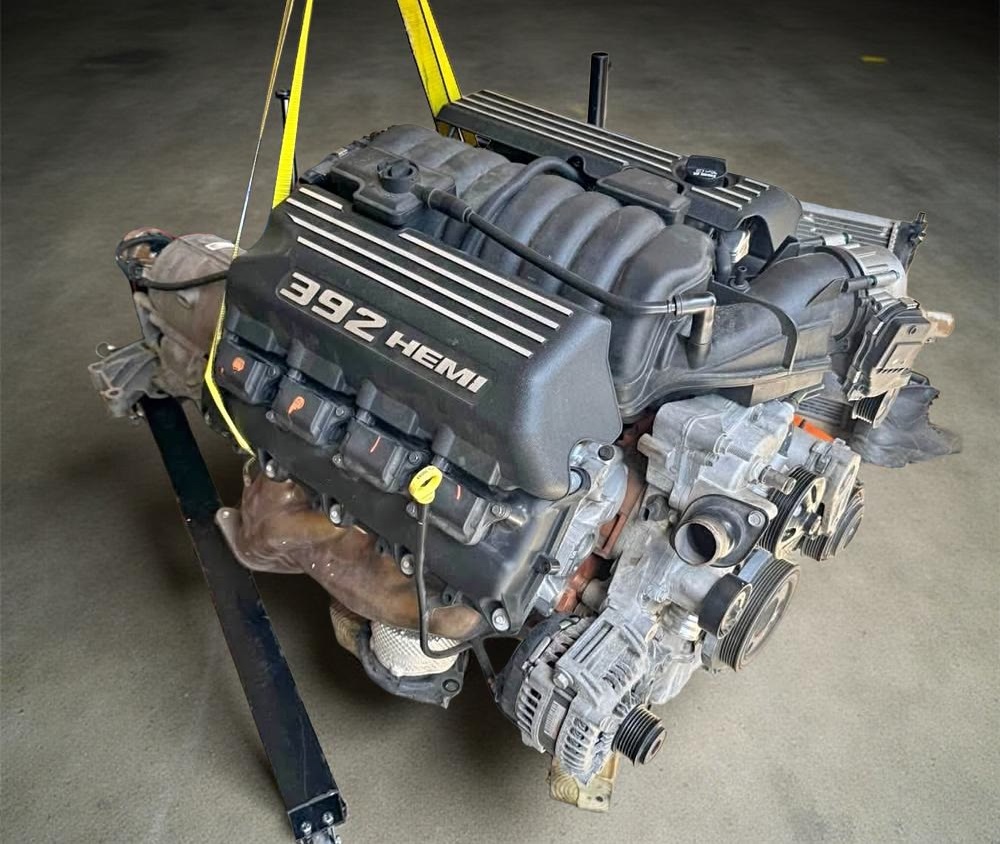
The 6.4 HEMI is Ram’s lower-cost gas V8 for HD work. Current Ram HD spec lists it at 405 hp and 429 lb-ft. Peak torque lands at 4,000 rpm, so the engine does its best work with some revs under it.
Its cleanest advantage sits under the hood. No DEF tank. No DPF. No SCR system. No diesel fuel filters. No variable-geometry turbo.
That matters in a Ram 2500. The Cummins, cooling parts, and emissions gear add real front-end weight. The HEMI leaves more of the truck’s GVWR for tools, passengers, hitch weight, salt spreaders, welders, and service bodies.
The cost side stays cleaner too. HEMI oil service takes 7 quarts of 0W-40. The Cummins takes 12 quarts of diesel oil, plus dual fuel filters at service intervals.
Cummins pulls where gas starts hunting
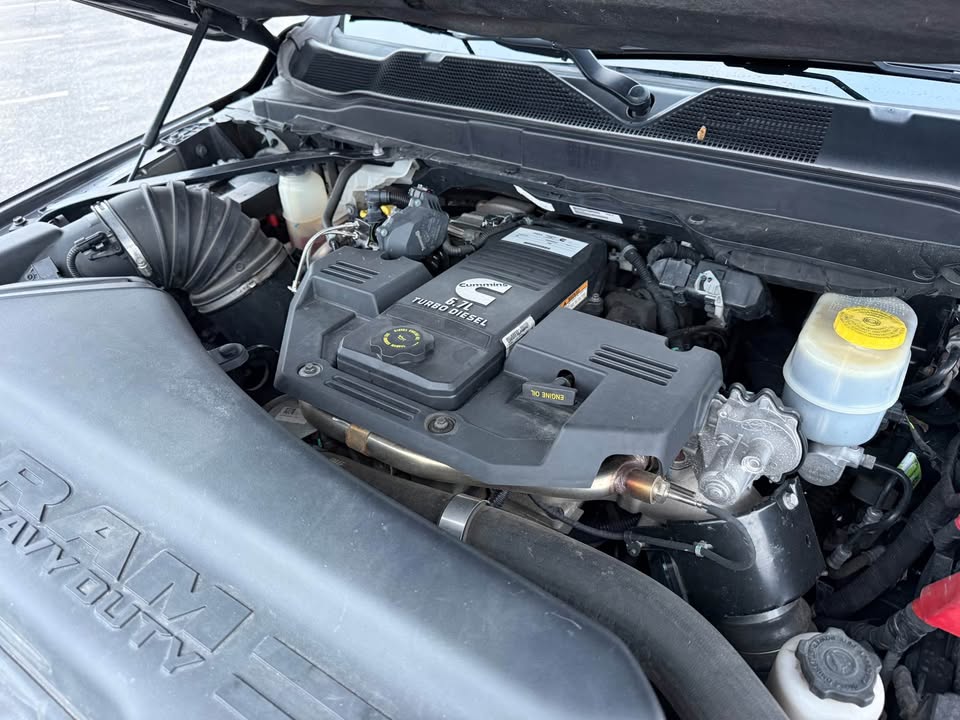
The 6.7 Cummins HO changes the truck’s feel at low rpm. Ram’s 2026 HD data lists 430 hp at 2,800 rpm and 1,075 lb-ft at 1,800 rpm. That’s the number that matters with a tall fifth wheel in the wind.
The HEMI can tow, but it has to climb into its power. On a grade, that means throttle, downshifts, heat, and more engine noise. The Cummins can pull harder before the tach climbs.
That low-rpm torque also helps the transmission hold a gear. Less hunting matters when the trailer stays heavy for 40 miles, not 40 seconds. A gas V8 can feel sharp empty, then busy once the hitch weight and grade pile on.
The Cummins earns that pull with extra hardware. High-pressure common rail injection, VGT control, EGR, DPF, SCR, DEF, and regeneration all add failure points. Short trips and long idle time can keep the exhaust too cool for clean DPF behavior.
Power numbers that explain the gap
| Powertrain point | 6.4L HEMI V8 | 6.7L Cummins HO | What it means |
|---|---|---|---|
| Horsepower | 405 hp at 5,600 rpm | 430 hp at 2,800 rpm | Gas makes power higher |
| Torque | 429 lb-ft at 4,000 rpm | 1,075 lb-ft at 1,800 rpm | Diesel owns low-rpm pull |
| Fuel type | Gasoline | Diesel plus DEF | HEMI keeps fill-ups simpler |
| Induction | Naturally aspirated | Variable-geometry turbo diesel | Cummins adds pull and parts |
| Best natural job | Payload, local work, lighter towing | Heavy towing, long grades, high miles | Use decides the engine |
2. Payload math starts before the truck moves
Cummins weight takes the first bite
Ram 2500 diesel shoppers can get pulled in by the torque number. The HO Cummins makes 1,075 lb-ft, so it feels like the safer pick on paper. Then GVWR shows up.
A Ram 2500 often lives under a 10,000-lb GVWR ceiling. The Cummins, emissions hardware, cooling package, and heavier front axle load use part of that rating before you add tools or people. Payload disappears while the truck is still parked.
That bite matters with fifth-wheel pin weight. A trailer can look fine by tow rating and still overload the truck by payload. Add 2 adults, a toolbox, a full tank, and hitch hardware, and the door-sticker payload can run out first.
HEMI works better when the bed earns the money
The 6.4 HEMI can make more sense when the load sits in the bed. Service bodies, salt spreaders, welders, fuel tanks, compressors, and landscaping gear all spend payload. A lighter gas engine leaves more room under the same GVWR.
This is where a Ram 2500 gas truck earns its keep. It may tow less at the top end, but it can carry more in many comparable builds. That matters for local work where the truck hauls gear every day and pulls a moderate trailer twice a week.
The HEMI also avoids diesel idle problems on job sites. Short trips and long idle time can keep a DPF too cool for clean regeneration. A gas truck still needs oil service, but it doesn’t need DEF, SCR, or diesel particulate filter heat management.
Cummins takes over when trailer weight runs the job
Trailer weight changes the math. Ram lists 20,000 lb of maximum available towing for the 2026 Ram 2500 with the HO diesel. Ram’s 2025 HD launch data also puts the 3500 Cummins HO at up to 36,610 lb of maximum towing.
Those numbers matter for fifth wheels, equipment trailers, hot-shot work, and long RV miles. The Cummins carries low-rpm torque into wind and grades where the HEMI needs downshifts. The diesel also brings exhaust braking, which becomes serious once a heavy trailer starts pushing downhill.
The issue sits on the door sticker, not the brochure. A diesel 2500 can tow hard and still lose the payload fight to pin weight. If the loaded truck crosses GVWR or rear-axle rating, the Cummins torque number doesn’t fix the scale ticket.
3. Towing feel shows up before the spec sheet wins
HEMI climbs with rpm, downshifts, and noise
The 6.4 HEMI can tow real weight. It just works like a big gas engine. Peak torque comes at 4,000 rpm, so grades push the tach higher when the trailer gets heavy.
That feels normal if you know gas trucks. The eight-speed drops gears, the engine gets louder, and throttle angle grows. Heat builds faster when the truck keeps pulling near the upper half of the rev range.
This does not mean the HEMI is weak. It means a 429 lb-ft gas V8 cannot pull like a 1,075 lb-ft diesel at 1,800 rpm. Long grades expose that gap before a short highway merge does.
Cummins stays calmer with weight on the hitch
The Cummins feels different because the torque arrives early. The HO diesel makes 1,075 lb-ft at 1,800 rpm, where the truck can pull without chasing rpm. That low-speed shove keeps the drivetrain quieter under steady load.
The advantage grows with trailer size. A tall fifth wheel hits wind like a wall, then holds that load for miles. The Cummins can stay in a taller gear while the HEMI keeps asking for another downshift.
Gear hunting wears on the driver first. Then it works the transmission, cooling stack, and fuel tank. If the trailer stays heavy all day, the diesel’s low-rpm pull starts saving heat and brake pedal.
Exhaust braking gives diesel the downhill edge
The Cummins also has a tool the HEMI lacks. Its variable-geometry turbo can close down and create exhaust backpressure. The record notes up to 150 retarding horsepower from diesel exhaust-brake hardware.
That matters on long descents. A 20,000-lb trailer can cook friction brakes if the driver rides the pedal mile after mile. Exhaust braking helps hold speed before the service brakes turn hot and soft.
The HEMI can use transmission grade braking. It can downshift and let engine drag help. It still lacks a dedicated diesel retarder, so the brake pedal carries more of the load on steep grades.
4. The 2025 transmission change rewrites the diesel feel
Older Cummins trucks still carry six-speed baggage
Older Cummins Ram HD trucks used 6-speed automatics. Standard-output trucks often ran the 68RFE. High-output 3500 trucks used the Aisin AS69RC.
The 68RFE gave smoother daily shifts, but diesel owners still treat it as the weak link under tuning. Add power, heat, and heavy throttle, and clutch life can vanish fast. A hard-used 68RFE can turn a cheap used diesel into a transmission bill.
The Aisin had the tougher work-truck name. It also shifted slower and felt heavier in normal traffic. That clunkier feel matters if the truck spends more time empty than loaded.
ZF PowerLine fixes the old diesel complaint
Ram changed the Cummins story for 2025. Stellantis moved the diesel to the TorqueFlite HD 8-speed, also known as the ZF PowerLine 8AP1075. Ram’s 2026 HD material lists the 8-speed as standard with both engines.
That matters because the old diesel trucks had a wider gear gap. The new 8-speed gives the Cummins tighter steps, quicker response, and better launch feel. It also lets the diesel use its 1,075 lb-ft without feeling as lazy off the line.
The PowerLine is a fly-by-wire unit with no mechanical shift cable. It talks through CAN data and uses electronic control to manage gear choice. A bad electrical fault or control problem now belongs in the scan-tool lane, not the cable-adjustment lane.
HEMI already had the better daily gearbox
The HEMI had the cleaner gearbox story before 2025. Its ZF-sourced 8-speed helped the gas V8 stay in its power band. That mattered because the 6.4L makes peak torque at 4,000 rpm.
The HEMI still needs rpm under load, but the 8-speed softens the work. Shorter gear steps reduce big rpm drops. In daily driving, that makes the gas truck feel sharper than older 6-speed diesels.
Used buyers need to sort model years before judging the Cummins. A 2019–2024 diesel still carries the old 68RFE or Aisin story. A 2025-up diesel brings the ZF 8-speed, and that changes the test drive fast.
5. Fuel savings only work when miles pile up
Cummins mpg looks better until the buy-in lands
The Cummins burns fuel more efficiently than the HEMI. Owner and dealer-side estimates put the 6.4 HEMI around 14–15 mpg mixed and 8–10 mpg while towing. The Cummins often runs closer to 16–17 mpg mixed, with 21–23 mpg possible on easier highway miles.
That sounds like an easy diesel win. Then the option price hits. The Cummins can add roughly $9,500 to nearly $13,000 before fuel, DEF, filters, or higher service bills enter the math.
At 15,000 miles per year, one cost estimate puts the HEMI at about $3,080 in annual fuel and the Cummins at about $2,585. That saves about $495 per year. A $10,000 diesel premium can take close to 20 years to earn back on fuel alone.
Diesel upkeep adds fluids, filters, and service points
The HEMI keeps the service lane simple. It takes 7 quarts of 0W-40 synthetic oil. A typical oil change lands around $60 to $90 in the cost record.
The Cummins takes 12 quarts of diesel oil. It also needs dual fuel filters around 15,000 miles to protect the high-pressure fuel pump. A diesel service can run past $120 to $200 when filters get added.
DEF adds another steady cost. The Cummins may use about 1 gallon of DEF for every 50 to 75 gallons of diesel burned. Run short on DEF, and the truck can warn, limit restart, or force a service stop.
The diesel also carries longer-mile service jobs. The CCV filter comes due around 60,000 miles. Valve lash inspection lands around 150,000 miles, a job the HEMI’s hydraulic lifters don’t need.
Cost points that decide the payback
| Cost factor | 6.4L HEMI | 6.7L Cummins | Why it matters |
|---|---|---|---|
| Upfront engine cost | Lower | About $9,500 to nearly $13,000 more | Diesel starts in a hole |
| Mixed fuel use | About 14–15 mpg | About 16–17 mpg | Cummins saves fuel with enough miles |
| Towing fuel use | About 8–10 mpg | Load-dependent, often better than gas | Heavy towing widens the gap |
| Oil service | 7 quarts of 0W-40 | 12 quarts of diesel oil | Cummins uses more oil |
| Fuel filters | No routine dual diesel filters | Dual filters around 15,000 miles | Bad diesel fuel gets expensive |
| DEF | None | Required | Adds fluid cost and warning logic |
| Best payback case | Low miles, local use | High miles, heavy towing | Mileage decides the math |
A commercial truck running 50,000 miles a year changes the answer fast. That kind of use can bring diesel payback into the 3- to 4-year range. A short-trip Ram 2500 that mostly hauls tools may never outrun the Cummins buy-in, fuel filters, DEF, and emissions service.
6. Reliability comes down to lifters, soot, and one ugly bolt
HEMI trouble starts in the valvetrain
The 6.4 HEMI’s common fear is lifter tick. The engine uses MDS lifters to shut down cylinders 1, 4, 6, and 7 under light load. Those lifters need clean oil, correct pressure, and the right 0W-40 fill.
Excess idle time can hurt the HEMI. Low hot idle pressure doesn’t feed the lifters as well as steady road speed. If a lifter roller starts to seize, it can chew the cam lobe.
That repair gets ugly fast. Cam and lifter work can run from about $2,500 to $9,000, depending on labor, parts, and how much metal moved through the engine. A loud tick after warm idle needs oil-pressure checks, not a louder radio.
Cummins problems build in heat, soot, and emissions hardware
The 6.7 Cummins carries a different risk stack. DOC, DPF, SCR, DEF, EGR flow, and VGT control all have to stay clean enough to work. Short trips and long idle time can keep exhaust heat too low for passive regeneration.
Then the ECM has to force an active regen. That late fuel injection burns soot in the DPF, but some fuel can wash past the rings. Diesel-thinned oil loses film strength, and bearings don’t forgive that for long.
The VGT can also bind when soot loads the sliding nozzle ring. Boost control gets lazy, then erratic. A stuck turbo can leave the truck flat on power or push overboost hard enough to threaten the head gasket.
Grid heater bolt failure can end a Cummins
The grid heater bolt deserves its own used-truck warning. The intake heater uses a powered bolt at the heating element. Corrosion, vibration, or age can loosen that hardware.
If the lower piece breaks free, gravity and intake airflow do the rest. The bolt can drop into the intake tract and enter a cylinder. Then the piston, valves, and cylinder head take the hit.
This is not normal diesel wear. Reported repair bills can pass $30,000 when the engine needs replacement after bolt ingestion. No grid-heater inspection history, no clean intake check, no safe Cummins bet.
7. Resale helps, but bad use still costs money
Diesel resale stays strong for one reason
Cummins trucks usually hold stronger money because used HD buyers want torque. They also want range, exhaust braking, and a drivetrain built for heavy trailers. That demand keeps diesel prices firm after the first owner eats the option cost.
Historical cost data puts Ram 2500 diesel resale near 60–65% after 5 years. HEMI trucks sit closer to 55–60% in the same window. On a $70,000 truck, that 5-point gap can mean about $3,500 in extra equity.
The diesel still starts with a bigger bill. A Cummins option can add roughly $9,500 to nearly $13,000 at purchase. Strong resale may recover part of that, but it doesn’t erase DEF, filters, emissions faults, or higher service costs.
HEMI can still win the total bill
A gas Ram HD can be cheaper when the truck works close to home. Local towing, short trips, low annual miles, and daily bed weight all favor the 6.4 HEMI. It skips the DPF and regeneration trouble that can punish diesel trucks in stop-and-go use.
The HEMI also avoids dual diesel fuel filters, DEF, CCV service, and valve lash checks. Its oil service uses 7 quarts of 0W-40. The Cummins uses 12 quarts and adds fuel-filter service around 15,000 miles.
That matters if the truck tows heavy only a few weekends a year. Diesel resale looks good at trade-in, but the owner may spend years feeding a powertrain they rarely use. A short-trip diesel with soot load, regen warnings, or weak service records can burn through resale profit in one shop visit.
Read the truck harder than the badge
A used HEMI needs a cold start, warm idle check, and oil-history proof. Listen for lifter tick after the oil thins. Ask about 0W-40 service, long idle use, and any cam or lifter work.
A used Cummins needs a deeper paper trail. Check dual fuel-filter records, DEF system history, DPF or SCR repairs, regen behavior, VGT operation, and grid-heater inspection notes. A clean badge means little if the truck lived on short trips and idle hours.
Model year matters too. A 2019–2024 Cummins still carries the 68RFE or Aisin story. A 2025-up truck brings the ZF 8-speed, but scan-tool faults, emissions history, and fuel records still decide the buy.
8. Which Ram HD engine fits the work
HEMI fits local work and payload-heavy trucks
The 6.4 HEMI fits buyers who need a Ram HD, not a diesel bill. It works well for short trips, cold starts, local towing, and bed-heavy jobs. Service bodies, compressors, tools, spreaders, and fuel tanks spend payload faster than horsepower.
A HEMI Ram 2500 can make more sense when the trailer stays moderate. The gas V8 skips DEF, DPF regeneration, dual diesel fuel filters, and VGT soot trouble. It still needs clean 0W-40 oil, because lifter tick and cam wear can turn into a $2,500 to $9,000 repair.
The weak fit is constant heavy towing. The HEMI makes 429 lb-ft at 4,000 rpm, so grades bring downshifts and noise. If the truck lives with 15,000 lb behind it, the gas engine works hard every mile.
Cummins fits long grades and heavy trailers
The 6.7 Cummins fits buyers who tow heavy, tow often, and drive far. Full-time RV owners, hot-shot drivers, mountain towers, and equipment haulers can use the diesel’s low-rpm pull. The HO Cummins brings 1,075 lb-ft at 1,800 rpm, before the HEMI reaches its torque peak.
The diesel also earns its keep downhill. Its VGT exhaust brake can add up to 150 retarding hp. That helps control a heavy fifth wheel before the service brakes overheat.
Mileage matters. At 50,000 miles a year, diesel payback can land in the 3- to 4-year range. At 15,000 miles a year, fuel savings alone can take close to 20 years to cover a $10,000 diesel premium.
Buyer fit without the brochure fog
| Buyer or use case | Better pick | Why |
|---|---|---|
| Daily driver with light towing | 6.4 HEMI | Lower cost, simpler service, no diesel emissions hardware |
| Local contractor with bed weight | 6.4 HEMI | Payload often matters more than diesel torque |
| Weekend boat or utility trailer | 6.4 HEMI | Enough pull without the diesel buy-in |
| Full-time RV towing | 6.7 Cummins | Torque, range, and exhaust braking matter |
| Mountain towing | 6.7 Cummins | Low-rpm pull and exhaust brake reduce heat |
| Hot-shot or high-mile work | 6.7 Cummins | Diesel payback works better with miles |
| Short-trip city use | 6.4 HEMI | Avoids DPF and regen trouble |
| Used 2019–2024 diesel shopper | Depends on records | 68RFE, Aisin, fuel filters, emissions, and grid heater need proof |
| Used 2025-up diesel shopper | 6.7 Cummins if towing heavy | ZF 8-speed improves diesel performance |
A HEMI buyer should verify oil history, warm idle noise, and 0W-40 service. A Cummins buyer should verify fuel-filter records, regen behavior, VGT operation, DEF faults, grid-heater inspection, and transmission type. No records, no clean scan, no deal.
Sources & References
- 2025 Ram 2500: Should You Choose the 6.4L HEMI V-8 or the 6.7L Cummins Diesel?
- 2026 Ram 2500 vs 2025 Ram 2500: A Comprehensive Guide | Pilson Ram Supercenter
- A Look at RAM’s Updated 2025 HD Lineup – RealTruck
- HEMI® Power To Keep Going In Ram Heavy Duty Trucks – MoparInsiders
- Ram HD 6.4 HEMI V8 vs. Ram HD 6.7 Cummins I6: Which Engine Is …
- HEMI vs Cummins: Which Is Perfect to Power Your Ram 2500?
- Ram Gas vs. Diesel: Hemi 6.4L vs. Cummins 6.7L Comparison (2026) with Jarod at Redwater Dodge – YouTube
- 2025 Ram HD Adds Eight-Speed Auto, Cummins Power, and Interior Refinement – Hagerty
- 2025 Ram Heavy Duty Boasts Several Upgrades Including Beefier Cummins
- 2026 Ram 2500 Cummins vs HEMI: Which Engine Is Right for Your Work?
- 2025 Ram 2500 Model Review in Merrill, WI – Brickner’s Park City
- 6.4L HEMI V8 vs. 6.7L Cummins Turbo Diesel – Milledgeville Chrysler Dodge Jeep Ram Fiat
- 2025 RAM 2500 Performance: HEMI® V8 vs. Cummins Diesel
- 2025 RAM 2500 Performance: HEMI® V8 vs. Cummins Diesel – Southland Dodge
- 2025 RAM 2500 Performance: HEMI® V8 vs Cummins Diesel
- 2025 Ram 2500 and 3500 Heavy Duty Unveiled With Exceptional …
- Gas vs Diesel: 23 Considerations Before Buying Another Truck
- Fuel Mileage with Ram 2500 6.4 HEMI HD vs Cummings Diesel – Fifth-Wheel
- PAYLOAD & TOWING WEIGHT CAPACITIES – Ram Trucks
- Aisin AS69RC vs. 68RFE: Which Transmission Do You Have? | Monster Tran
- 68RFE Vs. Aisin AS69RC Transmissions: How Do They Compare? – Jalopnik
- Aisin vs. 68RFE: Which Transmission Should You Build Behind Your 6.7L Cummins?
- All About The 2025 RAM Heavy Duty’s New Tranny: PowerLine ZF8
- 68RFE vs Aisin vs Allison | Best Cummins Transmission Swap – ATS Diesel Performance
- 8AP TorqueFlite 8-Speed Automatic Transmission – ATS Diesel Performance
- PowerLine – ZF
- 2025 RAM Truck Towing & Payload Capacity – C H Urness Motors Co.
- BD Inline Electronic Exhaust Brake 4″ Or 5″ Exhaust 13-24 Ram 6.7L Cummins
- BD Diesel Performance Exhaust Brake for Dodge Cummins 6.7L
- BD Cummins 6.7L Exhaust Brake Remote Air 4.0in Dodge 2007.5-2017 w/Non-VGT Turbo (1027344) – 4 Wheel Parts
- BD-POWER REMOTE MOUNT EXHAUST BRAKE FOR 07.5-12 6.7 CUMMINS
- Is a HEMI better than a Cummins? – Simi Valley Chrysler Dodge …
- Cummins vs Hemi : r/ram_trucks – Reddit
- 6.4 Hemi vs 6.7 Cummins Yearly Fuel & Operating Cost : r/ram_trucks – Reddit
- Gas vs. Diesel Trucks: Cost of Ownership Breakdown for Ram 1500 & 2500 – Towbin Dodge
- Cummins Diesel Maintenance: 2025 RAM 2500 Oil, Filters & DEF Tips – Jim Glover Dodge
- Regen and def consumption : r/ram_trucks – Reddit
- RAM 2500 Costs – CarEdge
- Dodge Cummins Maintenance Schedule – Service Information – Intervals – Bud’s Diesel
- RAM 2500 Maintenance Schedule
- Ram 3500 Maintenance Schedule | Guide for Optimal Performance – Wareing Belle Fourche
- 6.7 Cummins Delete Cost: How Much to Delete And … – SPEtuner
- HEMI Lifter & MDS Delete Buyer’s Guide: Prevention, Symptoms, Myths – FastHemis
- Opinion on MDS? : r/ram_trucks – Reddit
- Mds delete ASAP : r/ram_trucks – Reddit
- MDS? Delete or no Delete? : r/Charger – Reddit
- Common 6.7 Cummins DPF Problems and Upgrade Paths – EngineGo
- Cummins Diesel Regeneration Process (INSITE & Universal Diagnostics Guide)
- 14 Common 6.7 Cummins Engine Problems You Should Know – Longshine
- 6.7L Cummins Problems – 6.7 Cummins Reliability – 6.7 Cummins Reman Engine – Big Bear Engine Company
- Common 6.7L Cummins Engine Problems | Branch Automotive
- Boiling Point: How Much Power Can My Stock Turbo Handle? | DrivingLine
- RAM 2500 Depreciation – CarEdge
- 2025 Ram 2500: Performance, Trims & Towing Capacity