
Hook 16,000 lbs to the hitch and watch the grade pull the truth out fast. The Duramax feels calmer. The Powerstroke hits harder.
GM’s 6.6L L5P brings 470 hp, 975 lb-ft, a cast-iron block, and Denso HP4 fuel hardware. Ford’s 6.7L Powerstroke answers with up to 500 hp, 1,200 lb-ft, a CGI block, and a higher tow ceiling.
Pick the Duramax for smoother towing, lower fuel-system nerves, and easier mixed-use miles. Pick the Powerstroke when payload, gooseneck rating, and raw torque matter more than oil capacity, ride softness, or CP4.2 anxiety.
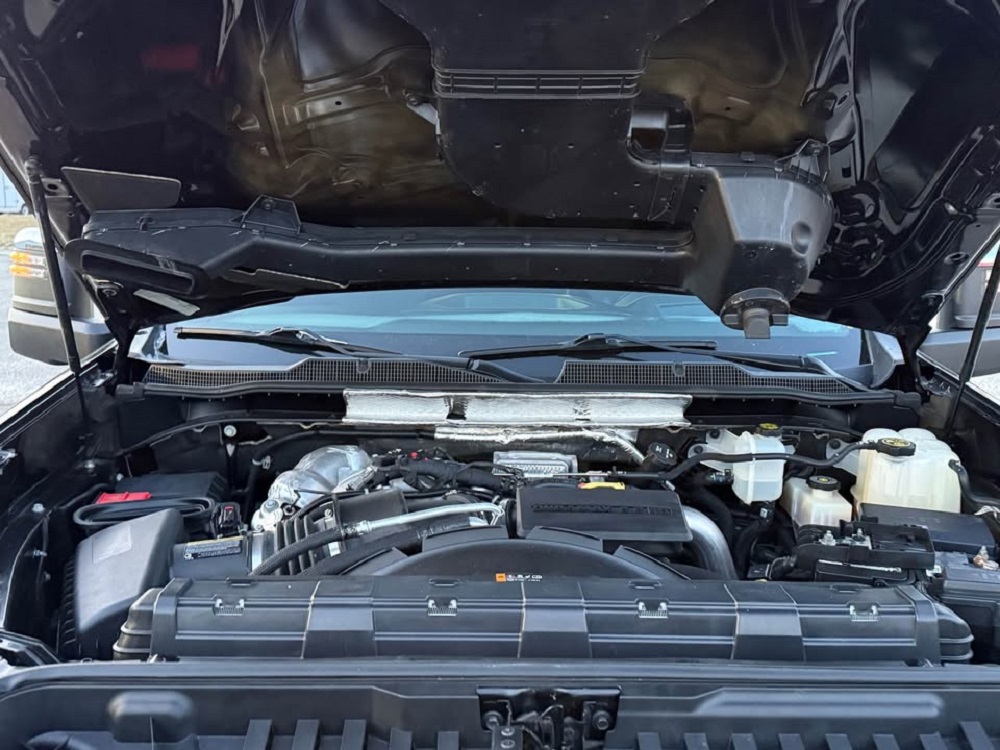
1. Start with the hardware, because Ford and GM solve the same job differently
Duramax plays the steadier hand
The 6.6L Duramax L5P feels built for control first. GM rates the current version at 470 hp and 975 lb-ft, backed by a deep-skirt cast-iron block and a Denso HP4 fuel system.
That cast-iron block matters under load. It damps noise well, handles long towing heat, and gives the L5P the calmer feel many Silverado HD and Sierra HD owners notice on grades.
The L5P also keeps its power delivery clean. Torque comes on smoothly near 1,600 rpm, so the truck doesn’t feel jumpy when you’re easing a fifth-wheel through a campground or pulling across wet pavement.
GM’s front end helps that character. The independent front suspension gives the Silverado HD and Sierra HD a more settled road feel than a solid-front-axle truck, especially unloaded or on broken pavement.
Powerstroke swings harder
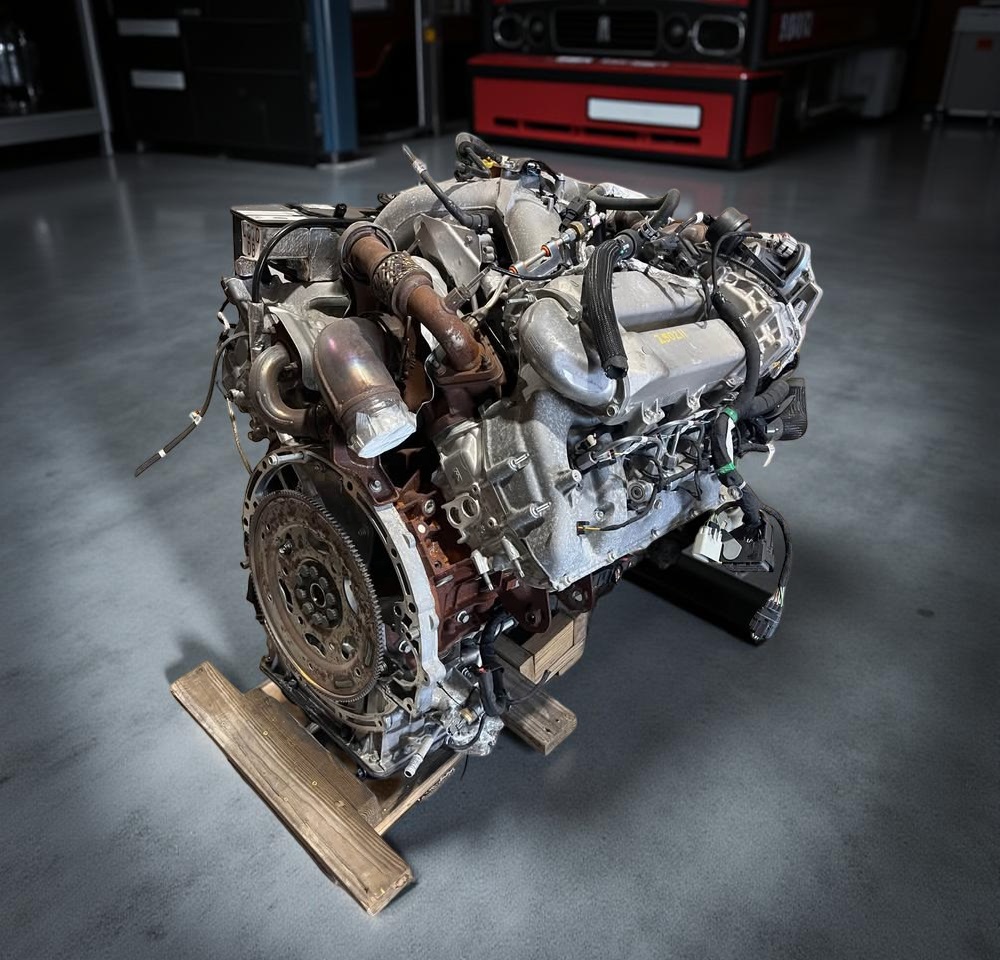
The 6.7L Powerstroke comes at the job with more factory muscle. In High Output form, Ford rates it up to 500 hp and 1,200 lb-ft.
That 1,200 lb-ft number is real. Ford built the engine around a compacted graphite iron block, forged-steel pistons in newer versions, and a hot-side-in turbo layout that keeps exhaust energy close to the turbo.
The Powerstroke’s torque hits low. Peak torque arrives around 1,600 rpm, which is exactly where a loaded Super Duty needs shove before road speed builds.
Ford also wins the rating fight. The 2026 Super Duty reaches up to 40,000 lbs of max diesel gooseneck towing and up to 8,000 lbs of available payload when configured correctly.
| Core comparison | 6.6L Duramax L5P | 6.7L Powerstroke |
|---|---|---|
| Current peak output | 470 hp, 975 lb-ft | Up to 500 hp, 1,200 lb-ft |
| Main strength | Smooth pull and fuel-system confidence | Maximum factory torque and tow rating |
| Block design | Cast iron | Compacted graphite iron |
| Fuel-system headline | Denso HP4 | Bosch CP4.2 |
| Best first fit | Owner who wants refinement and lower fuel-system anxiety | Owner who wants maximum pulling numbers |
2. The fuel system gives Duramax its cleanest win
Duramax left the CP4 path behind
The L5P Duramax gets its strongest buyer-facing edge from fuel hardware. GM dropped the Bosch CP4.2 after the 2011–2016 LML and moved to a Denso HP4 common-rail pump.
That move matters with U.S. ultra-low sulfur diesel. Poor lubricity can starve a high-pressure pump’s internal contact points and start metal-on-metal wear.
The Denso HP4 runs at about 29,000 psi. A factory electric lift pump in the tank feeds it steady fuel before the high-pressure side does its work.
That steady feed cuts cavitation risk. A starved diesel pump can shed metal, and metal does not stop at the pump body.
Powerstroke still carries the CP4.2 fear
The 6.7L Powerstroke still uses a Bosch CP4.2. Ford has refined filtration, coatings, and fuel delivery, but the pump still sits at the center of the biggest fuel-system concern.
How the pump fails is what scares owners. If the roller tappets rotate or lose proper contact under weak lubrication, the pump can grind itself and send debris downstream.
That turns one bad pump into a full fuel-system repair. Severe CP4.2 failures can push past $10,000 once injectors, rails, lines, filters, and tank cleanup enter the job.
That’s why Ford diesel owners talk so much about fuel quality, additives, filtration, and disaster-prevention kits. The kit can help trap debris after a pump failure, but it does not save the pump.
Ford runs higher pressure. GM runs calmer hardware.
Ford’s injector setup helps explain the power gap. Current Powerstroke versions can run injection pressure near 36,000 psi with Bosch piezo injectors.
That pressure helps Ford make clean, fast power. It supports fine atomization, quick response, and the 500 hp High Output rating.
GM uses Denso GS4 Gen-III solenoid injectors on the L5P. They can fire up to 7 injection events per combustion cycle and carry a strong durability record in this engine family.
Ford’s fuel system supports bigger output. GM’s Denso hardware keeps the worst fuel bill farther away, especially when metal debris can reach injectors, rails, lines, filters, and the tank.
3. Ford wins the rating sheet. GM fights back on control.
Ford owns the max-tow fight
The 6.7L Powerstroke takes the clean win on peak towing. Ford lists the 2026 Super Duty at up to 40,000 lbs of max available diesel gooseneck towing.
That number needs the right truck. The biggest rating lives in dual-rear-wheel Super Duty builds, where axle, tire, spring, hitch, and gross combined weight ratings all line up.
The High Output Powerstroke helps Ford hold that ceiling. Its 1,200 lb-ft peak arrives around 1,600 rpm, right where a heavy trailer needs torque before road speed climbs.
Ford also lists up to 8,000 lbs of available payload. That matters for hotshot work, heavy pin weight, service bodies, and trailers that load the rear axle hard.
GM’s smaller number still works for most heavy towing
The Duramax L5P does not lead the max-rating race. Chevrolet lists the 2026 Silverado HD at up to 36,000 lbs of max available diesel towing.
That 4,000-lb gap matters only when the trailer lives near the top of the chart. Many RV, farm, equipment, and enclosed-trailer setups never touch 36,000 lbs.
GM earns ground in how the truck feels under load. The Duramax makes 975 lb-ft with a smoother torque curve, and the 10L1000 tends to shift with less snap than Ford’s 10R140.
The independent front suspension changes the road feel, too. A Silverado HD or Sierra HD can feel calmer over broken pavement, especially when the trailer weight doesn’t demand Ford’s higher ceiling.
The numbers decide the edge cases
| Work metric | Duramax HD trucks | Powerstroke Super Duty |
|---|---|---|
| Max diesel gooseneck towing | Up to 36,000 lbs | Up to 40,000 lbs |
| Payload ceiling | Trails Ford’s highest published figure | Up to 8,000 lbs in the right build |
| Best tow feel | Smooth, linear, controlled | Stronger, harder-pulling, more aggressive |
| Best owner fit | Long-distance RV and mixed-use towing | Maximum-capacity towing and commercial p |
4. The 10-speed matters almost as much as the diesel
Ford’s 10R140 brings the heavier backbone
The 10R140 TorqShift gives Ford a stronger case under hard load. It’s rated for the High Output Powerstroke’s 1,200 lb-ft, so the transmission matches the engine’s biggest torque number.
The hardware supports that job. Ford’s 10R140 is commonly cited with a larger service-side fluid fill than GM’s 10L1000, but the exact number changes with pan drain, cooler drain, converter fill, and overhaul state.
That keeps the article out of dry-fill debates. A transmission with more cooling margin can handle long pulls better before heat darkens fluid, cooks clutch material, and weakens apply pressure.
Teardowns also point to heavier Ford internals. The 10R140 uses a larger pump gear, more filter capacity, and an anodized main drum for better wear resistance under clutch load.
GM’s 10L1000 shifts smoother, but the Allison badge needs context
The GM 10L1000 wears the Allison name in Silverado HD and Sierra HD trucks. The name carries weight, but the unit still needs judged by its hardware, calibration, and service history.
On the road, the 10L1000 feels polished. It shifts smoothly, pairs cleanly with the Duramax torque curve, and avoids some of the sharper unloaded shift feel Ford owners notice.
Fluid-capacity claims need careful wording here. Pan service, converter fill, cooler volume, and dry-fill capacity can land in very different ranges, so one quart number can mislead fast.
The concern sits deeper inside the drum. Transmission teardown reports have flagged F-clutch teeth wearing into the non-anodized main drum, which can lead to clutch slip or drum damage.
Loaded shift feel separates the two trucks
Ford’s 10R140 feels more work-focused. It can skip gears unloaded, then shift more firmly when trailer load changes throttle, wheel speed, and torque demand.
That sharper feel can help under weight. Crisp clutch apply keeps the engine closer to its torque band and cuts wasted flare during hard pulls.
GM’s 10L1000 feels calmer in mixed use. It suits the Duramax’s linear pull, especially on long highway grades where smooth shift timing matters more than maximum snap.
Both boxes use 3 overdrive gears. Ford’s 4.615:1 first gear is slightly deeper than GM’s 4.54:1, which gives the Super Duty a small launch advantage with a heavy trailer on a grade.
5. Maintenance cost and fuel use split the trucks quietly
Duramax carries the lighter oil-service bill
The 6.6L Duramax L5P takes 10 quarts of oil with the filter. That gives GM the cleaner routine-service math.
The newer 6.7L Powerstroke takes 15 quarts. Each oil change starts with 5 more quarts before the filter, labor, DEF checks, and fuel filters enter the ticket.
That gap grows fast on work trucks. Severe towing, idle time, dirt roads, and heat can pull both engines toward 5,000-mile oil changes.
At 3 severe-duty services a year, the Ford needs 15 extra quarts before anyone touches the fuel filters.
Powerstroke can stretch intervals, but each service starts heavier
Ford’s larger oil fill gives the Powerstroke more sump capacity. The Intelligent Oil-Life Monitor can allow longer normal-use intervals, often up to 15,000 miles in lighter duty.
Heavy diesel use changes that math. Long idle time, repeated regens, dusty job sites, and high coolant temps can shorten the interval fast.
The Duramax commonly lands in the 7,500 to 10,000-mile normal-service range. Severe duty can drag it back to 5,000 miles, which keeps the oil bill smaller per visit but brings the truck in more often.
Fuel filters deserve the same respect. A neglected diesel filter can starve the high-pressure pump, and that matters more on the Ford CP4.2 than it does on paper.
Duramax usually has the easier unloaded fuel story
The Duramax often gets credited with a small unloaded highway edge. Real-world numbers swing hard by axle ratio, tire size, speed, regen cycle, trim weight, and driver habit.
Powerstroke High Output mileage can trail in lighter use, especially on lifted trucks or aggressive tire setups. Its stronger tune and higher torque ceiling don’t come free.
Hook up 10,000 lbs or more and the gap shrinks. Wind, grade, trailer height, speed, and regen timing can erase a clean mpg comparison.
DEF use follows the same pattern. Light use can favor the calmer truck, but heavy towing and regeneration cycles can drain a 5-gallon DEF tank in a few thousand miles.
6. Reliability is a fight between different weak spots
Duramax trouble usually starts with soot, sensors, and emissions hardware
The L5P Duramax has a strong base-engine record. Its weaker spots tend to sit around airflow readings, glow plugs, DEF hardware, and SCR sensors.
The MAP sensor can clog with EGR soot. Reports often place that problem around 30,000 to 50,000 miles, with rough idle, lazy throttle response, or poor boost control.
Glow plug complaints show up too, especially in cold climates. The L5P uses ceramic glow plugs for fast starts, but failures can appear near the 50,000-mile range.
DEF and SCR faults can hurt the truck faster than the engine itself. Bad NOx data or temperature sensor readings can trigger reduced-power warnings and limp mode.
Powerstroke risk sits closer to fuel pressure and heat
The 6.7L Powerstroke makes huge torque, but the stress lands hard on fuel delivery and heat control. The CP4.2 still sits at the center of the worst repair bill.
A failed CP4.2 can send metal through the injectors, rails, lines, and filters. Severe repairs can exceed $10,000 once the tank and fuel lines need cleanup.
Turbo actuator faults also hit the Powerstroke. The VGT actuator lives near serious heat, and failure can cut boost, slow acceleration, or leave the truck flat under load.
Cooling hoses and quick-connect fittings add another weak point. Rough job-site use, vibration, and heat cycles can turn a small seep into low coolant and hot towing temps.
The failure pattern matters more than brand loyalty
| Risk area | 6.6L Duramax L5P | 6.7L Powerstroke |
|---|---|---|
| Fuel-system concern | Denso HP4 is the calmer pump story | CP4.2 failure risk remains the big fear |
| Common drivability fault | MAP sensor soot, DEF/SCR sensor faults | Turbo actuator faults, fuel-pressure faults |
| Heat-management concern | Heavy towing and emissions heat still matter | Valley-mounted turbo and complex cooling raise stakes |
| Repair-risk profile | More emissions issue than fuel-system panic | More output, more risk from fuel-system debris |
7. Daily comfort and trailer tech decide the close calls
GM feels calmer when the trailer is gone
The Duramax has an easier daily rhythm. Silverado HD and Sierra HD trucks use independent front suspension, which helps calm sharp road hits.
That matters when the bed is empty. A heavy-duty truck spends plenty of time with no gooseneck, no skid steer, and no pin weight pressing the rear axle down.
The Duramax’s smoother torque curve helps in traffic too. It pulls cleanly without the harder low-rpm punch that can make a truck feel jumpy on wet roads or tight turns.
The cabin feel follows the same pattern. GM keeps physical controls for major truck tasks like 4WD and exhaust brake use, so the driver isn’t hunting through screens with a trailer behind him.
Ford brings the heavier tool kit
The Super Duty answers with stronger work tech. Ford offers Pro Trailer Hitch Assist, Pro Trailer Backup Assist, and onboard payload-style features depending on trim and setup.
Those tools matter when the truck works alone. Hitch alignment, trailer angle, payload estimate, and camera coverage can save time in a yard or campsite.
Ford’s stronger ratings still shape the truck’s personality. Up to 40,000 lbs of diesel gooseneck towing and up to 8,000 lbs of payload give commercial buyers more margin.
That margin matters when trailers change weekly. Tongue weight, pin weight, axle rating, and hitch class can eat capacity before the engine ever feels strained.
Recreational buyers and hotshot haulers need different trucks
A Duramax ZR2, Silverado HD, or Sierra HD AT4 makes more sense for mixed use. It fits long RV runs, daily errands, gravel access roads, and unloaded highway miles.
The Powerstroke fits a harder schedule. F-350 and F-450 builds make more sense when the trailer sits near the rating limit and payload margin pays the bills.
Off-road trims change the math too. Tires, lift height, skid plates, softer suspension tuning, and added weight can cut payload or change towing feel.
If your trailer leaves thousands of pounds of rating unused, comfort deserves more weight. If it crowds the GCWR, axle rating, or payload sticker, Ford’s heavier ceiling starts to matter.
8. Match the diesel to the job, not the badge
Trailer weight should make the first cut
Start with the trailer, not the grille. A 16,000-lb fifth-wheel asks a different question than a 32,000-lb gooseneck loaded with equipment.
The 6.6L Duramax L5P fits owners who tow heavy but still drive unloaded often. Its 470 hp, 975 lb-ft, Denso HP4 fuel system, and smoother road feel make sense for RV miles and mixed use.
The 6.7L Powerstroke fits the buyer who needs more ceiling. In High Output form, Ford gives you up to 500 hp, 1,200 lb-ft, 40,000 lbs of max diesel gooseneck towing, and up to 8,000 lbs of available payload.
Maintenance should stay in the decision. The Duramax takes 10 quarts of oil, while the newer Powerstroke takes 15 quarts before filters, DEF use, and severe-duty service intervals enter the bill.
Fuel-system risk should make the second cut
The Duramax carries less fuel-system anxiety. GM’s Denso HP4 and factory lift pump keep the worst high-pressure pump story farther away.
The Powerstroke still carries the CP4.2 shadow. Ford’s bigger output comes with higher fuel pressure, piezo injectors, and a pump failure that can send metal through injectors, rails, lines, filters, and the tank.
That risk does not make the Ford weak. It means fuel quality, filter service, additives, and disaster-prevention kits sit closer to the front of the Ford plan.
If you ignore fuel filters on a CP4.2 truck, the repair can pass $10,000 before the truck leaves the bay.
Use the job, then pick the engine
| Owner type | Better fit | Why |
|---|---|---|
| Maximum gooseneck tower | 6.7 Powerstroke | Higher peak torque and up to 40,000 lbs max diesel gooseneck towing |
| RV owner towing long distances | 6.6 Duramax | Smoother delivery, strong unloaded fuel story, calmer road feel |
| Owner worried about CP4 failure | 6.6 Duramax | Denso HP4 avoids Ford’s CP4.2 concern |
| Commercial hauler near the rating limit | 6.7 Powerstroke | More torque, higher tow ceiling, stronger payload ceiling |
| Daily driver who tows on weekends | 6.6 Duramax | Better comfort and easier mixed-use manners |
| Owner focused on lower routine oil-service cost | 6.6 Duramax | 10-quart oil fill versus Ford’s larger 15-quart fill |
| Buyer who wants the strongest factory diesel numbers | 6.7 Powerstroke HO | 500 hp and 1,200 lb-ft headline output |
| Long-term owner who values calmer driving | 6.6 Duramax | More linear power and less CP4.2 worry |
Sources & References
- 2026 Silverado HD | Heavy Duty Truck | Chevrolet
- 2026 Ford Super Duty® Truck | Pricing, Photos, Specs & More | Ford.com
- Everything You Need To Know: L5P Duramax – Merchant Automotive
- 6.6L Duramax Diesel Engine Specs, LB7/LLY/LBZ/LMM/LML/L5P – DmaxStore
- 2017–2023 6.6L Duramax L5P: Specs, Improvements & Reliability – EngineGo
- 6.6L V-8 L5P Duramax® Turbo-Diesel Engine | GM Powered Solutions
- Ford 6.7L Powerstroke Diesel – Specs, Power & Reliability Insights – EGR Performance
- Power Stroke History, Lesson 4: 6.7L | DrivingLine
- Comprehensive 6.7 Powerstroke Specs: All You Need to Know – Rob Sight Ford
- DURAMAX DIESEL ENGINE – The Group Training Academy
- Detail Specs and Analysis of the 6.7L Powerstroke – Sinister Diesel
- 6.7L HO Power Stroke® V8 Turbo Diesel Engine Overview – Dorian Ford
- 6.7L Power Stroke Diesel Engine Details | Planet Ford Dallas, TX
- New L5P vs New 6.7 Power Stroke vs New 6.7 Cummins: Which Modern Diesel Is Right for You? – Compound Diesel
- Standard vs High Output 6.7L: The Mechanical Differences #Shorts – YouTube
- 6.7 Power Stroke Vs. High Output: What’s The Difference Between Ford’s Diesel Engines?
- https://bsbuiltllc.com/gm-6-6l-l5p-cp3-conversion-addressing-fuel-system-caution-and-reliability/
- Hold Your Horses – A Look At The Updated DuraMax Fuel-Injection-Related Transmission Issues – Gears Magazine
- 2015-2025 Super Duty Fuel System Guide: In-Tank Pump vs. CP4 High-Pressure Pump Issues – Go-Parts
- Bosch CP4 High-Pressure Fuel Injection Pump Failure Lawsuit | 10/17/2025
- DCR Conversion: The Ultimate High-Pressure Fuel Pump Solution For 6.7L Power Strokes
- real world MPG of Duramax and 6.7 on SRW body : r/Diesel – Reddit
- DIESELR 9th Injector Plugs – 5/16″ (2023-2025 Powerstroke 6.7L)
- Cummins vs. Duramax vs. Power Stroke – The Diesel Engine Showdown – Lifted Trucks
- Allison 10L1000 Transmission: A Technical Deep Dive and Overview
- TorqShift Vs. Allison: How Do These Heavy-Duty Transmissions Compare? – Jalopnik
- Ford 10R140 TorqShift Vs. GM 10L1000 Allison – Diesel World
- TorqShift Vs. Allison: Which Heavy-Duty 10-Speed Is Superior? | DrivingLine
- 10 speed ford transmission shift issue solved : r/superduty – Reddit
- 2025 Diesel Dyno Shootout: Ford Power Stroke HO vs. L5P Duramax vs. Cummins 8-Speed
- Duramax vs. Powerstroke: Which Diesel Wins in 2026? – EGR Performance
- L5P Duramax vs 6.7 Power Stroke: Reliability, Towing & Cost (2026) | LR Wheels N Lifts
- 2025 Ford F-250 Super Duty vs. Chevrolet Silverado 2500 HD
- Ford F-350 vs GMC Sierra 3500 HD: Powerhouse Pickup Showdown
- Comparing the Ford F-350 vs. the 2025 GMC Sierra 3500HD
- 2025 Sierra 2500HD & 3500HD Towing Specs | Max Tow Ratings – Valley GMC
- Silverado 2500 Vs. Ford F-250: Which 2025 Model Is Tougher? – East Hills Chevrolet
- Compare the specs & features of the Ford Super Duty F-250 truck and the Chevrolet Silverado 2500 truck – AutoNation Ford Arlington
- 6.7 powerstroke & 6.6 dmax reliability : r/Diesel – Reddit
- 2025 Ford F-250 vs 2025 Chevrolet Silverado 2500 – Bob Bell Ford
- Complete 6.6L Duramax Oil Capacity & Type Guide (2001-2026) – SPEtuner
- 6.7 Powerstroke Oil Capacity & Types (2011–2026 F250/F350) – EGR Performance
- Ford 6.7L Diesel Specs, Features, Performance & Reviews | Ford Component Sales LLC
- L5P Duramax Problems Explained (2025 Guide) – SPEtuner
- 2023-2024 Ford F250/F350 6.7L Powerstroke Injection Pumps – Alligator Performance
- CP4 Pump 6.7 Powerstroke: Failure Signs, Costs & Prevention – SPELAB
- Top 7 Common 6.7 Powerstroke Problems: 2026 Updated – SPEtuner
- 2025 RAM 2500 vs Ford F-250 & Chevy Silverado 2500HD
- Key Differences Between the 2025 Ford Super Duty and 2024 Ford Super Duty – SUVs, Trucks, and Cars in Wauchula, FL Alan Jay Ford of Wauchula