
Pull an old spark plug and the story shows on the tip: white ash, worn edges, wide gap. Now the shelf choice gets real: NGK or Bosch? Both brands can work. Both can also be wrong if the plug misses the engine’s heat range, reach, seat, gap, or exact part number.
A Honda or Subaru often points toward NGK. A BMW or Volkswagen often points toward Bosch. NGK’s company name changed to Niterra in 2023, but the box still says NGK.
Pick the plug your engine calls for, or the next misfire may start with the tune-up.
1. Start with fitment, because the plug has to match the engine first
NGK has the cleaner first shot on many Asian and domestic engines
NGK usually deserves the first look on Toyota, Honda, Subaru, Nissan, Hyundai, and Kia engines. Many of those platforms were built around NGK-style plug specs, not just a familiar logo.
The match lives in the small parts of the plug. Thread reach, seat type, resistor design, heat range, and electrode shape all affect how the coil fires and how the ECU reads combustion.
That same logic carries into many Ford and GM daily drivers. NGK often shows up as a strong catalog match there too, but only when the part number lines up with the factory plug design.
NGK Spark Plug Co. changed its corporate name to Niterra in 2023. The plug brand stayed NGK, and that’s still the name most owners see on the box.
Bosch makes its strongest case in European cars
Bosch fits best where European factory logic already points that way. BMW, Mercedes-Benz, Volkswagen, and Audi engines often match Bosch plug design closely.
Those engines can be picky. A turbo BMW or VW may care about insulator shape, electrode design, and firing voltage more than an older port-injected 4-cylinder.
Bosch also leans hard into long-life premium plugs. Its Double Iridium line uses iridium at the center and ground electrode, with laser-welded construction built for long service life.
Bosch can still work outside Europe. The issue is simple: buy it only when the catalog lists it as a direct OE-style replacement.
| Vehicle or use case | Better first look | Watch-out |
|---|---|---|
| Toyota, Honda, Subaru, Nissan | NGK | Use Bosch only with an exact catalog match |
| Hyundai and Kia | NGK | Bosch can work if listed as direct OE-style fit |
| BMW, Mercedes, VW, Audi | Bosch | NGK can work when cross-referenced correctly |
| Ford and GM daily drivers | NGK or Bosch | Exact OE replacement spec matters more than brand |
| Generic “upgrade” shopping | Neither by default | Match reach, seat, heat range, gap, and part number first |
2. Plug metal matters more than the badge
NGK wins ground where the spark has to stay sharp
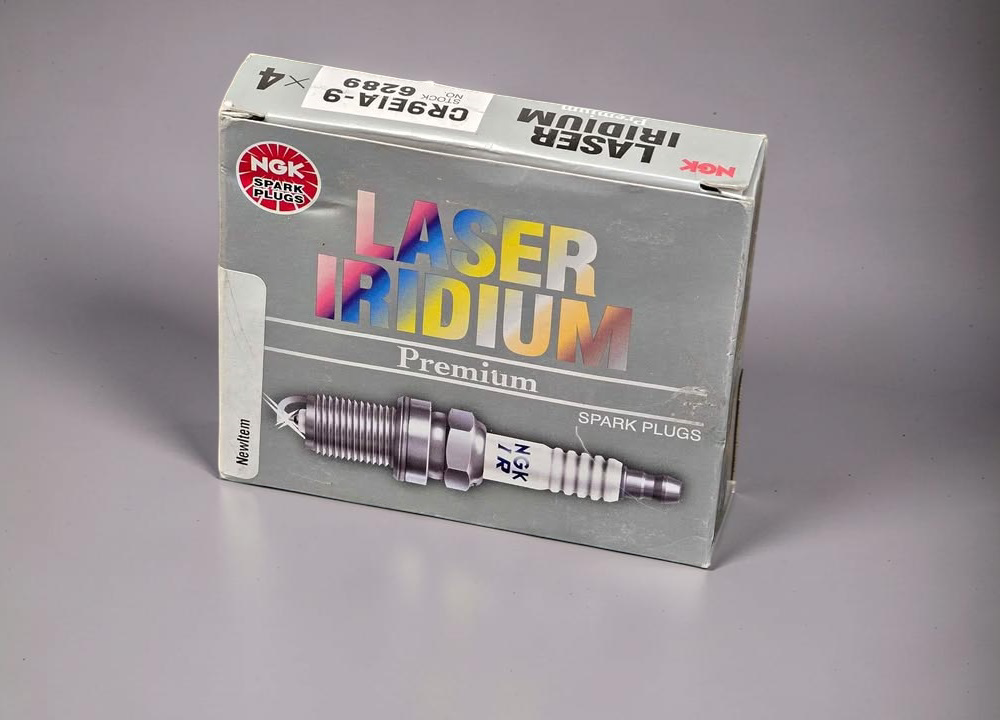
NGK’s strongest plug lines are Iridium IX, Laser Iridium, and Ruthenium HX. They aim at small, clean firing points that need less voltage from the coil.
That matters in small GDI and turbo engines. High cylinder pressure can blow out a weak spark, especially when the plug gap opens with age.
Laser Iridium is the more OE-style NGK pick. It often uses an iridium center tip and a platinum pad on the ground strap, which helps the gap stay stable near a 100,000-mile service window.
Ruthenium HX goes after newer high-pressure engines. NGK built that line for better oxidation resistance and lower quench loss, where a cold electrode can steal heat from the early flame kernel.
Bosch leans on long-life build quality
Bosch plays its best hand with durable OE-style plugs. Its Double Iridium plugs use iridium on the center electrode and the ground electrode.
Bosch also uses laser-welded construction on premium plug lines. That weld matters when a turbo engine hammers the firing tip with heat, pressure, and vibration.
The EVO plug line pushes the same idea harder. Bosch lists high dielectric strength above 45 kV, which helps the insulator survive modern downsized turbo engines with high firing demand.
A Bosch plug makes the most sense when the car already wants that plug shape. European engines can be picky about insulator length, ground strap design, and coil load.
Don’t buy metal like it’s a horsepower part
Copper, platinum, iridium, and ruthenium don’t work like upgrade steps on every engine. A wrong iridium plug can run worse than the right nickel or platinum plug.
The plug still has to match heat range, projection, thread reach, seat type, torque spec, and factory gap. Miss one of those, and the better metal won’t fix the mismatch.
Old copper-nickel plugs often land around 20,000 to 30,000 miles. Platinum can push about 60,000 miles. Iridium often reaches 80,000 to 100,000 miles, while ruthenium can stretch near 100,000 to 120,000 miles when the engine calls for it.
Use the metal your engine was built around. A fancy tip can’t save the wrong heat range.
3. GDI, turbo, and hybrid engines make the choice less forgiving
NGK gets the edge when cylinder pressure gets ugly
Modern GDI engines fire in a harsher chamber. Fuel sprays straight into the cylinder, pressure climbs fast, and the spark has less room for weakness.
That’s where NGK’s fine-wire designs make sense. Iridium IX, Laser Iridium, and Ruthenium HX all chase a tight firing point that needs less coil effort.
Turbo engines raise the stakes. More boost means more pressure across the plug gap, and that can expose a weak coil, tired plug, or lazy gap fast.
NGK Ruthenium HX fits this lane best. It targets GDI and turbo engines where fouling, spark blowout, and flame-kernel loss show up before the normal service interval.
Bosch still fits European boost and start-stop duty
Bosch stays strong in European turbo engines. BMW, Mercedes, Volkswagen, and Audi engines often want the exact plug shape Bosch already builds for that catalog logic.
Bosch EVO plugs aim at high-voltage demand. Bosch lists dielectric strength above 45 kV, which matters when a downsized turbo engine pushes the insulator hard.
Start-stop engines add another kind of wear. The engine shuts off, restarts, cools, and fires again before everything reaches steady heat.
Bosch Double Iridium plugs fit that job well when the application calls for them. The iridium center and ground electrode help hold the gap through long service life.
A plug won’t fix a sick ignition system
Misfires don’t always start at the spark plug. A weak coil, oil-soaked plug well, bad injector, vacuum leak, or carbon-loaded intake valve can make any brand look bad.
Valve-cover leaks cause a common trap. Oil runs into the plug tube, shorts the spark path, and leaves the new plug blamed for a seal failure.
Tuned turbo engines bring another trap. A tighter gap can help spark blowout under boost, but too tight can hurt idle quality and leave fuel partly burned.
Stock engines should stay with the factory gap and heat range. If the coil can’t fire that spec, the plug isn’t the first part to condemn.
4. Heat range is where brand swaps get risky
NGK and Bosch numbers don’t read the same way
Heat range tells you how fast the plug moves heat from the tip into the cylinder head. It doesn’t describe spark temperature.
NGK uses lower numbers for hotter plugs and higher numbers for colder plugs. Bosch heat-range logic commonly runs the other way in cross-reference charts.
That can burn a DIY owner fast. An NGK 7 doesn’t mean the same thing as a Bosch 7, even if both plugs look close on the counter.
| Heat-range point | NGK | Bosch |
|---|---|---|
| Number direction | Higher number means colder | Common cross-reference logic runs opposite |
| Main mistake | Buying colder without enough engine load | Matching the printed number instead of true heat range |
| If too cold | Carbon fouling, rough idle, weak fuel economy | Carbon fouling, rough idle, weak fuel economy |
| If too hot | Pre-ignition risk under load | Pre-ignition risk under load |
Too cold fouls. Too hot can hurt parts.
A cold plug sheds heat too fast. The tip may stay below its self-cleaning range, so carbon sticks and the engine starts to stumble.
That shows up as rough idle, weak throttle response, and fuel smell after short trips. The plug may look black and sooty even when the coil still works.
A hot plug holds too much heat at the tip. Under load, that hot tip can light the mixture before the spark event.
That’s pre-ignition territory. On a boosted engine, the damage can move from a bad plug to a cracked ring land or melted piston crown.
Stock engines should follow the factory plug spec
Stock engines don’t need forum heat-range math. They need the plug listed for the VIN, engine code, and service interval.
Tuned turbo engines sometimes move 1 step colder when power rises by about 75 to 100 hp. That rule still depends on boost, fuel, tune quality, and cylinder pressure.
Going colder without enough load creates its own mess. The plug can carbon-foul during normal street use and misfire before the next oil change.
For a stock engine, match the factory heat range first. If the catalog guess disagrees with the owner’s manual, the manual wins.
5. Installation mistakes can make either brand look bad
NGK plugs don’t need extra paste
NGK uses trivalent metal plating on many plug shells. That coating helps fight corrosion and keeps the threads from seizing after long heat cycles.
Anti-seize can turn that safety margin into a problem. Add lubricant to plated threads, then the same torque wrench can clamp the plug harder than intended.
That’s how a simple tune-up removes threads, cracks a shell, or crushes the gasket too far. If the NGK instructions say install dry, install it dry.
Bosch plugs still need hand-start care
Bosch plugs need the same slow start by hand. Cross-thread a plug in an aluminum head, and the brand debate ends with a thread repair bill.
BMW turbo engines show why this matters. Bosch ZR5TPP339 plugs used in some N55 and S55 applications had known insulator-cracking concerns, with misfires, rough running, and a Service Engine Soon light.
BMW service guidance moved those engines to the updated Bosch ZR5TPP330A plug. On N63T turbo engines, technicians were warned to hand-start plugs and tighten them to 23 Nm, with pneumatic tools kept off the job.
Don’t bend modern gaps like old copper plugs
Modern iridium and ruthenium plugs use tiny firing tips. Old pliers can chip the tip, bend the ground strap wrong, or stress the weld.
Modified turbo engines may need a tighter gap to stop spark blowout under boost. Some BMW tuning setups use NGK plugs gapped down for high-boost use, but going too tight can hurt idle and leave fuel partly burned.
Stock engines should keep the factory gap. If the engine still misfires at the listed gap, test the coil, plug boot, oil leak, and injector before blaming the plug.
6. Price and service life depend on the plug line
NGK premium plugs cost more when the engine works harder
NGK’s basic plugs don’t carry the same price hit as its top lines. The jump starts with Laser Iridium and gets stronger with Ruthenium HX.
That price makes sense in engines that punish ignition parts. Small turbo GDI engines run higher cylinder pressure, foul faster, and expose weak firing points sooner.
Ruthenium HX can stretch near 100,000 to 120,000 miles when the engine calls for it. Buying it for an old low-stress commuter can waste money before it fixes anything.
Bosch can be the cleaner value on OE-style replacements
Bosch often looks better on price when the car wants a standard platinum, double-platinum, or double-iridium plug. That’s especially true on European cars with Bosch already baked into the service catalog.
Double Iridium uses precious metal on both electrodes. That helps the gap hold steady as miles, heat, and cold starts add up.
Bosch Double Platinum often lands below premium iridium pricing. That makes it a strong fit for mid-range European engines where the factory spec doesn’t call for Ruthenium or a tuning plug.
Count the whole job, not the plug price
A cheap plug only saves money when labor stays cheap. A 4-cylinder with clear access can make that math work.
A transverse V6 changes the bill fast. Intake removal can turn a $40 plug set into a half-day job, and tight European turbo bays can do the same.
Long-life plugs matter more when labor hurts. If the rear bank takes hours to reach, saving a few dollars per plug can send you back into the same job 30,000 miles early.
7. Match the plug to the engine, not the argument
The best pick starts with the factory spec
The clean answer is the plug that matches the engine’s reach, seat, heat range, gap, resistor design, and service interval.
A Toyota, Honda, Subaru, or Nissan often points toward NGK. A BMW, Mercedes, Volkswagen, or Audi often points toward Bosch.
Stock daily drivers should stay boring here. If the owner’s manual calls for a long-life iridium plug, don’t swap in copper to save a few dollars.
Tuned, hybrid, and high-labor engines change the math
Turbo GDI engines care more about firing stability than brand pride. High cylinder pressure can expose a weak gap, tired coil, or wrong heat range fast.
Modified turbo engines often lean NGK because colder ranges and tuning support are common. The wrong colder plug can still foul in street use if the engine doesn’t make enough heat.
Hybrid and start-stop cars need stable firing after repeated shutdowns and restarts. Bosch or NGK can both work there, but the plug must match the exact OE long-life spec.
High-labor jobs deserve premium long-life plugs. If the rear bank sits under an intake, cheap plugs can turn into repeat labor.
| Owner type | Better fit | Why |
|---|---|---|
| Toyota, Honda, Subaru, Nissan owner | NGK | Strong OE-style fit in many Asian applications |
| BMW, Mercedes, VW, Audi owner | Bosch | Strong European OE-style alignment |
| Stock daily driver | Exact OE match | Brand matters less than correct spec |
| Turbo GDI owner | NGK or Bosch exact premium fit | Heat range and firing stability matter most |
| Modified turbo owner | NGK often leads | More common tuning support and colder-plug options |
| Hybrid or start-stop owner | Bosch or NGK OE-spec long-life plug | Stable firing and service life matter more than brand hype |
| Budget tune-up owner | Bosch or NGK standard/platinum fit | Correct fit beats premium metal upsell |
| High-labor spark plug job | Premium long-life OE match | Avoid paying labor twice |
Sources & References
- NGK vs Bosch spark plugs – AUTODOC UK
- Niterra expands aftermarket ignition coil range – AftermarketInsight – S&P Global
- Spark Plugs – Bosch Auto Parts
- Bosch Double Iridium Spark Plugs Features | PDF | Wire | Welding
- NGK vs Bosch Spark Plugs Comparison: Which Should You Choose? – AutoZone
- NGK Spark Plug Australia Changes Corporate Name to Niterra Australia
- NGK Spark Plugs is now Niterra | Brilliant Ideas For A Brighter Future – YouTube
- 2008 Saturn Outlook Spark Plugs | Advance Auto Parts
- Here’s What Makes Laser Iridium Spark Plugs Different From Standard Iridium Plugs
- 2006 Mercedes-Benz SLK350 Ignition and Tune-Up Products | Advance Auto Parts
- The best spark plugs | Popular Science
- NGK or Bosch spark plugs? – BMW M2 Forum – Bimmerpost
- How Do I Find a Colder or Hotter Plug? – SparkPlugs.com
- What is a Spark Plugs Heat Range? – NGK.com
- Which NGK Racing Spark Plugs Fit my Engine? – Driven 2 Automotive
- Spark plug heat range? – the Pelican Parts Forum!
- Heat Range Conversion Chart – NGK.com
- Automotive Spark Plug Market Size, Growth Analysis 2026-2035
- Press Release – Niterra
- NGK Ignition Parts extends ignition coils range with fourteen new references – Niterra
- If Bosch spark plugs are OEM on the car, why am I told to replace w/ NGK? – BMW M3 and BMW M4 Forum – Bimmerpost
- Market Deep Dive: Exploring Automotive Aftermarket for Spark Plugs Trends 2026-2034