
Hook a trailer. Watch the rear squat. Feel the steering go light at speed. That’s where towing reality starts. Since the 2023 redesign, the GMC Canyon runs a single TurboMax engine with 430 lb-ft and an 8-speed.
That torque hits early, around 3,000 RPM, which helps it pull hard off the line and up ramps. Ratings climb to 7,700 pounds on the right trims, backed by a 13,250-pound combined limit in ideal setups.
But that headline number shrinks fast once weight adds inside the truck. Passengers, gear, and tongue load all count against payload, often 1,300 to 1,900 pounds depending on trim. A 7,000-pound trailer can drop 700 to 1,000 pounds on the hitch alone.
Some builds stay stable and planted near max load. Others run out of margin before hitting the brochure number. Let’s break down where the limits really sit.
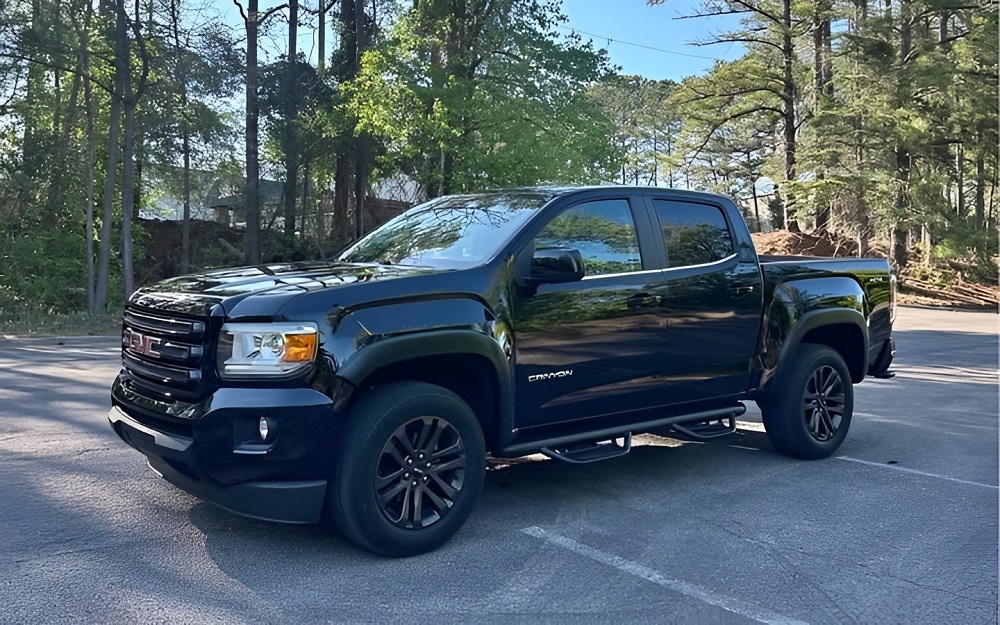
1. The headline number only works when the truck is built for it
One engine, one gearbox, built to pull hard from low rpm
Every current Canyon runs the 2.7L TurboMax. Output holds at 310 hp and 430 lb-ft. Peak torque hits around 3,000 RPM, right where towing starts to load the drivetrain.
The block uses forged steel crank and rods. Cylinder liners are cast iron, not aluminum sleeves. That setup handles high cylinder pressure under boost without flex.
A twin-scroll turbo cuts lag when pulling from a stop. The engine builds boost early, so it doesn’t hunt for power on ramps. Active cooling routes flow to hot spots under sustained load.
The 8-speed 8L80 transmission runs tow-specific shift logic. Tow/Haul mode holds gears longer under throttle. On descents, it downshifts to add engine braking and reduce pad heat.
The 7,700-pound rating belongs to specific trims, not every Canyon
Max tow lands at 7,700 pounds on Elevation, AT4, and Denali when equipped right. That requires the Z82 trailering package with hitch, wiring, and brake control.
Elevation carries the lightest curb weight in most builds. That leaves more room inside the combined rating. AT4 adds 4WD hardware and still holds the same ceiling.
Denali keeps the same tow rating but adds weight from trim, tech, and insulation. Payload drops, which tightens real towing margin.
| Trim | Drivetrain | Max Tow (lbs) | Typical Payload (lbs) | Real Limiting Factor |
|---|---|---|---|---|
| Elevation | 2WD / 4WD | 7,700 | ~1,500–1,600 | Best payload margin |
| AT4 | 4WD | 7,700 | ~1,400–1,500 | Added weight, softer suspension |
| Denali | 4WD | 7,700 | ~1,300–1,450 | Lowest payload, hits GVWR sooner |
Off-road trims give up towing capacity for suspension travel and weight
AT4X drops to 6,000 pounds. AEV Edition falls to 5,500 pounds with steel bumpers and heavier armor.
These trucks sit higher with a factory lift. DSSV dampers allow more wheel travel and absorb off-road hits better. That tuning reduces how much steady vertical load the rear can carry.
Curb weight climbs fast with skid plates, rock sliders, and larger tires. Payload shrinks as base weight rises, which cuts into trailer allowance.
A 35-inch tire adds rotational mass and raises the center of gravity. Both factors reduce stability under heavy tongue weight at highway speed.
2. Tow rating falls apart fast once weight math enters the picture
GVWR sets the truck’s hard ceiling before the trailer even counts
GVWR sits around 6,100 to 6,250 pounds on most Canyon trims. That number includes the truck, fuel, passengers, cargo, and hitch load.
Load four adults, add tools in the bed, then drop a trailer on the hitch. The truck can hit GVWR before the trailer reaches its rated weight.
Rear squat starts once payload pushes the limit. Steering lightens as front axle load drops, and braking distance grows.
GCWR decides if the full tow rating is even possible
GCWR caps the combined weight of truck and trailer. On 7,700-pound setups, it lands near 13,250 pounds.
A loaded truck at 5,800 pounds leaves about 7,450 pounds for the trailer. Add more cargo or passengers, and that number drops further.
Transmission temps climb faster near GCWR. The 8L80 holds gears longer under load, which raises fluid heat and pressure.
Tongue weight eats payload first and causes most overload situations
Tongue weight runs 10 to 15 percent of trailer weight. A 7,000-pound trailer pushes 700 to 1,050 pounds onto the hitch.
That load counts fully against payload. A Denali with 1,400 pounds of payload can lose half of it to the hitch alone.
Rear suspension compresses under that load. Front tires lose contact pressure, which cuts steering response and brake grip.
| Weight term | What it limits | Real failure point |
|---|---|---|
| GVWR | Loaded truck weight | Rear squat, weak steering |
| GCWR | Truck + trailer total | Heat load, power loss |
| Payload | Cabin + bed + hitch load | Overload before max tow |
| Tongue weight | Hitch downward force | Front axle lift, sway risk |
A weight-distributing hitch shifts load forward. Without it, stability drops fast once tongue weight passes 500 to 600 pounds.
3. Engine choice decides how the truck actually tows, not the brochure number
2.5L inline-4 struggles once weight climbs past mid-range loads
Rev hard. Hear the engine hold high rpm on even mild grades. That’s the 2.5L working near its limit.
Rated around 200 hp and 191 lb-ft, this engine handles light trailers fine. Push past 3,500–4,000 pounds, and it runs out of torque.
The 6-speed hunts between gears under load. Long climbs force constant downshifts, which builds heat in the fluid.
Fuel economy drops fast. Expect single-digit mpg when towing near its limit.
3.6L V6 brings stronger pull but still relies on high rpm
Step into the throttle. Feel the truck surge, then hear it climb the rev range. The V6 makes power up top.
With 308 hp and 275 lb-ft, it tows confidently up to 7,000 pounds. Past that, it needs rpm to hold speed.
The 8L80 transmission keeps it in the power band. That helps acceleration but raises fluid temperature under sustained load.
Cooling holds up better than the 4-cylinder, but heat still builds on long grades or hot days.
2.8L Duramax diesel delivers steady torque and better control under load
Roll into the throttle. Feel the truck move without a downshift. That’s diesel torque doing the work.
Rated at 369 lb-ft, the Duramax pulls heavier loads at lower rpm. That reduces gear hunting and keeps temps more stable.
Turbo boost builds early, which helps with launch and hill climbs. Engine braking also improves control on descents.
Fuel economy stays higher under load. Most setups hold mid-teens mpg while towing moderate weight.
| Engine | Torque delivery | Towing behavior | Heat load |
|---|---|---|---|
| 2.5L I4 | Low, high-rpm | Struggles near limits | High |
| 3.6L V6 | Mid, high-rpm | Strong but rev-heavy | Moderate |
| 2.8L Diesel | High, low-rpm | Smooth, controlled | Lower |
Engine choice sets the real towing experience. Same rating on paper, very different behavior under load.
4. Cooling and transmission limits show up first under real towing stress
Transmission heat builds faster than most drivers expect
Climb a long grade. Watch the temp creep past 210°F. That’s where problems start.
The 8L80 transmission holds lower gears under load. That keeps power up but drives fluid temperature higher.
Heat thins the fluid. Clutch packs lose grip, and shift timing starts to slip.
Repeated towing near max load shortens fluid life fast. Many units need service well before 45,000 miles under heavy use.
Factory cooling works, but only within a narrow margin
Most tow-package trucks include a transmission cooler and upgraded radiator. That setup handles moderate towing without issue.
Push near max rating in hot weather, and the system runs at its limit. Airflow drops at low speeds, especially on steep climbs.
Coolant and trans temps rise together. Once both climb, power output drops to protect the drivetrain.
Thermal management cuts power before damage happens
Modern control modules monitor heat across engine and transmission. Once temps spike, the system pulls timing and limits torque.
That feels like sudden power loss mid-climb. Speed drops even with steady throttle. It protects hardware, but it also shows the truck is past its comfortable towing range.
Fluid condition decides long-term survival under load
Old fluid breaks down under heat cycles. Viscosity drops, and clutch material wears faster.
Dark or burnt fluid signals heat stress already happened. That’s where shift flare and shudder begin.
Regular fluid changes matter more for tow vehicles than daily drivers. Under load, service intervals shrink to 30,000–45,000 miles.
5. Wheelbase and chassis balance decide stability more than power
Short wheelbase makes trailers push the truck around
Hit a crosswind. Feel the rear step sideways. That’s wheelbase working against you.
Crew Cab short-bed models run a shorter wheelbase than long-bed setups. Less distance between axles reduces leverage against trailer sway.
At highway speed, a heavier trailer can steer the truck from the rear. Small corrections turn into constant steering input.
Longer wheelbase trucks track straighter. They resist sway better under the same load.
Rear suspension squats early under tongue weight
Load the hitch. Watch the rear drop an inch or more. That changes the truck’s geometry.
Canyon uses soft rear leaf springs tuned for ride comfort. Under heavy tongue weight, they compress fast.
Front axle unloads as the rear squats. Steering loses precision, and braking stability drops.
Weight distribution becomes critical once tongue weight passes 500 pounds.
Weight-distributing hitch fixes balance but adds setup complexity
A weight-distributing hitch transfers load forward using spring bars. That restores front axle weight and levels the truck.
Setup matters. Incorrect tension can overload the front or leave the rear too soft.
Properly dialed in, it improves steering feel and braking stability. Without it, sway risk rises quickly with heavier trailers.
Tire choice and pressure shape how stable the truck feels
Soft sidewall tires flex under load. That adds delay between steering input and response.
Higher load-rated tires reduce flex and improve control. Proper pressure keeps the contact patch stable.
Underinflated rear tires worsen sway. Overinflated fronts reduce grip during braking.
6. Real towing capacity drops well below the advertised max
Hook up a 7,000-pound trailer. Add passengers, fuel, and gear. Watch the margin disappear fast.
Most Canyon setups hit limits before the brochure number. Payload and tongue weight eat capacity first.
A typical Crew Cab 4×4 with 1,400-pound payload loses 700–900 pounds to tongue weight alone. Add 500 pounds of people and gear, and the truck is near its ceiling.
That leaves little buffer for hills, heat, or emergency braking.
Safe towing range lands closer to 70–80% of rated capacity
Experienced towers stay below max rating for control and durability. That puts real towing around 5,500–6,200 pounds for most V6 setups.
Diesel models handle weight better due to torque, but limits still apply. Payload doesn’t change with engine choice.
Running at 100% rating works on flat ground for short trips. Sustained towing near max stresses every system.
Load distribution decides whether the truck feels stable or overwhelmed
Poorly balanced trailers sway even under rated weight. Too little tongue weight causes fishtailing.
Too much tongue weight overloads the rear axle. That lifts the front and reduces steering control.
Proper setup keeps tongue weight in the 10–15% range. That’s where stability holds.
Terrain and temperature cut towing capacity without warning
Climb in summer heat. Watch temps rise faster than expected.
High ambient temps reduce cooling efficiency. Mountain grades force constant load on engine and transmission.
Altitude cuts engine output. Naturally aspirated engines lose power faster than turbocharged ones.
7. Common towing-related failures show where the Canyon gives up first
Torque converter shudder shows up under steady load
Hold speed on a slight incline. Feel a light vibration through the seat. That’s the converter slipping.
The torque converter locks and unlocks under load to manage heat and efficiency.
Under towing stress, clutch material wears faster. Fluid breakdown makes the lockup uneven.
Shudder starts as a mild vibration, then turns into noticeable slip. Left unchecked, it leads to full converter failure.
Hard shifts and flare point to clutch wear inside the transmission
Accelerate onto the highway with a trailer. Feel a delay, then a harsh gear engagement.
That delay is clutch slip. The transmission builds pressure, then grabs suddenly.
Heat and load wear clutch packs faster. Once material thins, shifts lose precision.
Flare between gears shows the clutch can’t hold torque cleanly anymore.
Overheating triggers limp mode and sudden power loss
Push uphill with a heavy load. Watch temps spike, then feel power drop.
The system enters protection mode once limits are reached. Engine output cuts, and shift patterns change.
This prevents damage, but it leaves the truck struggling to maintain speed. Repeated overheating shortens transmission and engine life.
Rear axle and differential take hidden stress under heavy towing
Torque flows through the rear axle constantly under load. Heat builds in the differential fluid.
Heavy towing breaks down gear oil faster. Worn fluid reduces protection between gears.
Noise or whining under load often starts here. Left alone, it leads to bearing wear or gear damage.
| Failure area | Early symptom | What it leads to |
|---|---|---|
| Torque converter | Shudder at steady speed | Slip, full failure |
| Transmission clutches | Flare, hard shifts | Rebuild or replacement |
| Thermal protection | Power drop | Limp mode events |
| Rear differential | Whine under load | Gear or bearing wear |
Failures follow heat and load patterns, not just mileage.
8. Running costs climb fast once towing enters the picture
Fuel consumption doubles under load and stays high on grades
Hook up a mid-weight trailer. Watch the fuel gauge drop faster than expected.
V6 models often fall from 18–20 mpg down to 8–10 mpg while towing. Steep grades push it lower.
Diesel holds better efficiency, usually landing around 12–16 mpg under similar load. More throttle and higher rpm burn fuel fast. Long trips turn into frequent fuel stops.
Maintenance intervals shrink under towing stress
Heat cycles shorten fluid life across the drivetrain. Engine oil, transmission fluid, and differential oil all degrade faster.
Transmission service often drops to 30,000–45,000 miles under regular towing.
Differential fluid may need changes around 30,000–50,000 miles depending on load and use.
Brake wear increases as trailer weight adds stopping demand.
Repair costs rise once wear turns into failure
Transmission repairs lead the list. Rebuilds or replacements can run $3,500 to $6,000 depending on damage.
Torque converter replacement alone can land between $900 and $1,800. Cooling system issues add more cost if overheating events repeat.
Rear differential repairs range from $1,200 to $2,500 once gears or bearings wear out.
Sources & References
- GMC Canyon Towing Capacity | Texan GMC Buick
- 2024 GMC Canyon Review, Pricing, Specs – Car and Driver
- New 2026 GMC Canyon: Specs, Towing, & Trims
- 2026 GMC Canyon Review, Pricing, Specs – Car and Driver
- GM’s Revolutionary TurboMax Engine: Why It’s a Game-Changer for Chevy Owners in Omaha – DriveHH.com
- 2026 GMC Canyon Guide | Towing, AT4X, Trims & Price | Starling GMC of Titusville
- GMC Canyon Towing Capacity | Robert Basil Buick GMC
- 2024 GMC Canyon Specs & Performance Overview
- Towing Capability Explained: What the GMC Canyon Can Handle
- Differences Between the New GMC Canyon and Toyota Tacoma in Austin | Covert Bee Cave
- GMC towing capacity for each model
- 2025 GMC Canyon Specifications – The Car Connection
- Build & Price: 2024 Canyon | Gmc-mi
- 2024 GMC Canyon Towing Capacity | Hendrick Buick GMC Cary
- Will the 2026 GMC Canyon’s ProGrade® Trailering System Make Towing Easier in Pueblo, CO?
- 2024 GMC Canyon Trim Levels | Spitzer Buick GMC Parma
- 2024 GMC Canyon Trim Levels | Spitzer Chevrolet DuBois
- 2024 GMC Canyon Specs & Performance Overview – Bob Luegers Motors, Inc.
- 2025 GMC Canyon | Mid-Size Truck
- What Is the Towing Capacity of a 2023 GMC Canyon?
- GMC Canyon Towing Capacity
- GMC Canyon AT4 vs AT4X vs AT4X AEV Edition: What Are the Differences?
- GMC Canyon AT4X AEV Edition Review – Serious Off-Road Capability
- Which 2025 GMC Canyon AT4 Would You Choose? – Model Comparison
- 2024 GMC Canyon Trims Comparison [+ Chart] – Edmunds
- 2026 Chevrolet Colorado vs. GMC Canyon
- How Much Can My GMC Tow? The Complete Guide for 2025
- Build & Price: 2025 Canyon | Gmc-cvo
- New 2025 GMC Canyon Crew Cab AT4 Prices | Kelley Blue Book
- GMTC23CT100 2024 CANYON F&O_010424.indd – GMC
- 2025 GMC Canyon Towing Capacity
- 2025 GMC Canyon Towing Capacity | Hiley Buick GMC Of Fort Worth
- Still confused on payload and hitch weight : r/GMCcanyon – Reddit
- 2026 GMC Truck Towing Capacity Guide: Every Model Ranked
- 2025 GMC Canyon 2WD Elevation Crew Cab Features and Specs – Car and Driver
- 2024 GMC Canyon Towing Capacity
- Trim Levels of the 2024 GMC Canyon: Customizing Your Drive – Ed Martin Buick GMC Blog
- GMC Towing Technology Guide: ProGrade Trailering, Hitch Assist …
- What is GMC’s ProGrade Trailering System: Safe and Easy Towing | GMC of Riverfront Park
- GMC Canyon Payload & Towing Capacity Guide
- How Does GMC’s ProGrade Trailering System Work? [2026] – Joe Ball GMC
- GMC Sierra’s ProGrade Trailering System
- Explore the 2025 GMC Canyon in LONE TREE
- Colorado vs. Tacoma vs. Ranger: What Chevy Does Better – Ray Skillman Chevrolet
- Head-to-Head: 2025 GMC Canyon vs. 2025 Chevrolet Colorado Pickup Showdown
- 2025 Chevrolet Colorado vs. 2025 GMC Canyon: A Comprehensive Comparison
- 2025 Chevy Colorado vs GMC Canyon – Dan Vaden Chevrolet Brunswick
- 2025 Ford Ranger vs GMC Canyon: Which Truck Delivers More?
- 2025 Ranger or Canyon: What’s the Smarter Pick? – Brighton Ford
- 2025 Toyota Tacoma vs Ranger, Colorado, Frontier, Ridgeline Comparison
- 2026 GMC Sierra 1500 Engine Options: Towing, Power & Efficiency Explained
- Comparing Differences: GMC Canyon and Chevy Colorado in Austin | Covert Bee Cave
- GMC Trucks & Their MPG Ratings: Full Owner Guide [2025]
- 2025 GMC Canyon Specs & Performance | Hendrick Buick GMC Cary
- Why the 2026 GMC Canyon’s MultiStow® Tailgate Adds Everyday Utility for Castle Rock, CO Drivers
- MultiStow tailgate on the Canyon is one of my favorite tailgates! (StowFlex on the Colorado) – YouTube
- Tailgate storage? : r/GMCcanyon – Reddit
- 2025 Canyon | Tailgate Organizer | Cargo Nets | Dividers | D-Rings – ShopChevyParts.com