
Hook the camper, tap the throttle, and the smaller EcoBoost has to prove itself fast. The 2.7L feels right in a light F-150. It spools quick, sips less fuel empty, and makes errands feel easy. That’s why it works so well for commuting, family use, and lighter trailers.
The 3.5L earns its keep when the truck works harder. Ford rates it at 500 lb-ft, which gives it 100 lb-ft over the 2.7L. That extra shove matters with tongue weight, headwind, and a grade ahead.
Choose by load, not ego. The wrong engine shows itself on the first long pull, when the trans starts hunting and boost heat does the talking.
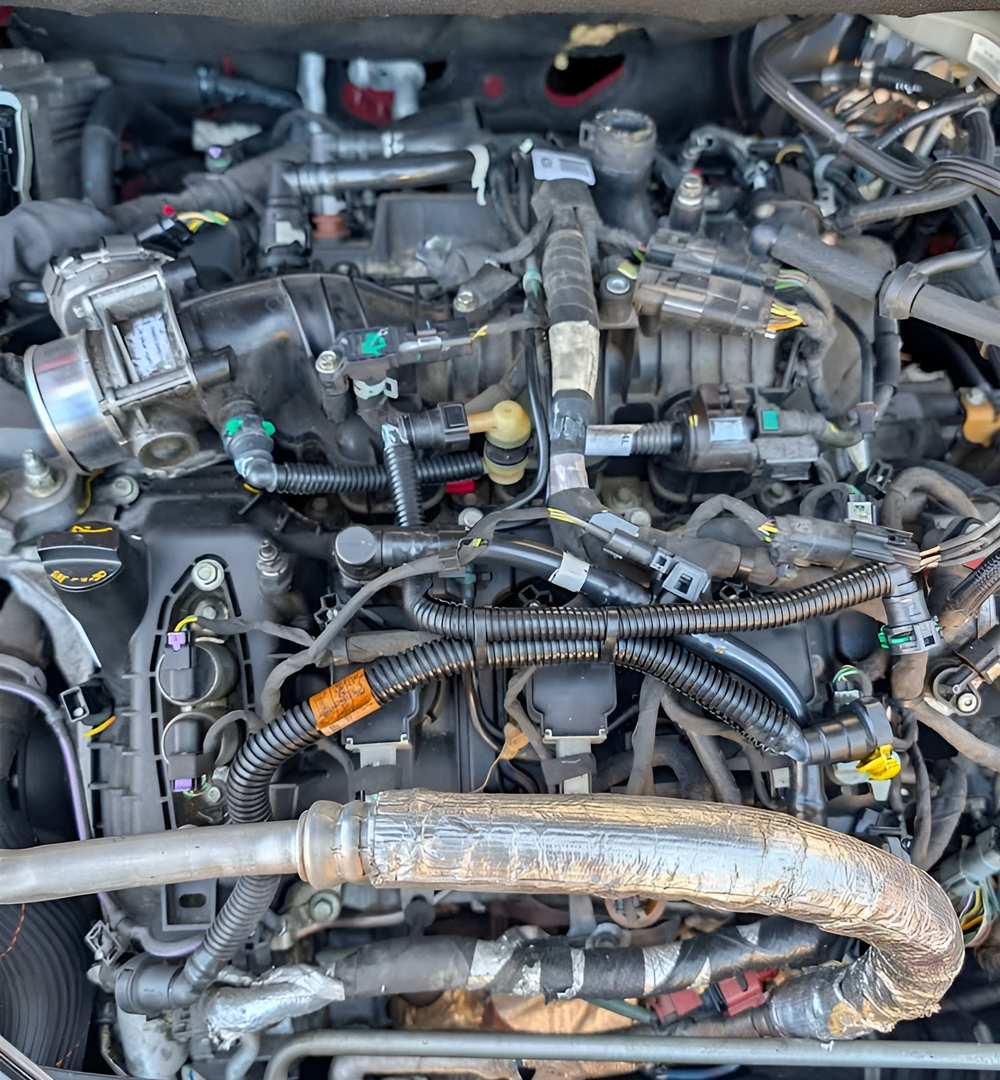
1. Start with the real fork, because these engines have different jobs
The 2.7 EcoBoost makes the lighter F-150 feel right
The 2.7L EcoBoost fits the F-150 owner who drives empty most days. It makes 325 hp and 400 lb-ft, which is stout for a 2.7L twin-turbo V6. Ford’s 2026 towing guide lists 8,400 lbs of max towing and 1,775 lbs of max payload for this engine.
That number does not make it a toy. It puts the 2.7 above plenty of older half-ton V8s in daily pull and throttle response. The smaller turbos help it build boost fast, so the truck feels sharp at stoplights, ramps, and quick two-lane passes.
Its best work happens before the truck gets heavy. A light bed, no camper, and normal family use keep the 2.7 in its clean zone. Push it into tall trailers and long grades, and the engine has less torque left in reserve.
The 3.5 EcoBoost earns its keep when the truck works
The 3.5L EcoBoost starts higher on the chart. Ford lists the available 3.5L at 400 hp and 500 lb-ft, with an available 13,500-lb tow rating. The 2026 towing guide also lists 2,440 lbs of max payload for the 3.5L.
That extra 100 lb-ft changes the truck under load. It helps when the bed carries tools, the hitch carries tongue weight, and the trailer catches wind at 65 mph. The 3.5 does not need to feel wildly stronger on a short test drive to matter later.
Its advantage shows up when the work gets ugly. Heat, grade, speed, and trailer drag all punish the smaller engine first. The 3.5 has more pull left before the transmission starts chasing gears.
The numbers draw the first line
| Core spec | 2.7 EcoBoost | 3.5 EcoBoost |
|---|---|---|
| Current output | 325 hp, 400 lb-ft | 400 hp, 500 lb-ft |
| Max available tow rating | 8,400 lbs | 13,500 lbs |
| Max available payload | 1,775 lbs | 2,440 lbs |
| Main feel | Quick-spooling, lighter, easier empty | Stronger pull, better under load |
| Best first fit | Daily use and light work | Frequent towing and heavier use |
2. Around town, the 2.7 feels sharper than the numbers suggest
The 2.7 wakes up fast in an empty truck
The 2.7L feels eager because its smaller turbos spool with less exhaust flow. Less rotating mass means boost arrives early, especially in light-throttle driving. That’s why a 2.7 F-150 can feel quick before the speedometer tells the full story.
Unloaded 0–60 mph runs often land around 5.9 to 6.1 seconds in the right setup. That’s fast for a half-ton truck with a small-displacement V6. Around town, the 2.7 feels lighter at the nose and cleaner off the pedal than the 3.5.
Ford’s Nano V6 also uses a compact graphite iron upper block. That CGI structure gives the small engine the strength it needs under boost without turning the truck into a front-heavy sled. The 2.7’s best work happens with an empty bed, normal tires, and no tall trailer pulling air behind it.
The 3.5 pulls harder once the truck gets loaded
The 3.5L has the torque edge that shows up after the easy driving ends. It makes 500 lb-ft at 3,100 rpm, while the 2.7L makes 400 lb-ft at 3,000 rpm. That 100 lb-ft gap matters most with people, cargo, tongue weight, or a trailer in the mirrors.
A light 2.7 can jump hard from a stop. A loaded 3.5 can hold speed with less drama once the turbos are lit. Passing on a two-lane road feels different when the truck has 5,000 lbs behind it.
The bigger engine also carries more reserve at highway speed. Wind drag climbs fast above 60 mph, and high-profile trailers make it worse. The 2.7 has to work deeper into boost sooner when the load gets square and tall.
Fast empty and strong loaded are different animals
A short test drive can fool you. The 2.7L feels sharp because the truck is lighter, the turbos respond fast, and the engine does not need much rpm to move an empty F-150. That first impression can make the 3.5L feel less special than its spec sheet says.
Load changes the math. Trailer drag, grade, heat, and payload all eat torque reserve. The 3.5L’s extra displacement and 500 lb-ft rating leave more room before the 10R80 starts dropping gears to hold road speed.
This is where buyers miss the fork. The 2.7 wins the empty errand run. The 3.5 wins when the truck has to pull hard above city speed with heat in the intercooler and weight on the hitch.
3. Towing is where the 3.5 earns its cost and complexity
The 3.5 is the clear pick when towing happens often
The 3.5L EcoBoost owns the towing side of this match. Ford lists the current 3.5L with a 13,500-lb max tow rating when properly equipped. The 2.7L tops out at 8,400 lbs in current F-150 tow data.
That gap is too wide to treat as taste. It changes how much trailer the truck can handle before heat, wind, and grade start calling the shots. A 5,000-lb camper on flat ground and a 7,500-lb box in a headwind do not ask the same thing from the engine.
The 3.5 also brings 500 lb-ft at 3,100 rpm. That gives the truck more room before the 10R80 has to drop gears and chase boost. Frequent towing turns that extra 100 lb-ft into lower strain on long pulls.
The 2.7 can tow, but it needs the right trailer
The 2.7L should not be treated like a weak engine. With 400 lb-ft at 3,000 rpm, it can handle utility trailers, small boats, side-by-sides, and lighter campers. The engine pulls well when trailer weight stays sane and wind drag stays low.
Owner reports often put the comfort line below the max rating. Many 2.7 trucks can move 7,000 to 8,000 lbs, but stability, braking feel, and highway reserve get thinner. A tall travel trailer exposes the smaller engine faster than a low flatbed at the same weight.
This is where trailer shape matters. A 5,500-lb enclosed camper can feel worse than a heavier open trailer because it catches more air. The 2.7 runs out of easy pull first when the trailer is tall, square, and pushed into 65-mph headwind.
Payload can run out before towing power does
Tow ratings do not carry passengers for free. Tongue weight, hitch gear, fuel, tools, coolers, dogs, and people all come out of payload. The door-jamb sticker decides the truck, not the engine badge.
The current 2.7L max payload sits at 1,775 lbs. The 3.5L reaches 2,440 lbs in the right setup. Those are max numbers, and higher trims, 4×4 hardware, big wheels, sunroofs, and bed accessories can cut the real sticker fast.
A normal travel trailer can put 10 to 15 percent of its weight on the hitch. A 7,000-lb trailer can add 700 to 1,050 lbs of tongue weight before anyone climbs in. Add 4 adults and bed cargo, and a soft payload sticker becomes the first hard stop.
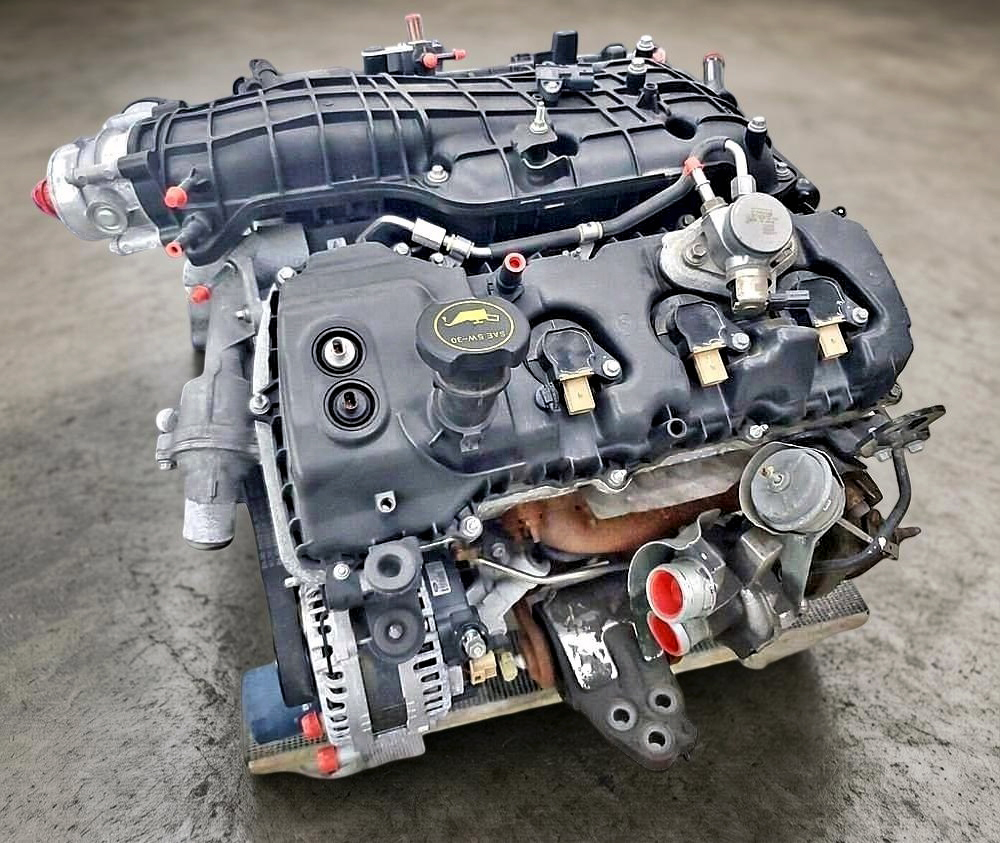
4. Fuel economy is where the 2.7 hits back
The 2.7 makes more sense for empty miles
The 2.7L wins the fuel-cost fight when the truck runs empty. EPA-style figures commonly put it around 19 mpg city, 25 mpg highway, and 21 mpg combined in 2WD form. The 4WD rating drops to about 18 city, 23 highway, and 20 combined.
Those numbers fit how the engine works. The 2.7 has less displacement to feed when boost stays low. On a commute, school run, or empty highway trip, it does not drag the larger 3.5L through every mile.
The 3.5L stays close on paper, but it still carries more engine. Common estimates put it near 17 mpg city, 25 highway, and 20 combined in 2WD form. In 4WD, it often lands around 17 city, 23 highway, and 19 combined.
Boost turns both engines thirsty
EcoBoost fuel economy depends on load. Keep either engine out of heavy boost, and it can run leaner on throttle than an old big V8. Lean on the turbos, and the fuel bill changes fast.
Under hard pull, the engine adds fuel to control heat and knock. That matters with a trailer, long grade, or headwind. Owner reports often put both engines around 8 to 11 mpg while towing heavy.
The 3.5L handles that work with more torque reserve. The 2.7L can do lighter trailer work, but it has to dig deeper into boost sooner. A tall camper at highway speed can erase the smaller engine’s fuel edge before the first fuel stop.
Fuel savings do not always mean lower cost
The 2.7L’s best case goes beyond mpg. It usually lives an easier life when owners use it for commuting, errands, and lighter towing. Less heat, less load, and fewer heavy pulls help keep the turbos, oil, and cooling system out of the red.
The 3.5L earns its higher fuel use only when the truck needs its torque often. If it tows a camper twice a month, the extra 100 lb-ft can spare the driver constant downshifts. If it mostly hauls air, the bigger engine becomes extra fuel burn and more expensive failure exposure.
Long-term cost also follows known weak spots. The 2.7L has a stronger reputation, but 2021 to early 2022 valve-recall trucks need a VIN check. The 3.5L carries more cam-phaser and timing-system repair risk, and those repairs can run into thousands outside coverage.
5. Reliability is where the small engine gets its edge
The 2.7 has a strong record, but 2021–2022 trucks need a VIN check
The 2.7L EcoBoost has earned a cleaner name than the 3.5L in F-150 circles. Its compacted graphite iron block, quick-spooling turbos, and durable chain layout give it a strong base. Used right, it usually lives an easier life than the bigger towing engine.
The sharp warning sits on certain 2021–2022 models. Ford recall 24S55 covers some Bronco, Edge, Explorer, F-150, Nautilus, and Aviator models with 2.7L or 3.0L engines. The fault centers on intake valves that may fracture while driving.
That failure is not a small leak or a rough idle complaint. A broken intake valve can damage the cylinder and force engine replacement. Ford’s repair path includes an engine-cycle test, then engine replacement if the truck fails.
Older 2015–2017 2.7L trucks also need an oil-pan check. Those engines used a plastic oil pan sealed with RTV instead of a normal gasket. Heat cycles can warp the pan and open a leak at the sealing face.
Ford addressed that pattern with TSB 19-2205. A wet pan rail, oil film near the lower block, or fresh RTV work deserves a closer look. Ignore the seep long enough, and the repair becomes pan removal, surface prep, and reseal labor.
The 3.5 carries the louder timing-system risk
The 3.5L EcoBoost has the bigger repair shadow. Early engines built their reputation around timing-chain stretch, cam-phaser rattle, and cold-start clatter. The common noise comes from the front of the engine after oil drains down.
Cam phasers adjust valve timing with oil pressure. When the lock pin or internal phaser hardware wears, the phaser can rattle before oil pressure catches it. Owners often hear it as a diesel-like clatter for a few seconds after startup.
The repair gets expensive because the front cover has to come apart. Shops often quote thousands once phasers, chains, guides, tensioners, seals, and labor stack up. A cheap used 3.5L can turn ugly fast if the cold start sounds loose.
First-generation 3.5L engines also used direct injection only. Fuel did not wash the back of the intake valves, so oil vapor could bake carbon onto the stems. Rough idle, misfires, and power loss can follow once buildup gets heavy enough for walnut blasting.
Gen 2 improved the picture. Ford added dual injection for 2017 on the 3.5L, then used dual injection on the 2.7L from 2018. The port injectors help clean the intake valves, but they do not erase cam-phaser history on used 3.5L trucks.
The failure map favors the 2.7, unless the recall hits your VIN
| Risk area | 2.7 EcoBoost | 3.5 EcoBoost |
|---|---|---|
| Best-known concern | 2021–2022 intake valve recall on affected VINs | Cam-phaser rattle and timing-system wear |
| Earlier-generation issue | 2015–2017 plastic oil pan leaks | Carbon buildup on early direct-injection engines |
| Key paperwork | 24S55, TSB 19-2205 | Cam-phaser TSBs, timing repair records |
| What to check cold | Startup noise, oil leaks, recall status | Front-cover rattle, chain noise, VCT repair history |
| Worst repair path | Engine replacement if valve failure hits | Phaser, chain, guide, tensioner, and front-cover labor |
| Buyer Lesson | Strong engine when the VIN and oil pan check out | Strong worker with higher repair exposure |
6. The shared 10R80 can make either engine feel worse
Shift behavior can muddy the engine choice
Both engines use the 10R80 in newer F-150s. That transmission can make a good engine feel rough if the shift logic gets lazy, confused, or harsh. A sharp 2.7L feels worse fast when 3-4-5 shifts start banging through town.
The 10-speed uses adaptive shift learning. Battery disconnects, fluid wear, towing, and mixed driving can change how it behaves. Some trucks flare, hesitate, clunk into gear, or hunt between close ratios.
Ford has issued transmission-related service guidance over the years, including software work for harsh shifts. TSB 21-2145 is often tied to recalibration paths on rough-shifting trucks. A reflash may help a calibration fault, but it will not fix worn clutch packs, pressure loss, or a damaged drum.
The 3.5 pushes more torque through the same gearbox
The 3.5L sends 500 lb-ft through the 10R80. The 2.7L sends 400 lb-ft. That 100 lb-ft gap matters when the truck tows, climbs, or makes repeated downshifts under heat.
More torque loads the converter, clutch packs, fluid, and valve body harder. A 3.5L that tows often can cook fluid faster than a 2.7L commuter. Heat turns clean fluid into varnish, then shift timing gets uglier.
The 10R80 also uses skip-shift behavior in normal driving. It may move through ratios like 1-3-5 or drop several gears under throttle. In a loaded 3.5L, bad calibration or weak fluid can turn that wide ratio spread into a harsh downshift.
Test the transmission before trusting the engine
Start the test drive cold. Shift from Park to Reverse, then Drive, and feel for delay or a hard bump. A lazy engagement can point to pressure loss, solenoid trouble, or worn internal parts.
Drive it at low speed first. Watch for harsh 3rd, 4th, or 5th gear shifts in stop-and-go traffic. Then hold steady cruise and add moderate throttle to see if the transmission hunts.
Make at least 2 firm downshifts. A healthy truck should drop gears cleanly without a bang, shudder, or rumble-strip feel. If it bangs, delays, shudders, or hunts badly, the engine choice is no longer the first repair risk.
7. Match the engine to the job, not the bigger number
The 2.7 fits light use, the 3.5 fits real load
The 2.7L EcoBoost makes the most sense when the truck runs empty most days. It fits commuting, school runs, light bed work, small boats, utility trailers, and weekend gear. The 325 hp and 400 lb-ft rating gives it enough punch without buying the 3.5L’s repair exposure.
The 3.5L EcoBoost earns its place when the trailer shows up often. Its 400 hp and 500 lb-ft rating gives the truck more pull at highway speed. The 13,500-lb max tow rating also leaves more room before payload, heat, and wind start boxing in the truck.
Payload still decides many real trucks. A 2.7L with a weak door-jamb sticker can run out of legal carrying room before it runs out of engine. A 3.5L with the right axle, tow package, and payload rating gives you more working margin.
Used buyers should sort risk before pride. A clean 2.7L needs a 24S55 VIN check on 2021–2022 trucks and an oil-pan check on 2015–2017 trucks. A used 3.5L needs a cold-start listen, timing repair records, and a hard 10R80 test drive.
The buyer-fit table
| Owner type | Better fit | Why |
|---|---|---|
| Daily commuter who rarely tows | 2.7 EcoBoost | Better empty fuel use and lighter feel |
| Family truck with occasional light towing | 2.7 EcoBoost | Enough torque without the bigger engine |
| Small boat, utility trailer, or ATV owner | 2.7 EcoBoost | Fits low-drag trailer work well |
| Frequent travel-trailer tower | 3.5 EcoBoost | More torque and much higher tow ceiling |
| Mountain or high-wind towing driver | 3.5 EcoBoost | More reserve under load |
| Buyer worried about cam phasers | 2.7 EcoBoost | Avoids the 3.5L’s best-known repair headache |
| Buyer shopping 2021–2022 affected VINs | Depends on recall status | The 2.7L valve recall must be checked |
| Owner who wants maximum F-150 gas towing | 3.5 EcoBoost | Ford’s current top gas tow rating sits here |
Sources & References
- 2.7 Vs 3.5 EcoBoost: What Are The Differences Between These …
- 2021 Ford F-150 Pickup Truck Buyer’s Guide
- Ford Engines Archives – Truck Insiders | Your go-to experts for all things trucks
- Ford 2.7 EcoBoost Engine: What’s Different Between The Nano’s Gen 1 & 2? – SlashGear
- Ford F-150 Engines: 3.5L EcoBoost vs. 2.7L vs 3.3L Ti-VCT V6
- What is Ecoboost? 3.5L Ford Ecoboost V6 Generations … – Full Race
- Ford 2.7L EcoBoost Specs & Turbocharged-V6 Engine Performance | J.C. Lewis Ford Savannah
- Ford’s new 2.7-L EcoBoost V6 designed for lighter aluminum F-150 SAE-MA-00663
- Ford F-150 Engine Specs & Performance – Jones Ford Casa Grande
- 2025 Ford F-150® Engine Options & Specs | Imlay City, MI
- 2.7L vs 3.5L : r/f150 – Reddit
- 2.7 vs 3.5 : r/f150 – Reddit
- 2.7 vs 3.5 Fuel mileage & butt dyno : r/f150 – Reddit
- How We Dyno Tested Ford’s 3.5-liter EcoBoost V-6 and 5.0-liter V-8 Engines | Cars.com
- 2.7 vs 3.5 capabilities : r/f150 – Reddit
- Ford F-150 Towing Capacity by Engine (2021 Update)
- 2025 Ford F-150 Towing Capacity & Payload Specs | Max Towing …
- F-150 EcoBoost: 2.7L Vs 3.5L 0-60 Comparison – Ftp
- 2026 Ford F-150 Engine Comparison: Efficiency, Torque, Power – Germain Ford of Beavercreek
- 2026 Ford F-150 Towing Capacity & Payload Guide
- 2025 Ford F-150® Engine & Tow Specs Available in McHenry, IL
- 2024 Ford F-150® Towing Guide
- 2021 Ford F-150 Trailer Towing Selector
- Ford F-150 Engine Options Comparisons
- 2.7 vs 3.5 ecoboost for F150 towing – Reddit
- 3.5 vs 2.7 : r/f150 – Reddit
- 2.7 or 3.5 : r/f150 – Reddit
- 5 Ford 2.7 Ecoboost Problems & How to Fix Them – The Lemon Law …
- 2.7 EcoBoost Problems You Might Run Into And Which Models To Avoid – CarBuzz
- Ford 2.7L EcoBoost Problems (2025 Update) – Lemon Law Firm
- What’s a reasonable mechanic’s price for cam phaser replacement? : r/f150ecoboost
- Cam Phaser Class Action Lawsuit : r/f150 – Reddit
- Purchased a 2018 3.5L F150 yesterday… then I read about cam phasers today – Reddit
- 3.5 ecoboost Cam Phasers that bad? : r/f150
- Ford 2.7 Ecoboost Problems – CoPilot for Car Shopping
- 10L80 vs 10R80 Transmission: GM vs Ford 10-Speed Breakdown
- Guys with the 10 speed… do you consistently have rough shifts from the 3rd-4th-5th gears? : r/f150 – Reddit
- Ford F-150 Transmission Repair Guide (2015-2024) | Common Problems & Costs
- Payload questions and 2.7 vs 3.5 advice : r/f150
- 2025 Ford F-150 Weight Guide | Payload, Towing & Specs in Feasterville, PA
- 2021 F-150 Technical Specs – Ford From the Road
- 2.7 vs coyote power curve | Page 2 | Bronco6G
- How Much Does a Ford F150 Weigh – Truck Weight Guide
- Ford F-150 Maintenance Schedule and Costs – CarEdge
- Ford F-150 Maintenance Costs – What To Expect | Kalispell Ford
- Ford’s 2.7 vs 3.5 EcoBoost: Which is Better? – YouTube
- Used 3.5 vs 2.7 EcoBoost : r/f150 – Reddit
- Ask TFL: Should I Buy a Ford F-150 2.7L EcoBoost V6 or a 3.5L EcoBoost V6 For Towing?
- Ford F150 2.7L EcoBoost V6 Engine **Heavy Mechanic Review**| First Gen vs Second Gen