
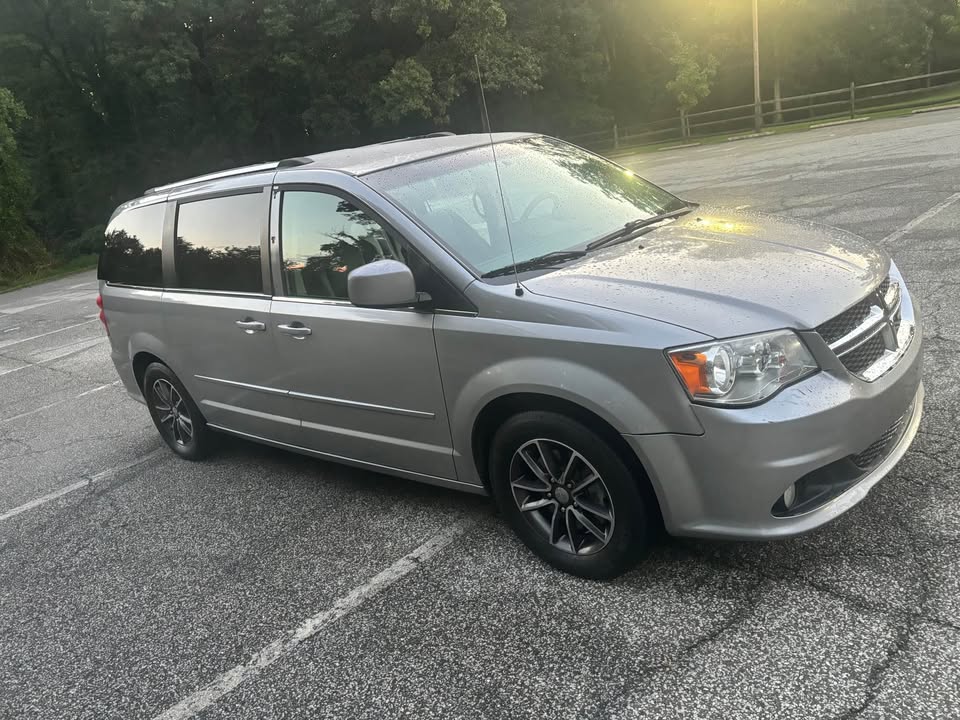
Hook up a camper. Watch the rear bumper drop. Hear the 62TE hunt for a gear. That’s where the Dodge Grand Caravan Tow Package matters. A 2011–2020 Grand Caravan can tow up to 3,600 lbs only with the right factory parts. A hitch alone does not make that rating real.
Start with the build sheet. Check for Trailer Tow Group, Nivomat rear shocks, heavy-duty cooling, clean ATF+4, and the right trailer plug. Miss one, and the weak point shows fast: rear sag, hot fluid, or trailer brakes stuck behind a 4-pin harness.
1. The 3,600-lb number has rules
The rating belongs to the equipped van
The clean number is 3,600 lbs. FCA’s 2017 Grand Caravan specs tie that rating to the Trailer Tow Prep Package, and 2020 Grand Caravan material ties it to the Trailer Tow Group. That rating applies when the van has the right tow hardware and enough payload left.
A plain Grand Caravan can sit far below that mark. The engineering record lists 2,000 lbs as the standard tow capacity and 3,600 lbs with Trailer Tow Group AHT. That gap matters at the hitch counter.
The receiver can fool you. A used van may wear a clean aftermarket hitch and still lack heavy-duty cooling, load-leveling shocks, and factory tow wiring. Tow near the top number without those parts, and the 62TE takes the heat first.
A hitch-only van still has unfinished work
A Class III aftermarket hitch can bring a 2-inch receiver and a high sticker rating. Some hitch hardware lists around 4,000 lbs gross trailer weight and 400 lbs tongue weight. The van still answers to its cooling, rear suspension, brakes, wiring, and payload.
The factory tow setup uses more than steel under the bumper. The AHT package record shows a hitch, 4-pin wiring, Nivomat self-leveling shocks, and heavy-duty cooling NMC instead of standard cooling NMB. Some builds also use a 160-amp or 180-amp alternator, depending on trim and equipment.
That’s why the build sheet matters more than the receiver opening. Check for Trailer Tow Group AHT, Heavy-Duty Engine Cooling NMC, and load-leveling rear shocks before trusting the number. A hitch-only van can pull a small trailer, but it hasn’t earned the full 3,600-lb ceiling.
The quick rating map
| Setup | Practical tow rating | What it usually has | Main risk |
|---|---|---|---|
| No tow package, no hitch | Not tow-ready | No receiver, no trailer wiring | Full tow build starts from zero |
| Aftermarket hitch only | Hitch may rate high, van may not | Receiver, sometimes 4-way wiring | Heat and rear sag stay unresolved |
| Factory Trailer Tow Group | Up to 3,600 lbs when properly equipped | Hitch, wiring, load leveling, cooling package by year and trim | Payload can run out first |
| Full retrofit done right | Can approach factory capability | Hitch, wiring, cooler, suspension aid, brake controller if needed | Parts and labor can erase the bargain |
A Grand Caravan that squats hard before the family loads in has already failed the first tow test.
2. The factory tow package lives in the parts
What Trailer Tow Group changes
Factory Trailer Tow Group AHT changes the van in places a hitch sticker won’t show. The record lists the jump from 2,000 lbs standard towing to 3,600 lbs with AHT, plus Nivomat self-leveling rear shocks, heavy-duty cooling NMC, and a factory 4-pin flat connector.
Cooling matters first. Standard cooling NMB gives the van less heat margin, while NMC adds the heavy-duty setup tied to tow use. The same record lists total coolant capacity at 10.3 quarts, which gives the Pentastar and 62TE more buffer under load.
The alternator can change by trim and equipment. Standard vans list a 160-amp alternator under sales code BAB, while some Trailer Tow Group builds show 160-amp or 180-amp output under BAD. Every 2011–2020 Grand Caravan still uses a 730-amp maintenance-free battery in this record.
Check the receiver before you trust the listing
Factory hitch wording gets messy across listings. The engineering record calls the factory tow hitch a Class II unit with a 1.25-inch receiver, while some later retail listings describe a 2-inch receiver on 2020 tow-group vans. Treat the actual van as the truth, not the ad copy.
Slide under the bumper and read the rating label. Check the receiver opening, rust at the cross tube, crash damage near the rear rails, and any hacked trailer-wire splices. A clean hitch with a crusty 4-pin plug can still leave you chasing dead marker lights at the campground.
Wiring needs the same cold look. The factory tow setup commonly shows a 4-pin flat connector, which covers basic trailer lights only. If a used van claims camper duty but has no 7-pin plug or brake-controller wiring, it’s not ready for electric trailer brakes.
The factory hardware check
| Factory item | Why it matters | What to verify on a used van |
|---|---|---|
| Hitch receiver | Connects the trailer and sets accessory fit | Receiver size, rust, crash damage, rating sticker |
| Trailer wiring harness | Powers trailer lights | 4-pin or 7-pin, corrosion, hacked splices |
| Load-leveling suspension | Keeps rear ride height from collapsing under tongue weight | Nivomat shock body, sales code, ride height |
| Heavy-duty cooling | Gives the engine and 62TE more heat margin | Build sheet, radiator, cooler hardware |
| Trailer Sway Control | Uses ESC logic to fight trailer yaw | ABS light, ESC light, stored chassis codes |
| 3.6L Pentastar and 62TE | Pulls the trailer and absorbs the heat load | ATF+4 color, shift flare, service history |
A factory tow van with missing Nivomats or a spliced 4-pin harness has already lost key tow hardware.
3. The Pentastar pulls, but the 62TE takes the heat
The V6 has power, but it needs revs
The 3.6L Pentastar gave the 2011–2020 Grand Caravan real pull. It makes 283 hp at 6,400 rpm and 260 lb-ft at 4,400 rpm, with dual VVT and a 6,800-rpm electronic limit. That torque peak sits high for tow work.
A loaded camper can make the van downshift often on grades. The engine needs 3rd or 4th gear to stay near its working range, especially with wind drag from a tall trailer. Let it lug in overdrive, and the converter makes heat before the van makes speed.
Highway mileage also changes fast under load. The record lists 25 mpg highway in normal use, but a high-profile camper cuts into that number hard. Frontal area hurts the van before trailer weight reaches the full 3,600-lb rating.
Gear hunting cooks the 62TE
The 62TE is a six-speed front-drive transaxle. It uses a 3.160 final drive and a tall 0.65 to 0.69 6th gear, so it can cruise light but still pull when locked in a lower gear. That wide spread becomes a problem when the trailer keeps dragging the van out of overdrive.
Under tow load, the control module watches fluid temperature and converter slip. If heat climbs, it can change shift timing or lock the converter sooner to cut friction. You feel that as firmer shifts, fewer overdrive grabs, or a van that refuses to stay in the top gear.
ERS, also called manual range select, earns its keep on hills. Hold 4th or 3rd before the van starts hunting between overdrive and a lower gear. A steady gear makes less heat than repeated converter slip.
Cooling is cheap compared with a hot transaxle
Heavy-duty cooling NMC is the tow-package part that saves the 62TE from steady heat. The factory tow setup can include a high-capacity radiator and auxiliary transmission oil cooler. Standard cooling NMB leaves less margin when the van pulls a camper in summer.
ATF+4 starts to degrade fast above 220°F. Once it turns dark and smells burnt, the fluid has lost friction control and the clutch packs start paying for it. A 3,000-lb trailer on a long grade can push a non-cooled van into that danger zone.
A serious retrofit needs an auxiliary cooler in front of the A/C condenser. A stack-plate cooler can drop trans fluid temperature by 20–40°F in tow use. Skip the cooler, and the next clue is dark ATF+4 or hot shift flare.
4. Load-leveling shocks tell the real story
Nivomats pump the rear back up
Factory tow vans used Sachs-style Nivomat self-leveling rear shocks. These hydropneumatic shocks use road motion to pump the rear back toward normal height after load compresses the springs. The first mile matters because the shock needs movement before it raises the van.
The Grand Caravan runs a torsion-beam rear suspension with coil springs. Tongue weight presses that beam down and pushes the rear bumper lower. Nivomat shocks add spring support after the van starts moving, so the rear suspension doesn’t ride on its last bit of travel.
That height control changes how the van behaves. Headlights stay closer to level, the rear bump stops stay farther away, and the front tires keep more bite. On a front-wheel-drive tow van, the front tires have to steer, brake, and pull.
Rear sag steals grip from the wheels that matter
Tongue weight works like a lever. The hitch loads the rear axle and takes weight off the front axle. Once the nose gets light, the van can feel vague at the wheel and lazy under braking.
That matters more on a Grand Caravan than on a rear-drive SUV. The Pentastar sits over the front tires, but the trailer can still pull weight away from them. On a wet boat ramp, that shows up as front-wheel spin before the trailer moves cleanly.
The usual tongue-weight target is 10% to 15% of loaded trailer weight. A 3,000-lb trailer can put 300–450 lbs on the hitch before passengers or cargo enter the van. Too much tongue weight can shove the rear down and leave the front tires scrubbing for grip.
Cheap shocks can wreck a tow van
Nivomat vans may use softer rear springs because the shocks carry part of the load. That detail traps used-van buyers and cheap repair jobs. Swap failed Nivomats for standard shocks without matching springs, and the rear can sit low all the time.
The price trap is real. Nivomat replacement can run high enough that some owners choose standard shocks, air bags, or bump-stop helpers instead. Those parts can control sag, but they don’t make a non-tow van a factory AHT van.
Check the rear shock body before ordering parts. A Nivomat unit is larger and heavier than a plain shock, and the ride-height clue often shows before the part number does. Rear sag after a shock swap means the wrong parts may already be under the van.
5. Wiring decides what trailer belongs behind the van
A 4-pin plug only runs lights
The factory tow setup commonly uses a 4-pin flat connector. It covers ground, running lights, left turn/brake, and right turn/brake. That fits small utility trailers, light cargo trailers, and many small boat trailers.
A 4-pin plug does not send brake-control power. It also does not charge a trailer battery or run reverse-light circuits. If a camper has electric brakes, the flat plug has already run out.
Corrosion shows up fast on old trailer wiring. Check the white ground wire, green and yellow brake/turn circuits, and brown running-light circuit before blaming the trailer. A weak ground can make both taillights flash like the harness is haunted.
A 7-pin plug moves the van into camper territory
A 7-pin RV blade connector adds the missing circuits. It can carry electric brake output, 12V trailer battery charge, reverse lights, and the basic lighting feeds. That matters once the trailer has brakes, a breakaway battery, or camper equipment.
A 4-to-7 adapter only changes the plug shape unless the missing circuits get wired. The brake pin still needs a controller. The 12V feed still needs proper power, fuse protection, and heavy-gauge wiring to the battery.
A 3,000-lb camper with electric brakes should not leave the driveway on a flat-four harness. The van may pull it, but the trailer won’t help stop it. Hard braking leaves the Grand Caravan’s pads and rotors eating the whole load.
Use a proportional brake controller for heavier trailers
A proportional brake controller reads van deceleration and applies trailer brakes to match. That feels smoother than a time-delay unit and keeps the trailer from shoving the rear bumper during panic stops. Heavy campers need that control before highway speed.
Retrofitting a 7-pin setup means more than plugging in a socket. Common kits run a dedicated power wire to the battery and add a brake-controller circuit into the cabin. Poor crimps, unfused power, or loose grounds can melt the job into an electrical fault.
Trailer Sway Control can help correct yaw through the van’s ESC logic, but it does not replace trailer brakes. If the trailer has brake drums, wire the 7-pin and controller before towing near the 3,600-lb ceiling. A dead brake pin turns the camper into dead weight behind the bumper.
6. Payload beats the tow rating first
The van has to carry the hitch weight too
Tow rating gets the headline, but payload ends the plan. The Grand Caravan’s payload sits around 1,540 lbs in the record, and that number must cover people, cargo, fuel, gear, and trailer tongue weight. A full van can burn through that margin fast.
Tongue weight counts against payload because it presses down on the hitch. A 3,600-lb trailer at 10% tongue weight adds about 360 lbs to the van before coolers, bikes, tools, or bags. At 15%, that same trailer puts 540 lbs on the rear.
That load lands behind the rear axle. The rear springs compress, the nose gets lighter, and the front tires lose bite. On a front-wheel-drive Grand Caravan, those same tires steer, brake, and pull.
The family load eats the margin
| Load item | Example weight |
|---|---|
| Driver and front passenger | 350 lbs |
| 3 children | 300 lbs |
| Cooler, bags, stroller, tools | 250 lbs |
| Trailer tongue weight | 300–360 lbs |
| Total added load | 1,200–1,260 lbs |
A van loaded like this has little room left before the payload label does the talking. Add a dog, bikes, firewood, or water jugs, and the remaining margin shrinks again. The trailer can still sit under 3,600 lbs while the van runs out of carrying capacity.
That overload shows up through the chassis. Rear squat cuts suspension travel, braking distance grows, and the steering can feel light at highway speed. If the rear bump stops touch on driveway dips, the payload number is already gone.
Tongue weight controls sway and front grip
Low tongue weight can make a trailer sway. Too much tongue weight shoves the rear down and lifts load off the front axle. The usual target stays around 10% to 15% of loaded trailer weight.
Minivans have less room to absorb that mistake than full-size SUVs. The Grand Caravan’s compact rear suspension, Stow ’n Go floor space, and front-drive layout all squeeze the same payload budget. A pickup can hide extra tongue weight better, but the van shows it in ride height and steering feel.
Use loaded trailer weight, not dry brochure weight. Propane, battery, water, food, and gear can move a camper hundreds of pounds past its empty sticker. If the tongue scale reads high and the front end feels light, unload before the 62TE and rear shocks pay for the trip.
7. Low, light trailers fit the van best
Pop-up campers are the clean match
A pop-up camper fits the Grand Caravan better than most hard-wall trailers. Folded low, it cuts frontal area and gives the 3.6L Pentastar less wind to fight. Many pop-ups sit around 1,800 to 2,500 lbs before gear, which leaves more room under the 3,600-lb ceiling.
That lower profile helps the 62TE too. Less drag means fewer downshifts, less converter slip, and less ATF+4 heat on long grades. A low trailer can feel boring behind the van, and boring is good tow behavior.
A-frame campers can also work when loaded weight stays honest. They tow lower than many travel trailers and often stay under 3,000 lbs. Watch tongue weight, battery location, and front storage boxes before trusting the brochure weight.
Boat ramps expose the front-drive limit
Small aluminum boats and utility trailers can suit the Grand Caravan well on the road. The load stays low, wind drag stays mild, and a 16- to 18-foot aluminum boat can fit the van’s powertrain better than a tall camper. The problem starts where pavement turns wet and steep.
A launch ramp loads the weak side of this layout. Tongue weight pushes down behind the rear axle and lifts weight off the front tires. Those front tires must pull the van and trailer back up the ramp.
Owner reports point to the same pattern on slick ramps. Algae, mud, worn tread, and a sharp throttle stab can spin the front tires before the boat moves. Use 1st gear, keep throttle steady, and skip the ramp if the tires are bald.
Tall travel trailers punish the 62TE
A tall 3,000-lb travel trailer can tow worse than a low 3,000-lb camper. The scale shows weight, but the highway adds wind load. Crosswinds can shove the rear of the van before Trailer Sway Control catches the yaw.
“Ultra-light” also needs a hard look. Many travel trailers list dry weight near 3,000 lbs, then gain water, propane, batteries, food, and camping gear. The loaded number can crowd the 3,600-lb limit before passengers enter the van.
High-wall campers and stick-and-tin boxes put the worst load on the van. They add frontal area, sway leverage, and heat in the 62TE. If the trailer needs electric brakes, carries a battery up front, and stands tall in a crosswind, the Grand Caravan is already in the wrong lane.
8. Retrofit the weak points, not just the hitch
Start with heat and sag before the receiver
A Class III hitch looks like the big upgrade. Most aftermarket Grand Caravan hitches use a 2-inch receiver, and some list around 4,000 lbs gross trailer weight. The van still answers to its own 3,600-lb ceiling when properly equipped.
Mopar’s accessory hitch listing for a 2020 Grand Caravan shows a 2-inch opening and warns that tow rating depends on proper equipment. Wiring and ball mounts may be separate parts. That detail matters when a seller points at the receiver and calls the van tow-ready.
Build the retrofit around load and heat. Add powered wiring, check rear ride height, service the 62TE, and install a cooler before chasing the full rating. A shiny receiver won’t save burnt ATF+4.
Suspension helpers carry consequences
Air Lift 1000 bags fit inside the rear coil springs and let you tune pressure for load. The record lists a 5–35 psi working range. Run them too low, and the bags can chafe or fail.
Timbren-style bump stops take a simpler path. They replace the factory bump stops and engage as the suspension compresses under load. They need less upkeep than air bags, but they can feel firm once the van settles onto them.
Neither part raises the legal tow rating. They help control rear sag inside the van’s limits. If tongue weight still drops the rear hard, the trailer is too nose-heavy or the van is overloaded.
The retrofit cost map
| Retrofit item | Why it matters | Typical fit logic |
|---|---|---|
| 2-inch Class III hitch | Adds common ball-mount and rack fit | Useful hardware, but not the tow rating |
| Powered trailer wiring | Protects the van’s light circuits | Minimum for small trailers |
| 7-pin plug and brake controller | Runs electric trailer brakes | Needed for many campers |
| Auxiliary transmission cooler | Cuts ATF+4 heat under load | Strongly advised for repeated towing |
| Air bags or Timbren-style supports | Controls rear sag | Helps non-load-leveling vans |
| ATF+4 pan-drop service | Replaces fluid and filter | Do before hard towing |
A pan-drop service matters more than a flush on a used 62TE. Towing counts as severe duty, and the record points to a 60,000-mile transmission-fluid interval for vans that tow often. High-pressure flushing can move debris into the valve body, where a cheap service turns into harsh shifts or flare.
9. The smart tow decision depends on the van
The factory tow van starts ahead
A Grand Caravan with factory Trailer Tow Group AHT is the best starting point. Look for Nivomat rear shocks, heavy-duty cooling NMC, factory wiring, clean ATF+4, and no ABS or ESC warning lights. That van has the hardware that supports the 3,600-lb rating.
The trailer still has to fit the van. Low pop-ups, small utility trailers, and light aluminum boats suit the front-drive layout better than tall travel trailers. Loaded weight, tongue weight, and payload decide the real limit.
Check the service trail before you hitch anything. Frequent towing moves the 62TE toward the severe-duty schedule, with transmission fluid and filter service around 60,000 miles. Burnt fluid or hot shift flare turns a tow package into a transmission job.
A hitch-only van needs money first
A hitch-only Grand Caravan is a partial tow build. It may have a 2-inch receiver, but it can still lack cooling, 7-pin wiring, a brake controller, and rear load support. The receiver rating does not protect the 62TE from heat.
Start with the jobs that stop damage. Add an auxiliary transmission cooler, service ATF+4, inspect rear ride height, and wire the trailer brakes correctly. If the trailer has electric brakes, a 4-pin plug has already failed the assignment.
Suspension aids can help a non-Nivomat van, but they don’t rewrite the door label. Air bags need pressure checks. Timbren-style supports only work once the van is loaded and sitting into them.
The buying line is simple
Ask what this exact van has, not what the brochure promised. Confirm Trailer Tow Group AHT, load-leveling rear shocks, heavy-duty cooling NMC, clean wiring, healthy brakes, and enough payload for people plus tongue weight. A missing build sheet should lower the price.
Then match the trailer to the van. A low 2,500-lb pop-up with proper tongue weight makes sense. A tall 3,000-lb camper with electric brakes, front storage, battery weight, and a flat-four plug does not.
Walk away from rear sag, burnt ATF+4, hacked wiring, ESC lights, or a seller who treats the hitch as the whole tow package. Price the cooler, shocks, wiring, brake controller, and transmission service before the first trip.
Sources & References
- Used 2011 Dodge Grand Caravan-V6 Grand Caravan Mainstreet Specs – JD Power
- 2020 DODGE GRAND CARAVAN – Auto Catalog Archive
- Used 2011 Dodge Grand Caravan Minivan R/T Specs & Features – Edmunds
- 2017 Dodge Grand Caravan Near Ft Lauderdale
- 2017 Dodge Grand Caravan SPECIFICATIONS – Amazon S3
- 2020 DODGE GRAND CARAVAN – Stellantis Fleet
- Used 2011 Dodge Grand Caravan Minivan Crew Specs & Features – Edmunds
- Trying to not end up on this sub. Is a 2014 Dodge Grand Caravan capable of dealing with a 2800lb boat + trailer? : r/IdiotsTowingThings – Reddit
- Front wheel drive minivan rated at 3500# – can I tow to the launch 20 min away and make it back up the ramp? : r/boating – Reddit
- 2017 Dodge Grand Caravan Culpeper VA
- 2020 Dodge Grand Caravan Review, Pricing, and Specs – Car and Driver
- 2020 Dodge Grand Caravan Review, Pricing, and Specs – Car and Driver
- What is a Tow Package? Unlock the Secrets to Safer Towing – CURT
- What’s The Difference Between A Factory-Installed And An Aftermarket Tow Hitch?
- Dodge Grand Caravan Transmission Fluid Change Cost – RepairPal
- 2020 BUYER’S GUIDE
- Grand Caravan | Stellantis Fleet
- Dodge Grand Caravan Towing Guide | Best Campers for the “Value …
- Tow package or aftermarket? : r/GrandCherokee – Reddit
- Trasmission fluid change : r/DodgeGrandCaravan – Reddit
- When to Change Transmission Fluid – AutoZone.com
- Factory Hitch vs Aftermarket: Performance, Cost, and Installation Compared – Torklift Central
- 2020 Dodge Grand Caravan Trims Comparison [+ Chart] – Edmunds
- 2017 Dodge Grand Caravan Passenger Specs & Feature Comparisons | Kelley Blue Book
- Factory tow package : r/GrandCherokee – Reddit
- Identify Nivomat Shocks: Signs and Replacement Guide
- Here’s Why You NEVER MESS WITH Your FACTORY INSTALLED SHOCKS!! – YouTube
- What Suspension Enhancement do you Have for My 2019 Dodge …
- etrailer | Best 2018 Dodge Grand Caravan Suspension Enhancement Options – YouTube
- Dodge Grand Caravan – REAR SUSPENSION CONVERSION (Self Leveling Nivomat to … – YouTube
- 2017 Dodge Grand Caravan 6pc Rear Drilled Slotted Rotors and Ceramic Brake Pads Kit – Detroit Axle
- Mopar® Reman Loaded Brake Calipers
- 2017 – buyer’s – guide – Stellantis Fleet
- Detroit Axle – Rear Brake Rotors for Chrysler Town & Country Dodge Grand Caravan Journey Ram C/V Disc Brake Rotors Replacement : 12.91″ inch Rotors – Walmart
- Trailer Wiring Diagrams – etrailer.com
- 4 Way vs 7 Way Trailer Plugs: What’s the Difference? – YouTube
- Wiring 101: 4-Pin vs. 7-Pin, Brake Controllers, and Troubleshooting – gen-y hitch
- General 2008–2020 Dodge Grand Caravan Maintenance & Schedule Guide – Firestone Complete Auto Care
- 2019 BUYER’S GUIDE – Stellantis Fleet
- The Ultimate Guide to 4-Wire Trailer Connectors – CURT
- 4 pin or 7 pin? : r/TeardropTrailers – Reddit
- Common Trailer Wiring – 4 Way vs 7 Way Wiring – YouTube
- Adapter Needed for 4-Way on 2018 Dodge Grand Caravan to 7-Way on Trailer Side | etrailer
- What is the Difference Between a 4-Way and 7-Way Trailer Connector | etrailer
- Dodge Caravan Towing Capacity | CarHub
- Traction on the launch ramp – General Discussion – MB Boat Owners
- For 2011-2020 Dodge Grand Caravan Trailer Hitch kit by: Draw-Tite | TrailerJacks.com
- 2011 Dodge Grand Caravan Trailer Hitch – etrailer.com
- 2011-2020 Dodge Grand Caravan Draw-tite Class 2 Trailer Hitch, 1-1/4 Inch Square Receiver Bundle w/ Plug-n-Play T-One Wiring Harness – TowUniverse
- For 2011-2020 Dodge Grand Caravan Trailer Hitch kit by: Draw-Tite | TrailerJacks.com
- Tow with 2014 Grand Caravan R/T? | Good Sam Community – 1715205
- Dodge Grand Caravan Maintenance Schedule St. Louis, MO
- Dodge Maintenance Schedule | CDJR Fort Walton Beach
- Dodge Maintenance Schedule | Barrie Chrysler
- 2008-18 Dodge Grand Caravan (and Cargo)/Chrysler Town & Country Van Routine Maintenance FAQ – Haynes Manuals
- Dodge Grand Caravan Maintenance Schedule | Chicago Dealer
- [Solved] Should I change the ATF in my 2013 Dodge Caravan? – CarKiller
- 2012-2020 Dodge Grand Caravan Brake Rotor – Detroit Axle 6BPR3600117 – Parts Geek