
Park beside an R/T and a 392, and the badge starts the argument before the engine does. The 5.7 HEMI costs less, shows up in more cars and trucks, and usually asks less from the fuel pump.
The 6.4 HEMI brings 392 cubic inches, Apache heads, and a harder midrange hit. In a Durango, that gap shows as 360 hp versus 475 hp.
Pick by the job, not the exhaust note. The 5.7 fits daily V8 use, light towing, and budget boost builds. The 6.4 fits Scat Pack speed, Ram HD work, and naturally aspirated power. Choose wrong, and the bill may show up as premium fuel, broken manifold bolts, or cam-and-lifter teardown money.
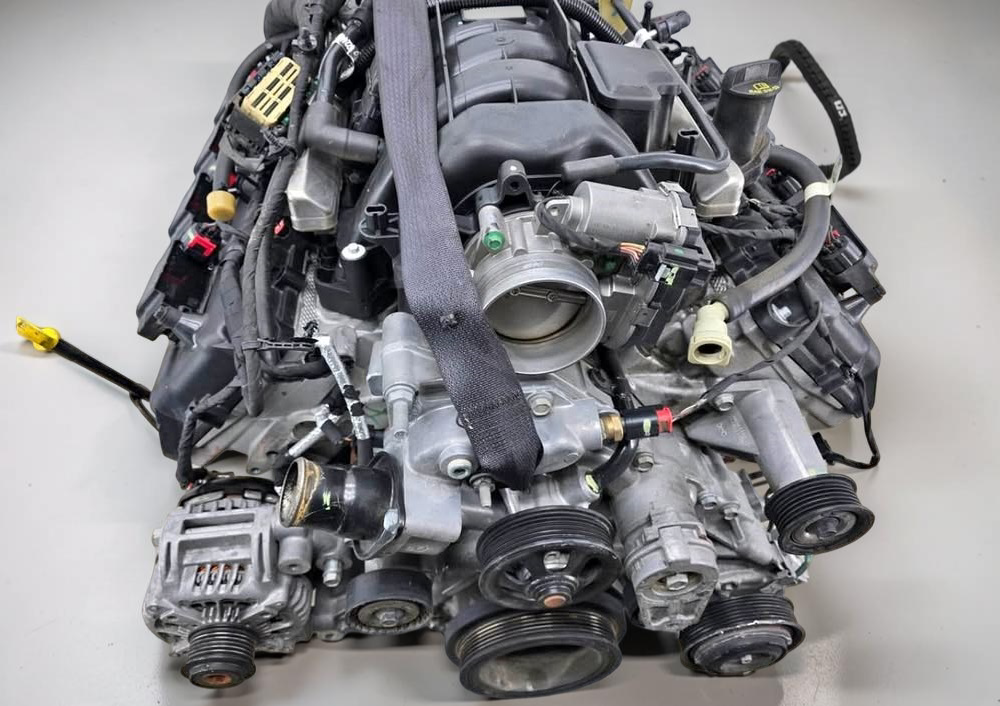
1. 5.7 reaches farther, 6.4 hits harder
5.7 is easier to find and cheaper to feed
Shop HEMIs long enough, and the 5.7 keeps showing up. Ram 1500, Charger, Challenger, Durango, Wagoneer, and other Stellantis models used it across many years. That reach keeps used engines, parts, swap pieces, and tuning support easier to find.
The 5.7 also starts with the lower bill. Its 345 cubic inches still give you real V8 pull, but many applications run on regular or mid-grade fuel. That matters when the car sits in traffic, hauls family duty, or burns through fuel every week.
It fits more normal use than the 6.4. A 5.7 R/T or Ram 1500 can tow, commute, and take mild upgrades without dragging you into SRT costs. The first hit usually lands at the pump, the insurance quote, or cold-start manifold tick.
6.4 brings factory muscle without waiting on mods
Step into a 6.4, and the engine stops feeling like a warmed-over 5.7. Displacement jumps to 392 cubic inches, bore grows to 4.090 inches, and stroke stretches to 3.724 inches. That extra size builds torque before a cam, blower, or long-tube header enters the job.
Hardware moves up too. The 6.4 uses a forged steel crank, while the 5.7 commonly uses a cast or nodular iron crank. Apache heads add larger valves and stronger airflow, so the 392 keeps pulling where a mild 5.7 starts to flatten out.
Dodge’s Durango numbers make the gap plain. Current Durango 5.7 output sits at 360 hp and 390 lb-ft. The 6.4 jumps to 475 hp and 470 lb-ft, and that extra torque hits the transmission, tires, and fuel bill every time you lean into it.
Specs that decide the buy
| Core difference | 5.7 HEMI | 6.4 HEMI | Why it matters |
|---|---|---|---|
| Displacement | 345 cu in | 392 cu in | 6.4 makes more torque without boost |
| Bore | 3.917 in | 4.090 in | 6.4 has more room for valve area |
| Stroke | 3.578 in | 3.724 in | 6.4 adds leverage and midrange pull |
| Typical car compression | About 10.5:1 | About 10.9:1 | 6.4 needs better fuel and cleaner tuning |
| Crankshaft | Cast or nodular iron | Forged steel | 6.4 gets stronger factory crank |
| Common fuel need | 87–89 octane, by application | 91+ in SRT cars, regular-capable HD truck tune | Platform changes fuel cost |
2. Block strength and head flow give 6.4 its stock edge
6.4 carries more metal where heat climbs
Crack open the short-block story, and the 5.7 still looks solid. The 2009-up Eagle 5.7 uses a deep-skirt cast-iron block with cross-bolted mains. That layout keeps the crank supported under normal truck, car, and mild performance use.
The 6.4 starts with more load in mind. Apache car blocks brought the bigger 392 layout, while BGE truck castings added higher-strength iron and thicker cylinder-wall logic. That extra wall support matters when cylinder pressure, towing heat, and sustained rpm start stacking up.
BGE castings also use a shorter water-jacket layout. That leaves more iron around the bores instead of more open coolant space. Push a heavy Ram HD up a grade at 4,000 rpm, and thin cylinder walls become a bad place to save weight.
Apache heads let 392 breathe past 5.7 limits
The 5.7 Eagle heads were a real upgrade over early 2003–2008 heads. Intake flow improved by about 14%, and the later heads helped the 5.7 pull harder than the old pre-Eagle engines. They’re still the reason a modern 5.7 responds well to cams, headers, and tuning.
Apache heads move the ceiling higher. The 6.4 uses 2.138-inch intake valves and 1.654-inch exhaust valves. The 5.7 Eagle heads use 2.05-inch intake valves and 1.55-inch exhaust valves.
That valve size needs the 6.4’s larger 4.090-inch bore. Bolt Apache heads onto a stock-bore 5.7 without the right work, and valve shrouding cuts into the airflow you wanted. The 6.4 also carries more cam lift, with nearly 0.100 inch more intake lift than a standard 5.7 cam.
Flow shows up at rpm. The 6.4 can hold power toward its 6,400-rpm redline because the heads keep feeding the cylinders. A mild 5.7 often starts flattening past about 5,500 rpm unless the intake, cam, and exhaust catch up.
6.4 intake gives the 5.7 swap crowd a reason to work
The 6.4 car intake adds one factory trick the 5.7 crowd likes to borrow. Its short-runner valve changes the air path inside the composite manifold. Long runners help torque down low, then the valve opens near the upper midrange for shorter, freer airflow.
That switch point often lands around 4,800 rpm. Below that, runner length helps cylinder fill and throttle response. Above that, the shorter path helps the 392 breathe harder near peak power.
A 6.4 intake swap can wake up a 5.7, but the manifold won’t do the job by itself. The short-runner valve needs wiring, tuning, or an external controller. Leave the valve dead, and the swap turns into expensive plastic with one half of the airflow trick missing.
3. Cars and SUVs make 6.4 feel like a different class
R/T feels strong, 392 feels stronger everywhere
Launch a 5.7 R/T, and it still feels like a proper V8 car. The 5.7 gives quick throttle response, rear-drive shove, and enough torque for normal street use. In Challenger R/T form, output commonly sits around 375 hp and 410 lb-ft.
The 6.4 Scat Pack changes the pace before the speedometer gets stupid. Its 485 hp and 475 lb-ft hit harder in the middle of the rev range. Passing takes less throttle, and the 8-speed has more torque to work with after every downshift.
Quarter-mile numbers show the gap without dressing it up. Challenger R/T models often run in the mid-13-second range, while Scat Pack cars commonly land around 12.7 seconds. Tires, weather, gearing, and driver matter, but the 392 starts with a bigger hammer.
Durango weight exposes torque fast
Put the same engine fight in a heavy SUV, and the 6.4 gap gets louder. Dodge lists the current Durango 5.7 at 360 hp and 390 lb-ft. The Durango 6.4 jumps to 475 hp and 470 lb-ft.
Weight makes torque easier to feel. A Durango R/T has to move family-hauler mass, AWD hardware, seats, cargo, and sometimes a trailer. The 392 has 80 lb-ft more torque, so it doesn’t need as much rpm to punch through that load.
Dodge lists the 2026 Durango 5.7 at 6.2 seconds to 60 mph. The 6.4 model drops that number to 4.4 seconds. Miss the tire budget or brake service on the SRT, and that extra speed starts eating wear parts fast.
5.7 still fits drivers who rarely use full throttle
Most daily driving never asks for 475 hp. The 5.7 has enough torque for commuting, highway ramps, and easy passing without forcing SRT fuel and tire costs. It also makes more sense when the car spends more time idling than charging toward redline.
The 6.4 pays off when you use the power often. Scat Pack and SRT 392 buyers feel the extra displacement every time the throttle opens past light cruise. That same use raises heat, fuel burn, rear-tire wear, and brake load.
A quiet 5.7 with clean oil history can be the better daily buy. A neglected 6.4 with cheap tires, unknown oil, and hot tick at idle can turn factory power into teardown risk. No clean cold start, no solid service record, no deal.
4. Trucks change the fight because 6.4 means heavier work
5.7 fits Ram 1500 duty better than HD punishment
Hook a trailer to a Ram 1500, and the 5.7 still makes sense. It served for years as the half-ton V8 workhorse, with 395 hp and 410 lb-ft in later Ram 1500 form. That’s enough for daily driving, weekend towing, and mixed-use truck work.
The 5.7 does its best work in the light-duty lane. The truck around it brings lighter axles, lighter brakes, lighter suspension, and lower payload structure than a Ram HD. Push that setup into constant heavy hauling, and the engine stops being the only limit.
A good 5.7 Ram 1500 can tow well when the trailer stays inside the door-jamb ratings. Payload usually runs out before horsepower does. Overload the truck, and the rear axle, cooling stack, brakes, and transmission heat pay first.
6.4 HD is built for load, heat, and rpm
The Ram HD 6.4 is a different 392 than the SRT car engine. Truck calibration drops compression to about 10.0:1, so it can work on regular 87-octane fuel. That matters when the engine pulls long grades under load instead of chasing quarter-mile slips.
Ram’s 2024 HD tow data lists the 6.4 HEMI at 410 hp and 429 lb-ft with the 8HP75-LCV 8-speed automatic. That combo sits in Ram 2500 and 3500 gas trucks, where frame, axle, brake, and cooling capacity matter as much as peak output. The 6.4’s job is sustained pull, not SRT theater.
The truck 6.4 also aims its power lower than the car version. Its intake and calibration favor the 3,600 to 5,000 rpm range, where mountain towing keeps a gas V8 working. Lug it too low with a heavy trailer, and heat climbs through coolant, oil, and transmission fluid.
Towing numbers follow the whole truck, not the badge
A 5.7 Ram 1500 and a 6.4 Ram 2500 don’t compare like engine swaps. The 2500 brings heavier axles, frame sections, springs, brakes, hubs, and cooling hardware. Those parts turn engine torque into legal tow rating.
The numbers show why the platform matters. A 2024 Ram 1500 5.7 can tow up to 12,750 pounds in the right setup. A Ram 2500 6.4 reaches 17,730 pounds, while a Ram 3500 6.4 reaches 18,210 pounds in listed configurations.
Payload cuts even harder. The 1500 5.7 tops out around 2,300 pounds, while the 2500 6.4 reaches 4,010 pounds and the 3500 6.4 reaches 7,680 pounds. Put too much tongue weight on the half-ton, and the scale ticket fails before the HEMI runs out of noise.
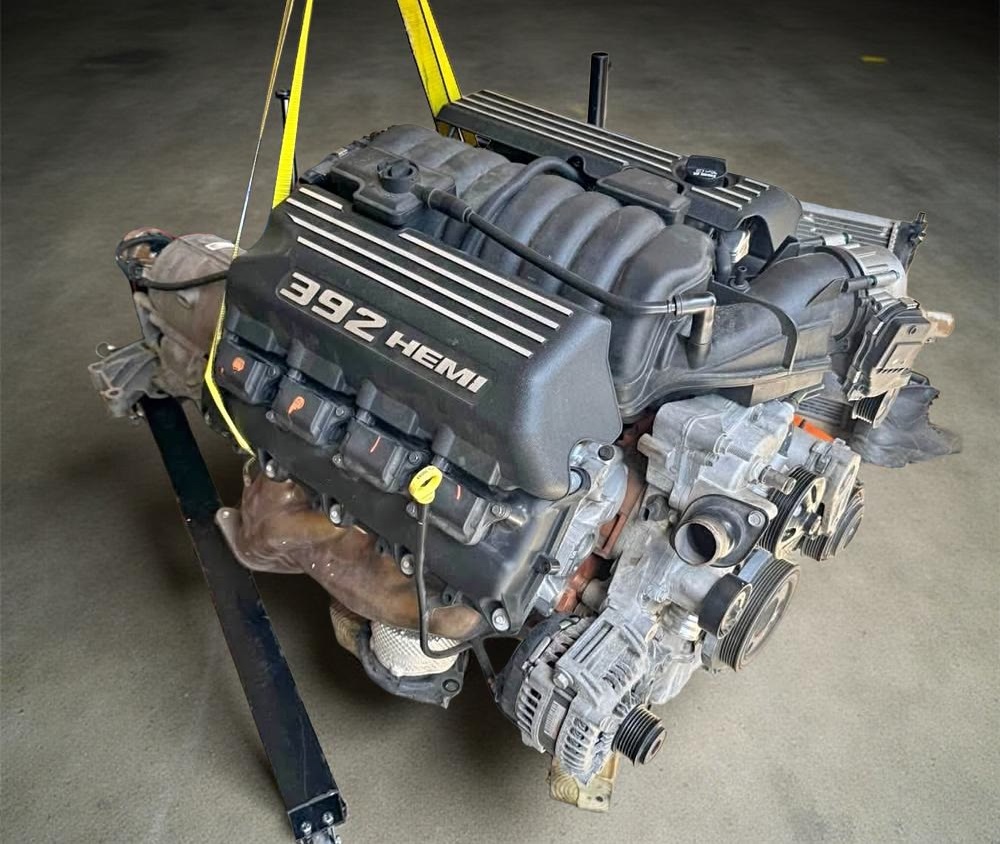
5. Fuel and repair costs keep 5.7 in the fight
5.7 usually burns cheaper fuel
Fill both tanks for a month, and the 5.7 starts clawing money back. Many 5.7 applications run on 87 or 89 octane, depending on the vehicle and owner’s manual callout. That makes it easier to live with in a Ram 1500, Durango R/T, or daily-driven Charger.
The 6.4 costs more in SRT and 392 use. Its car tune runs higher compression, often around 10.9:1, and premium fuel protects it from knock under load. Cheap fuel in a high-compression 392 can turn timing pull into heat, noise, and lost power.
The Ram HD 6.4 plays by a different rule. Its truck tune drops compression to about 10.0:1 and allows regular fuel in heavy-duty use. The fuel grade gets easier, but the bigger truck still brings heavier tires, brakes, fluid loads, and service bills.
6.4 cost rides with the chassis
A 6.4 bill rarely stops at the engine. Scat Pack, SRT 392, and Durango SRT models bring bigger brakes, wider tires, performance suspension parts, and higher insurance risk. Those parts wear faster when 470 lb-ft keeps hitting the rear tires.
Oil choice matters too. Many 5.7 applications call for 5W-20 or an application-specific grade, while 6.4 performance use often calls for 0W-40 synthetic. Wrong oil can upset MDS lifters, solenoids, and hot idle behavior.
Spark plugs, tires, and brakes turn into repeat costs. Performance 6.4 use can call for spark plug service around 30,000 to 50,000 miles. Skip the maintenance trail, and a cheap 392 starts looking like deferred repair money with a loud exhaust.
Cost points that change the math
| Cost or repair point | 5.7 HEMI | 6.4 HEMI | What it means |
|---|---|---|---|
| Fuel cost | Usually lower | Higher in SRT cars | 5.7 wins daily fuel cost |
| Oil spec sensitivity | Often 5W-20 or application-specific | Often 0W-40 in performance use | Wrong oil can upset MDS and lifters |
| Exhaust manifold leak | Common HEMI tick source | Common on HD-style cast manifolds too | Cold-start tick needs diagnosis |
| Cam and lifter repair | Expensive if roller failure eats the cam | Also expensive, with pricier performance context | Real tick can become teardown money |
| Performance tires and brakes | Lower, trim-dependent cost | Higher on SRT and 392 models | Chassis around 6.4 raises the bill |
Exhaust manifold work can land around 3 to 5 labor hours, with repair estimates often near $1,329 to $1,639. Cam and lifter service hits harder, often in the $2,500 to $5,000 range when the roller wipes a lobe. Metal in the oil turns a tick into a teardown.
6. HEMI tick hits both, but owner habits change the odds
Hot tick can mean lifter and cam damage
Hear a sharp tick after warm-up, and the easy guesses start running out. Gen III HEMI engines can suffer hydraulic roller lifter failure, especially when oil quality, viscosity, idle time, and MDS hardware stack up badly. Once the roller stops rolling, it starts grinding the cam lobe.
MDS adds more parts to the lifter story. Automatic 5.7 and 6.4 engines use special lifters on cylinders 1, 4, 6, and 7. Oil pressure unlocks those lifters during cylinder deactivation, so dirty oil or wrong viscosity can foul the lifter pins and solenoids.
The expensive failure leaves clues. A tick that stays hot, joins a misfire, or sends metal into the oil points beyond manifold noise. Cam and lifter service can run $2,500 to $5,000 once the lobe gets eaten.
Cold-start tick often comes from manifold bolts
A cold tick that fades after warm-up points somewhere else. HEMI exhaust manifolds can warp as cast iron expands and cools against aluminum heads. The rear bolts take the stress first, then snap and open an exhaust leak.
That leak sounds ugly on startup. The gap is widest when the manifold is cold, so the tick hits hard for the first few seconds or minutes. As the metal heats up, the manifold expands and can quiet the leak.
This failure hits 5.7 trucks often, and 6.4 HD engines can see it too. Exhaust manifold replacement commonly takes 3 to 5 labor hours. Repair estimates often land around $1,329 to $1,639 before broken bolt extraction turns sour.
5.7 sees idle abuse, 6.4 sees heat and hard use
The 5.7 gets hurt by where it works. Ram trucks, police cars, fleet rigs, and delivery use can idle for hours. Low-speed oil flow does less for lifter rollers than clean rpm and steady oil temperature.
Long idle time matters because the valvetrain still loads the cam and lifters. Some HEMI specialists point toward higher-volume oil pump upgrades, including Hellcat-style pumps, when engines get cam work. The goal is more oil volume up top, especially after lifter trouble starts showing in the pattern.
The 6.4 faces a different kind of beating. SRT cars see heat, rpm, traction shock, and aggressive timing. Ram HD 6.4 trucks see long grades, heavy payload, and high-load rpm. A hot tick after towing or repeated hard pulls deserves oil inspection before the next drive.
7. 6.4 wins naturally aspirated, 5.7 takes boost better
6.4 starts ahead without a blower
Build for naturally aspirated power, and the 6.4 gives you more engine on day 1. Its 392 cubic inches, Apache heads, forged steel crank, and active intake manifold give it a stronger base than a stock 5.7. Long-tube headers, camshaft, and tuning have more airflow to work with.
The 6.4 also carries more valve and port capacity. Apache heads use 2.138-inch intake valves and 1.654-inch exhaust valves, while 5.7 Eagle heads use 2.05-inch and 1.55-inch valves. That extra flow helps the 392 hold power toward its 6,400-rpm redline.
Cammed 6.4 builds can gain serious power when the tune, valve springs, and exhaust match the cam. Some Stage 2 cam packages claim gains around 80 to 100 hp. Miss the oil spec or spring setup, and the valvetrain pays before the dyno sheet matters.
5.7 gives stock parts more boost room
Add boost, and the 5.7 starts looking smarter. Its lower compression, shorter stroke, and smaller bore give tuners more margin on pump fuel. A stock 5.7 Eagle often handles moderate 6 to 8 psi blower setups when fuel, timing, and intake air temperature stay under control.
The 6.4 can make big power with boost, but stock parts leave less room for mistakes. Car versions run about 10.9:1 compression, with tight factory ring gaps and hypereutectic pistons. Heat and detonation can butt the rings, crack the top land, and turn a clean 392 into broken aluminum.
Stock 6.4 boost often stays around 5 to 6 psi for a reason. Push past that on bad fuel or an aggressive tune, and the piston ring land becomes the fuse. A loud dyno pull won’t save a cylinder with collapsed ring clearance.
Forged internals move the line
Forged pistons and rods change the build math. Once you open ring gaps, upgrade fuel delivery, and tune for the actual cylinder pressure, the 6.4’s bigger block and heads start working in your favor. The BGE casting gives serious builders more cylinder-wall support than a stock 5.7.
The 5.7 still wins many budget blower builds. Used engines cost less, parts are everywhere, and a mild setup can make strong street power without chasing 4-digit dyno numbers. Keep the boost modest, and it can stay out of the expensive machine-shop lane.
A forged 6.4 build needs real money before it becomes safer. Pistons, rods, bearings, machine work, fuel system, tuning, and labor can pass the cost of a running 5.7 takeout fast. On stock pistons, ring gap and detonation set the limit.
8. Locked PCMs and MDS make late HEMI builds costlier
2015-up tuning starts with PCM access
Tune a late HEMI, and the first bill may arrive before the laptop opens. Since 2015, many Chrysler PCMs use encryption that blocks normal tuning access. The 5.7 and 6.4 both get caught by that lock.
The fix usually means an unlocked PCM or an unlock service. HP Tuners lists Dodge PCM unlock service around $200 to $249.99, while PCM and tuner bundles can run $665.95 to $1,349.95. That cost hits cam swaps, intake swaps, boost kits, and MDS changes before parts go on the engine.
Older 2003–2014 HEMI builds avoid much of that pain. They still need proper fuel, timing, and transmission calibration, but the control module doesn’t fight access the same way. On a 2015-up car, no unlocked PCM means no clean tune.
2018-up security gateway adds another locked door
The 2018-up security gateway adds a second access problem. Deeper scan-tool work and tuning often need a bypass cable before the OBD-II port gives full control. That matters when you’re changing cam timing, MDS behavior, or 6.4 intake runner control.
The gateway doesn’t care whether the engine is a 5.7 or 6.4. It sits between the tool and the modules, so both engines can need extra hardware before the work starts. A basic code scan may still work, but bidirectional control and tuning access can stall.
This becomes a real shop-time problem. A cammed HEMI with locked PCM access can idle poorly, throw fuel trims off, or keep MDS logic wrong after the parts install. No bypass, no unlock, no clean calibration.
MDS saves fuel but adds lifter risk
MDS shuts down cylinders 1, 4, 6, and 7 during light-load cruising on many automatic HEMI models. Oil pressure moves special lifters so those valves stay closed while the engine runs on 4 cylinders. Manual-transmission HEMI cars skip MDS, which changes both feel and repair risk.
The fuel gain can matter on long highway runs. Some technical summaries claim cylinder deactivation can improve economy by up to 20% in the right light-load conditions. The hardware also adds lifters, solenoids, oil passages, and failure points.
Oil choice keeps showing up here. Many 5.7 MDS applications want 5W-20, while 6.4 performance use often calls for 0W-40. Wrong viscosity, dirty oil, or long idle time can foul lifter pins and turn a fuel-saving system into camshaft damage.
9. Pick 5.7 or 6.4 by job, not noise
5.7 fits budget V8 buyers and mild boost plans
Buy the 5.7 when cost matters as much as sound. It gives you 345 cubic inches, wide parts support, and lower buy-in across Ram 1500, Charger, Challenger, Durango, and Wagoneer applications. It also keeps fuel cost easier in many regular or mid-grade setups.
The 5.7 fits daily drivers that see traffic, school runs, work miles, and weekend pulls. It has enough torque for normal use without dragging you into SRT tire, brake, and insurance costs. A clean 5.7 with good oil history beats a cheaper 6.4 with hot tick and no records.
Mild boost also points toward the 5.7. Lower compression and shorter stroke give it more room on pump fuel than a stock 6.4. Keep the tune clean, watch intake air temp, and stop before ring gap becomes the weak link.
6.4 fits buyers who want factory power first
Pick the 6.4 when you want the big hit without building the engine first. The 392 starts with more displacement, Apache heads, a forged steel crank, and stronger naturally aspirated power. In current Durango form, it brings 475 hp and 470 lb-ft.
The 6.4 fits Scat Pack, SRT 392, Durango SRT, and Ram HD shoppers. In cars and SUVs, it changes passing, launch feel, and quarter-mile pace. In Ram HD trucks, the 6.4 works with heavier axles, brakes, cooling, frame strength, and payload structure.
The cost comes with the hardware. SRT cars often want premium fuel, 0W-40 oil, larger brakes, and wider tires. Stock-bottom-end boost leaves less room for heat, knock, and tight ring gaps.
Best HEMI pick by use case
| Buyer or use case | Better pick | Why |
|---|---|---|
| Budget V8 daily driver | 5.7 HEMI | Lower buy-in and easier fuel cost |
| Charger or Challenger street car | 6.4 HEMI | Much stronger factory power |
| Durango buyer who wants towing and speed | 6.4 HEMI | Big torque gain in a heavy SUV |
| Ram 1500 mixed-use owner | 5.7 HEMI | Better light-duty fit |
| Ram HD gas buyer | 6.4 HEMI | Built for heavier truck work |
| Mild supercharger build | 5.7 HEMI | Lower compression gives more margin |
| Naturally aspirated cam-and-header build | 6.4 HEMI | Better heads, displacement, and intake |
| Forged high-power build | 6.4 HEMI | Stronger foundation once pistons and rods are upgraded |
| Long-idle work vehicle | Neither without caution | HEMI lifter and oiling risk needs attention |
| Cheapest long-term cost | 5.7 HEMI | Less fuel and chassis cost in most applications |
A 5.7 buyer should check cold-start manifold tick, hot valvetrain noise, oil records, and MDS behavior. A 6.4 buyer should check the same, then add tire wear, brake cost, premium-fuel history, and signs of hard heat cycles.
Walk away from any HEMI with hot tick, metal in the oil, or a service story that starts after the noise began.
Sources & References
- Chrysler Hemi engine – Wikipedia
- Everything You Wanted to Know About Gen III Hemi Engines …
- GEN III HEMI® Engine Quick Reference Guide Part IV | DodgeGarage
- Gen III HEMI® Engine Quick Reference Guide – Part I (Updated): 5.7L 2003-2008 Specs, Differences and Performance Breakdown | DodgeGarage
- 2009+ Mopar Gen. III 5.7L Hemi Eagle Engine Guide: Bore & Stroke …
- 5.7L HEMI vs. 6.4L HEMI. Which one is better? #mopar #dodge #srt #rt #hemi #chrysler #stellantis #v8 – YouTube
- Do 5.7 R/Ts handle boost better than Scat Pack 6.4? : r/Challenger – Reddit
- 5.7 vs 6.4 : r/Challenger – Reddit
- Upgraded 5.7L or stock 6.4L? : r/Dodge – Reddit
- Pre-Eagle 5.7L HEMI Heads: Upgrade or Swap? – YouTube
- #1—Head Flow Charts & Comparisons – Hughes Engines
- Edelbrock Aluminum Cylinder Head Flow Data
- 5.7 vs. 6.4 Driving Experience Compare/Contrast. : r/Challenger – Reddit
- Thinking about a 6.4 intake on my 5.7 : r/Charger – Reddit
- 6.4 Intake Manifold On A 5.7 HEMI: What Gains Can You Expect? – SlashGear
- Towing with Ram 2500, either 5.7 or 6.4 engine | Good Sam Community – 1543426
- Active runners 6.4 intake manifold on 5.7 hemi : r/Challenger – Reddit
- HEMI Lifter Tick | HEMI MDS Lifter Failure – Hot Shot’s Secret
- PCM Swap Kits – Holley
- Dodge PCM Services – HP Tuners
- Diablosport PCM Unlock – shopHEMI.com
- DiabloSport PCM & Tuner Package for 15-24 Chrysler, Dodge & Jeep 3.6/5.7/6.4L – High Horse Performance, Inc.
- DiabloSport PULSAR 2015-2024 RAM 1500/2500 5.7L & 6.4 HEMI – Tuner Tools
- Which Is The Better Choice: 5.7 Hemi Or 6.4 Hemi? – YouTube
- Hemi Engine Tech – Multi Displacement System (MDS) – Help Center
- What Is MDS? How Do I Disable It on My Hemi Engine? – 1A Auto
- Opinion on MDS? : r/ram_trucks – Reddit
- Towing with Ram 2500, either 5.7 or 6.4 engine | Good Sam Community – 1543426
- Question For Daily Drivers – Auto / MDS : r/Challenger – Reddit
- Dodge 0-60 Times & Dodge Quarter Mile Times | Dodge Durango …
- 2026 Dodge Durango Review, Pricing, and Specs – Car and Driver
- Tested: 2021 Dodge Durango SRT 392 Makes Powerful Sense – Car and Driver
- 1500 5.7 or 2500 6.4 : r/ram_trucks – Reddit
- Ram 1500 vs. Ram 2500: 2025 Models Compared for Towing, Power & Value
- How 6.4L Hemis Differ In Cars Vs Trucks – HotCars
- Ram 2500 Towing Capacity & Payload: Chart By Year & Trim
- RAM Truck Towing Capacity Guide | Southern Chrysler Dodge Jeep Ram
- 2024 Ram 1500 vs. Ram 2500 | Engine Specs & Towing Capacity – Thomas Chrysler Dodge Jeep Ram of Highland
- 2022 Wagoneer vs. 2022 Grand Wagoneer | Security Dodge Chrysler Jeep Ram
- Tested: 2022 Wagoneer and Grand Wagoneer Go Big for Jeep – Car and Driver
- 2022 Jeep Wagoneer Road Test and Review – Autoweb
- Difference Between the 2022 Wagoneer vs. 2022 Grand Wagoneer – Jacky Jones Chrysler Dodge Jeep Ram
- Ram 1500 Vs. Ram 2500: A Comprehensive Comparison – Kearny Mesa Chrysler Dodge Jeep Ram
- Hemi tick, what’s your guess : r/ram_trucks – Reddit
- 1500 5.7 Hemi, are bad lifters a common problem? : r/ram_trucks – Reddit
- Oil Pump replacement for 5.7 to prevent Lifter/Cam issues? : r/ram_trucks – Reddit
- Hellcat/OEM Oil Pump – FRP Tuning
- Hellcat Oil Pump Install on 5.7 Hemi Discussion : r/Dodge – Reddit
- Bad Lifter Replacement Cost, Symptoms, and More – Allied Motor Parts
- How long did your Hemi 5.7 last after it developed a lifter failure? : r/DodgeDurango – Reddit
- How Much Does It Cost To Do Hemi 5.7 Lifters? #alexthecardoctor #cartips – YouTube
- Exhaust Manifold Replacement Cost Estimate – RepairPal
- Exhaust Manifold Repair & Replacement Costs – SoFi
- Hellcat Oil Pump Upgrade during Camshaft Package install 5.7 6.2 6.4 VVT
- Top 5 Mods for Mopar 5.7L & 6.4L HEMI – National Speed
- ’21 RAM 1500 & 2500 SUPERCHARGER KIT: 5.7L & 6.4L – ProCharger
- 6.4 HEMI VS 5.7 HEMI PERFORMANCE TALK!! Which is better?! – YouTube
- Dodge Durango vs. Jeep Wagoneer Comparison – TrueCar
- 5.7 vs 6.4 as a Daily Drive : r/Challenger – Reddit
- MPG for Dodge 5.7 hemi vs 6.4 hemi | Good Sam Community – 1725610
- SRT vs RT? : r/DodgeDurango – Reddit
- 2022 Grand Wagoneer Engine Comparison: 3.0L Hurricane Twin-Turbo vs 6.4L V8 – Safford CJDR of Winchester
- Jeep Wagoneer (WS) – Wikipedia