
Bolt the EFI unit down, turn the key, and the pump whines longer than it should. Now the choice matters. Holley Sniper and FiTech can both make an old 4150-style V8 start cleaner and fuel better than a worn carb.
Both can also stumble, surge, or die hot if the fuel pump, ground, O2 bung, or tach signal is wrong.
Holley Sniper 2 fits the owner who wants fewer loose ends. It gives you 4 100 lb/hr injectors, better RF noise control, stronger sensor hardware, and an easier path to ignition control.
FiTech fits the hands-on buyer who wants a lower price and can chase fuel pressure, wiring noise, and handheld settings without paying shop labor.
Miss fuel pressure or the ground path, and the first fix starts with a no-start, not a tune.
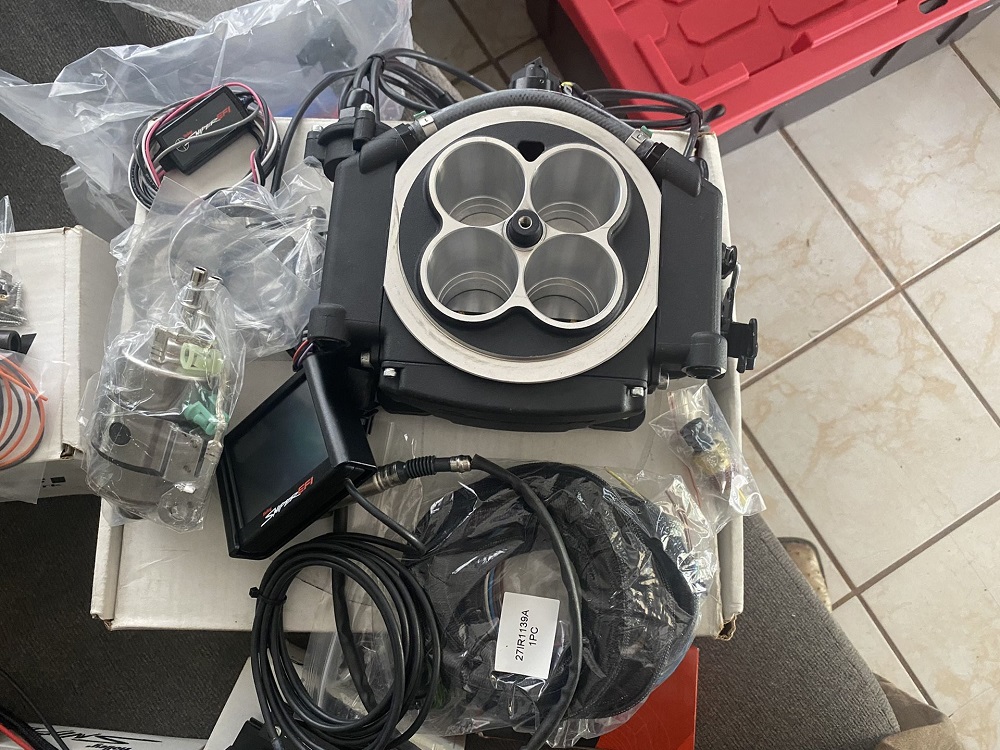
1. Both bolt on like a carb, then punish old fuel habits
Same intake, new rules
Holley Sniper and FiTech aim at the same car. Old V8. 4150 intake. Worn carb.
Both kits sit where the carb sat. Both add injectors, an ECU, a MAP sensor, and a wideband O2 sensor. Both trim fuel while you drive. That part sounds easy. The fuel side isn’t. A carb can live on low pressure, but TBI EFI wants a steady 58–60 psi.
A weak pump will show up fast. So will a bad ground, poor tank vent, dirty pickup sock, or cheap fuel hose near heat.
Bad installs look like bad tuning
A bad EFI swap often starts with one wire. The ECU needs clean power and a clean ground. It also needs a tach signal that plug wires can’t scramble.
The O2 sensor can ruin the tune too. Put it near an exhaust leak, too far back, or where water sits, and it sends bad data. The ECU then learns from bad air-fuel numbers.
That’s when the car starts to act drunk. It surges. It loads up. It dies hot. The handheld gets blamed while the pressure gauge sits ignored.
Fuel heat can do the same thing. A frame pump can cavitate. An engine-bay surge tank can boil fuel. A dead-head fuel line can cook the pump.
Holley buys room for error, FiTech buys a lower bill
Holley gives you more help around the throttle body. Sniper 2 brings better RF noise control, stronger sensor hardware, HyperSpark support, and cleaner wiring paths. Shops also know Holley better.
FiTech gives you more value up front. Go EFI 4 is rated up to 600 hp and costs less than many Holley paths. That works if you can test fuel pressure, clean up grounds, and tune with the handheld.
The choice starts with the installer. Holley gives more margin when the car has old wiring or paid labor. FiTech makes sense when the owner can chase the hard faults without running up shop time.
Miss the pump feed, ground path, or tach signal, and either kit can end the first road test with a hot stall.
2. Holley feels more sorted, FiTech feels cheaper and faster
Sniper 2 fixes the old Sniper pain points
Sniper 2 matters because Holley changed the hard parts. The old Sniper 1 built a strong name, but early installs had real complaints around throttle feel, RFI noise, ECU stress, and wiring sensitivity. Holley didn’t paint the same box again.
The new 4-barrel Sniper 2 uses 4 100 lb/hr injectors. Holley rates it at 650 hp naturally aspirated and 575 hp with boost. That gives a mild small-block, 383 stroker, or street big-block plenty of fuel room before the injectors run out.
The bigger win sits in the electronics. Sniper 2 adds better RF noise resistance, M8-style positive-lock connectors, and a cleaner fuel-pump relay path. That matters when an old ignition box, plug wires, or hot pump tries to drag the ECU into a false RPM mess.
FiTech Go EFI 4 keeps the bill lower
FiTech Go EFI 4 plays a different game. It gives the basic street crowd a 600-hp rating, 4 flow-matched injectors, a built-in pressure regulator, and a 1-bar internal MAP sensor. That’s enough for a lot of carb-swap cars.
The appeal is simple. You can spend less on the throttle body and still get self-learning fuel control, timing-control support, and a compact ECU-on-body layout. For a mild 350, 302, 383, or 454 cruiser, the raw spec sheet looks strong.
The issue shows up when the engine gets less normal. A 1-bar MAP sensor fits naturally aspirated street use. Boost, big cams, weak idle vacuum, or rough dual-plane signal can push FiTech toward more setup work.
Where base street kits differ
| Core point | Holley Sniper 2 | FiTech Go EFI 4 | What it means |
|---|---|---|---|
| Main street rating | 650 hp NA, 575 hp boosted | Up to 600 hp | Holley has more room in the base 4-barrel kit |
| Injector setup | 4 injectors, 100 lb/hr | 4 flow-matched injectors | Both cover most street V8 swaps |
| MAP setup | Stronger sensor setup | 1-bar internal MAP | FiTech fits basic NA use better than boost |
| Main pitch | Cleaner wiring, stronger support, newer electronics | Lower price, compact self-contained unit | Budget decides how much polish matters |
| Best basic fit | Restomod, daily cruiser, paid install | Budget street car, hands-on owner | Install quality still decides the first road test |
3. Fuel pressure beats brand loyalty
Carb pressure won’t feed EFI
A carb can run on low fuel pressure. Many old street carbs live around 5–7 psi. Holley Sniper and FiTech TBI need a steady EFI feed near 58–60 psi.
That pressure jump exposes weak old parts fast. A tired pickup sock, hot frame pump, loose ground, or poor tank vent can make the engine surge or die hot. The throttle body gets blamed while the pump loses pressure.
Return fuel matters too. A return-style setup keeps cool fuel moving through the system. A dead-head line can trap heat near the throttle body and cook the pump on long summer drives.
Holley gives cleaner fuel-system paths
Holley builds around a full parts stack. Sniper 2 can pair with in-tank pump kits, HyperSpark ignition, and optional PDM hardware. That helps when the car needs fewer mystery wires under the dash.
An in-tank pump keeps the pump cooler and quieter. Fuel cools the pump body, instead of letting it roast on a frame rail. Holley fuel kits also commonly point owners toward proper hose, fittings, regulator logic, and return-line planning.
Sniper 2 also moved fuel-pump load away from weak ECU-board logic. The newer relay path keeps high pump current out of the brain box. A hot pump that pulls too much amperage can still fail, but it’s less likely to burn the ECU board with it.
FiTech’s easy fuel shortcut can bite in heat
FiTech got popular because it made EFI feel cheap and fast. The Fuel Command Center style setup let owners keep the old mechanical pump and feed a small engine-bay reservoir. That saved tank work.
Heat made that shortcut ugly. Engine-bay fuel can boil after shutdown. A small surge tank can trap heat, grow pump noise, and turn hot restart into a long crank.
Many owners later move to an in-tank pump anyway. That means dropping the tank, adding a return path, fixing venting, and buying EFI-rated hose. The bargain kit loses ground when the fuel system needs a second build.
4. Sensors decide idle quality before tuning does
Sniper 2 gets a cleaner throttle signal
TPS data has to be clean. The ECU watches throttle angle every time you crack the blades open, lift off, or ease through traffic. A bad TPS signal can make the fuel table chase a pedal move that never really happened.
Sniper 2 uses a contactless magnetic TPS setup. No wiper rubs across a wear strip. No dead spot shows up at the same pedal angle each time.
That matters on old V8s with stiff return springs and rough idle shake. A noisy TPS can spike, drop, or jitter while the engine rocks on its mounts. The result can feel like lean surge, rich tip-in, or a lazy stumble off idle.
FiTech sensors are cheap to fix, but signal quality still rules
FiTech leans on common sensor logic. Many sensors follow familiar GM-style patterns, which helps when a road-trip failure needs a parts-store fix. Cheap parts can save a weekend.
The weak side shows up in noise and wear. A basic mechanical TPS can develop a worn spot. A poor connector, weak ground, or cheap sensor can make the handheld show numbers that drift instead of sitting still.
FiTech can still run well with clean parts. The install has to prove it. Watch TPS percentage, coolant temp, IAT, MAP, and AFR on the handheld before blaming fuel maps.
Dual-plane intakes can muddy the MAP signal
MAP signal can make or break street manners. Many classic V8s use dual-plane intakes because they help low-speed torque. Those divided plenums can send uneven vacuum pulses to a throttle-body EFI unit.
FiTech Go EFI 4 uses a 1-bar internal MAP sensor. On a mild naturally aspirated engine, that can work fine. On some dual-plane setups, the signal can pulse enough to roughen idle or low-speed fueling.
Holley has the cleaner case here. Sniper systems use stronger MAP signal handling, with a better chance of smoothing vacuum data from common street manifolds. If MAP kPa jumps around at idle, the next fault may show as surge, fuel smell, or a hot stall.
5. Timing control separates clean EFI from fuel-only guesswork
HyperSpark makes Holley feel plug-together
Holley has a cleaner ignition path. Sniper 2 can pair with a HyperSpark distributor, coil, and ignition box. The main harness gives the installer a clear route to ECU-controlled timing.
That helps at startup. The ECU can pull timing during cranking, then add timing once the engine fires. A hot small-block with too much initial timing can kick back against the starter.
Idle control gets better too. A big cam can make vacuum weak and choppy at low rpm. With timing control, the ECU can move spark fast enough to catch idle before the engine drops into a stall.
FiTech can run timing, but setup asks more from you
FiTech can control timing with GoSpark parts or a compatible CDI box. It can work well. The harder part is setup.
Base timing has to match what the handheld thinks. Distributor phasing has to stay right. The tach signal must stay clean, or the ECU can see false rpm and move fuel or spark at the wrong time.
Software wording can slow the job down. A Holley-tuned shop may find Sniper faster to sort. A FiTech owner needs to know what the handheld numbers mean before touching timing tables.
Fuel-only EFI leaves spark trouble untouched
Many swaps run fuel-only at first. That can be fine on a mild engine with a good distributor, clean advance curve, and no hot-start kickback. A worn mechanical advance can wreck that plan.
Old distributors add slack. Springs wear. Weights stick. Vacuum cans leak. Then the EFI tries to clean up fuel while spark timing wanders under it.
Full timing control gives the ECU one more tool. It can steady idle, soften hot starts, and react to load changes. Skip that on a cammed street car, and the next complaint may be a hot restart fight or a stall at the light.
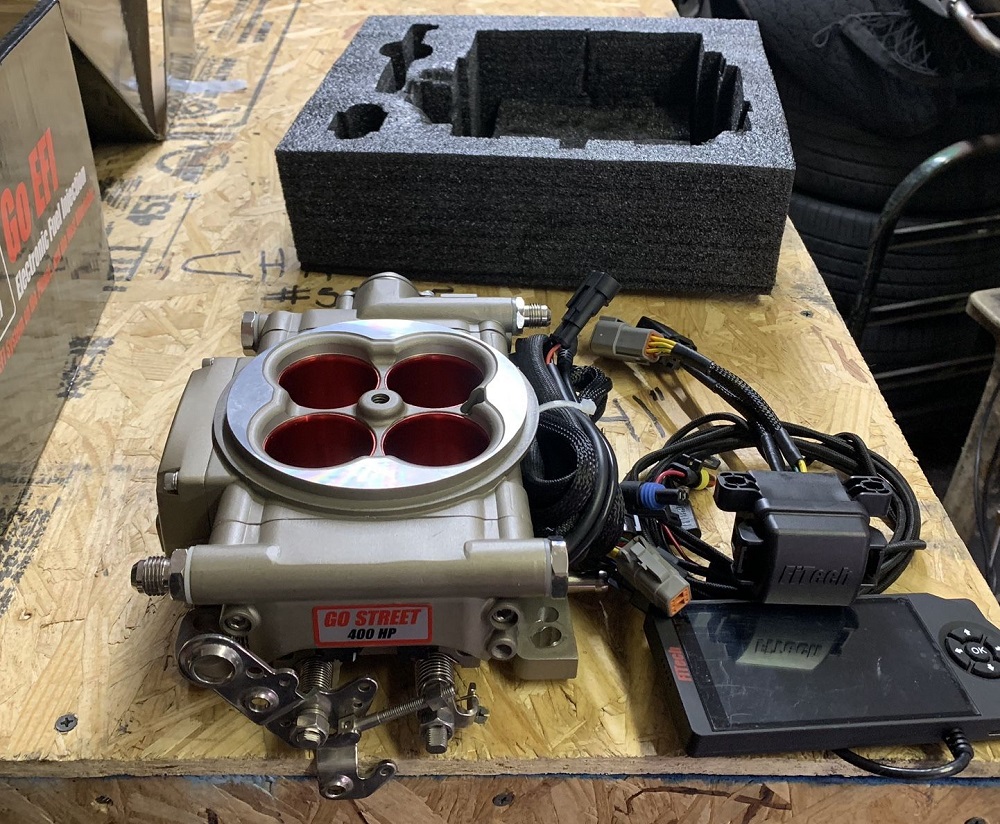
6. Noise, grounds, and heat turn clean installs into tow calls
Sniper 2 answers old RFI complaints
Old EFI hates dirty signals. Spark plug wires, ignition boxes, coils, and loose routing can throw noise into the ECU. Then the system sees false rpm or drops communication.
Early Sniper installs had a known RFI sore spot. Some owners chased resets, false tach signals, and random shutoffs. Even an air-cleaner base has been blamed for acting like an antenna in a noisy engine bay.
Sniper 2 attacks that fault with better RF noise resistance. Holley also moved to stronger positive-lock M8-style CAN connectors. Bad plug wires can still wreck the signal path, but Sniper 2 has more armor than the first unit.
FiTech works best when wiring is clean
FiTech can run well, but it doesn’t forgive lazy wiring. The ECU, handheld, O2 sensor, fuel pump, and tach lead all need clean paths. One poor ground can make the whole tune look wrong.
Ground the engine hard. Ground the body hard. Keep the ECU ground clean, not shared with a rusty bracket or painted intake bolt. A weak ground can shift sensor voltage and make AFR correction chase a ghost.
Tach wiring needs care too. Route it away from plug wires and ignition boxes. A false rpm spike can hit fuel and timing at the same time, then the engine coughs, loads up, or quits.
Heat soak hits both throttle-body ECUs
Both systems keep the ECU on the throttle body. That makes the engine bay neat. It also puts the computer above a hot intake after shutdown.
Underhood heat can climb past 200°F in tight cars. A black air cleaner, short hood clearance, hot crossover, and summer traffic can trap heat around the unit. Then the next restart asks the ECU, pump, and fuel rails to work hot.
Fuel heat stacks on top of ECU heat. A frame pump can get loud. An engine-bay surge tank can boil. A tight harness can bake near headers until the insulation gets hard and the next hot stall starts before the scanner connects.
7. Holley’s support bench helps when self-learn runs out
Holley gives tuners more room to work
Holley has the deeper tuning bench. More shops know Sniper software, HyperSpark wiring, fuel-pump relay logic, and Holley fault behavior. That saves time when a street car won’t idle after the wizard.
Self-learn can only fix so much. A big cam, poor idle vacuum, dual-plane pulse, or power-adder setup can push past basic handheld tweaks. Then laptop tuning, data logs, and known Holley workflow matter.
That shop familiarity has real cost weight. A mechanic who knows Holley can find a bad tach lead, noisy TPS trace, or wrong fuel-pressure setup faster. At $100–$150 per shop hour, a cheap EFI kit can lose its price edge before lunch.
FiTech rewards patient owners
FiTech can run well when the owner stays with it. The handheld gives access to many useful settings. It also asks more from the person holding it.
Some FiTech menus can feel odd if you’re new to EFI tuning. Base timing, AFR targets, accel fuel, fan settings, and idle trims need real checks, not button poking. A wrong change can turn a mild surge into a rich stumble.
A patient DIY owner can make FiTech pay off. A driver who wants a shop to fix it fast may struggle if the local tuner knows Holley better. The bill climbs when the first 2 hours go into finding the right screen.
Bluetooth helps clean interiors and quick checks
Sniper 2 adds phone-based monitoring through Holley’s Bluetooth module. The owner can use the Sniper EFI mobile app instead of keeping the handheld on display. That matters in a clean restomod with no room for a plastic screen on the dash.
Phone monitoring also helps during quick checks. You can watch coolant temp, AFR, rpm, TPS, and battery voltage without digging out the handheld. A weak alternator or low-voltage crank shows up before the tune gets blamed.
FiTech leans harder on its handheld. The aluminum case feels tougher than some plastic screens, but it still needs a place to live. Leave it unplugged, and the next hot-start fault may need a handheld, a pressure gauge, and a voltmeter before the car moves.
8. Cheap EFI gets expensive one receipt at a time
Throttle body price starts the bill
The kit price lies by omission. You still need a pump, filters, EFI hose, fittings, wiring supplies, and a return path. Many swaps also need an O2 bung welded in the exhaust.
Fuel parts add up fast. An in-tank fuel setup can run $300–$600 before labor. Ignition control can add another $400–$700 if the owner wants the ECU to manage spark.
Labor hurts when the car fights back. A basic install may land around $600–$1,500. Add RFI noise, low voltage, hot fuel, or a bad tach signal, and the hour meter keeps running.
Holley costs more, but sorting can cost less
Sniper 2 usually costs more at the counter. The throttle body, HyperSpark parts, Bluetooth module, and PDM hardware can push the receipt higher fast. That extra cost buys cleaner paths for power, ground, timing, and fuel-pump control.
Paid shops care about that. A familiar Holley layout can shorten diagnosis when idle hunts or the pump won’t prime. A known harness and known software screen save time at $100–$150 per hour.
The math changes when troubleshooting starts. Saving $400 on the kit doesn’t help if the shop burns 5 hours chasing voltage drop, false rpm, or a cooked pump relay. That repair order wipes out the cheap win.
FiTech pays off when the owner can do the hard work
FiTech makes sense when the owner brings tools and patience. You need to check fuel pressure, watch AFR, clean up grounds, and read handheld data. Guessing costs money.
The lower buy-in works best on a simple engine. A mild small-block with good exhaust, clean wiring, and an in-tank pump gives FiTech fewer ways to stumble. A big cam, dual-plane pulse, or noisy ignition box raises the skill floor.
Shop labor can erase the savings. A $800–$1,500 EFI unit can turn into a $2,100–$4,300 conversion once fuel, spark, hose, fittings, and labor land on the bench. No fuel-pressure gauge, no clean voltage, no fair diagnosis.
9. Choose by car, budget, and installer
Holley suits the owner who wants fewer loose ends
Holley Sniper 2 fits the safer build. It gives you better sensor hardware, cleaner ignition pairing, stronger RF noise control, and a larger support base. That matters when the car has paid labor on the clock.
Restomods lean Holley. So do daily cruisers and cammed street cars. Bluetooth monitoring also helps when the owner wants a clean dash with no handheld hanging off the console.
Shop support matters after the first startup. More tuners know Holley screens, HyperSpark setup, and Sniper fault patterns. A bad ground still stops the job, but the diagnostic path is shorter.
FiTech fits the owner who can chase details
FiTech fits the hands-on buyer. Go EFI gives a lower buy-in, a compact ECU-on-body layout, and street-friendly kit choices. FiTech also has bigger kits, but most street swaps live or die on fuel pressure, wiring, and idle control.
The owner has to carry more of the work. Fuel pressure, return flow, TPS data, MAP signal, and handheld settings all need real checks. A cheap install with poor wiring can turn into hot stalls and rich surging fast.
FiTech works best on simple street cars with clean fuel work. Mild engines give it room. Cammed engines, dual-plane pulse, or noisy ignition parts raise the odds of a long tuning day.
Where each system makes sense
| Buyer or build | Better pick | Why |
|---|---|---|
| First EFI swap | Holley Sniper 2 | Easier support path and cleaner parts family |
| Tight-budget cruiser | FiTech Go EFI | Lower entry cost |
| Paid shop install | Holley Sniper 2 | More shops know the software and wiring |
| Clean-interior restomod | Holley Sniper 2 | Bluetooth can keep the handheld hidden |
| Mild V8 carb swap | Either | Fuel pressure and wiring matter most |
| Dual-plane street car | Holley Sniper 2 | Better MAP signal case |
| Cammed street car | Holley Sniper 2 | Timing control and tuning depth help idle |
| Hands-on budget owner | FiTech Go EFI | Strong value if the owner can sort faults |
| Owner who hates tuning | Holley Sniper 2 | Fewer odd setup traps |
A clean Holley install costs more up front. A clean FiTech install asks more from the owner. Pick wrong, and the bill shows up as shop time, cooked fuel, false rpm, or a hot stall before the tune gets a fair shot.
Sources & References
- FiTech Vs. Holley Sniper: Which EFI Should You Get? | JEGS
- Self-Tune Showdown: FiTech Vs. Holley Vs. FAST – Lateral-g.net
- Holley EFI or FiTech EFI | ClassicBroncos.com Forum
- Sniper, Atomic, Fitech? Lets beat a dead horse! | ClassicBroncos.com Forum
- EFI Vs. EFI 2: The Ultimate Holley Sniper EFI Buying Guide | JEGS
- Holley Sniper EFI 550-511-3PX Holley Sniper 2 EFI – Black
- Self-learning fuel injection systems-FiTech, Sniper, EZ-EFI – Engine Tech
- Throttle Body EFI Systems & Kits | Self-Tuning Fuel Injection | FiTech
- 30001 Go EFI 4 600HP System – FiTech Fuel Injection
- Holley Sniper EFI 550-511-3XX Holley Sniper 2 EFI – Black
- Holley Sniper 2 EFI – Black
- Is the Holley sniper the go-to for fuel injection? : r/EngineBuilding – Reddit
- Which Fuel Injection Kit, Holley, Fitech? | ClassicBroncos.com Forum
- FiTech or Holley Sniper? | ClassicBroncos.com Forum
- Sniper 2 EFI Throttle Body System – Summitracing
- Fitech or Holley EFI | ClassicBroncos.com Forum
- How To Choose The Right Holley Stand-Alone EFI System – Holley …
- Holley Sniper vs FiTech by wallace18. – Factory Five Forums