
The engine revs, but the Santa Cruz loses its pull in moving traffic. Certain 2022 turbo models can lose drive after a transmission oil-pump fault triggers flawed control software. Hyundai’s recall describes just 20–30 seconds of continued power before the clutches disengage. That leaves little time to reach a safe spot.
The 2022 turbo deserves the most caution, especially with missing repair records or repeat transmission faults. But the gearbox matters as much as the year.
Non-turbo trucks use a conventional automatic, while turbo versions kept the dual-clutch transmission through 2025. Hyundai switched the turbo to a conventional automatic for 2026, though long-term durability remains unproven.
This guide breaks down the years to approach carefully, the recalls to check, and the repairs that change the deal.
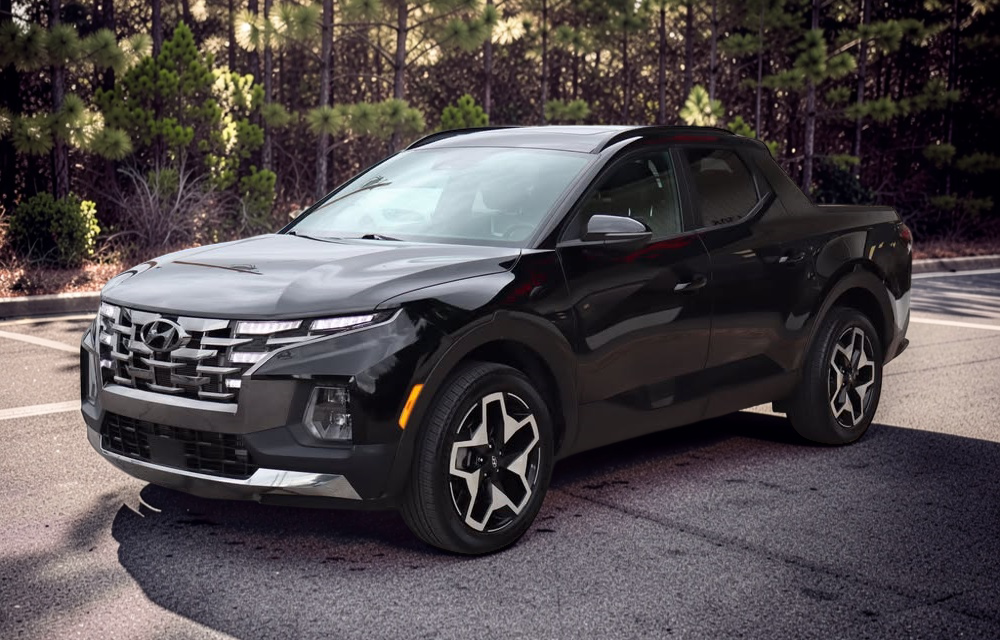
1. Which Santa Cruz years carry the most risk?
The gearbox matters more than the listing
A used listing that says “8-speed automatic” leaves out a key detail. U.S. Santa Cruz models from 2022–2025 use two different gearboxes. The non-turbo 2.5-liter engine pairs with a conventional automatic. The 2.5-liter turbo uses an 8-speed wet dual-clutch transmission, or DCT. Hyundai changed the turbo powertrain to a conventional 8-speed automatic for the 2026 XRT and Limited.
The conventional automatic uses a torque converter to transfer engine power as you pull away. The DCT engages clutch packs to do that job. Its wet clutches run in oil, which helps control heat. Pump faults and clutch-control problems need different repairs, even when both cause poor engagement.
The 2025 styling refresh kept the turbo DCT. A newer dashboard will not tell you which transmission sits underneath. Confirm the engine and gearbox through the VIN-linked build details.
Put repair history ahead of a newer badge
The 2022 turbo draws the strongest caution because its documented transmission defect can cut drive power. Later turbo models also appear in Hyundai transmission-pump service guidance. That supports careful inspection, but it does not establish how often each model year fails.
Raw complaint totals cannot settle that question. A 2022 truck has had more time to accumulate miles than a 2025 model. Maintenance, prior repairs, and the installed gearbox carry more weight than a small gap in model years.
| Model year | Buying assessment | Faults and records that matter |
|---|---|---|
| 2022 | Require the most careful review, especially for an unresolved turbo-DCT fault. Do not reject every 2022 automatically. | Turbo-DCT recall repairs; applicable injector and thermal-management repairs; hitch-harness and roof-molding recalls; turbo oil-supply-pipe recall. |
| 2023 | Approach with caution and verify campaign completion. | Turbo-DCT fault history; thermal-management repairs; applicable hitch-harness and roof-molding recalls. |
| 2024 | Conditional used candidate. Non-turbo versions avoid the DCT, but the turbo still needs a complete repair-history review. | Steering-assist recall; turbo repair history; VIN-specific campaign status. |
| 2025 | Conditional choice for the refreshed cabin. Turbo versions retain the DCT. | Shift-lock, curtain-airbag, and collision-avoidance recalls; turbo pump and transmission history. |
| 2026 | Option for turbo buyers who want a conventional automatic. Long-term durability remains unproven. | Curtain-airbag, instrument-cluster, and collision-avoidance recalls. |
2. Why the 2022 turbo can lose drive
A pump fault can leave the clutches open
Recall 22V-746, Hyundai campaign 236, covers certain 2022 Santa Cruz trucks with the turbo DCT. An internal fault in the transmission’s high-pressure electric oil pump can trigger dash warnings. The transmission controller can then enter an impaired protective routine.
Hyundai’s filing describes roughly 20–30 seconds of continued drive after the fault triggers. The transmission can then disengage its clutches and drive gears, cutting power to the wheels. The engine can still run, but pressing the accelerator will not restore propulsion.
The amended recall covers 10,733 Santa Cruz vehicles built from June 22, 2021, through May 13, 2022. Those dates define the production window, but Hyundai must confirm eligibility by VIN. This campaign applies to affected 2022 DCT trucks, not every Santa Cruz with an automatic.
A closed recall does not prove the gearbox was replaced
Recall 236 calls for transmission-control software updates and inspection, with transmission replacement when required. Some trucks received new software without a replacement gearbox. A campaign marked complete will not tell you which repair took place.
Ask for the dealer invoice showing the work, mileage, and any replacement parts. A documented repair followed by normal operation carries more weight than a seller’s claim that Hyundai “fixed it.” Repeat warnings, failure to engage, or another loss of drive require a fresh diagnosis before purchase.
Later pump faults still need a hardware diagnosis
Hyundai issued bulletin 26-AT-001H in March 2026 for certain 2022–2025 turbo Santa Cruz models. It addresses high-pressure electric oil-pump faults, including P1C2D03, P193B79, and P086800. The procedure can require transmission replacement after the specified diagnostic and campaign checks.
A separate March 2026 campaign, LA12, uses bulletin 26-01-028H for certain 2022–2024 DCT vehicles. It updates pump-control software for specified motor-position and motor-control faults. Its coverage and repair path differ from the transmission-replacement bulletin.
An update performed years earlier does not establish whether either March 2026 procedure applies. Have a Hyundai dealer check the VIN, stored codes, and installed software. A software update can change pump commands; it cannot repair damaged pump hardware.
Shudder needs testing before a gearbox verdict
Low-speed judder needs its own diagnosis. In June 2026, Hyundai issued 26-AT-005H, replacing 23-AT-012H. It directs dealers to perform the applicable software and calibration work before replacing a DCT for judder or drive complaints.
The software must match the installed transmission hardware, including the revised clutch spring where applicable. Calibration sets how the controller engages the clutches. A mismatch can affect engagement, but calibration will not restore worn or damaged clutch parts.
Start the road test with a cold transmission and check engagement into Drive and Reverse. Once warm, assess low-speed movement and normal acceleration. Note repeated shaking, harsh engagement, or an unpredictable response to the accelerator.
Those symptoms alone do not identify a failed clutch pack or oil pump. Hyundai’s procedure requires the applicable checks before choosing the repair. No universal one-second delay proves that this DCT needs replacement.
3. Two fire recalls with very different reach
The turbo oil-pipe recall covered five trucks
Recall 22V-197, Hyundai campaign 222, concerns a weak joint in the turbocharger’s oil-feed pipe. A manufacturing defect could let the joint crack and leak oil onto hot engine parts. That creates a fire risk.
The recall filing identifies five Santa Cruz vehicles built March 2–7, 2022. The narrow scope matters when judging a used 2022 turbo. This recall does not establish that every early turbo truck has a defective oil pipe.
The remedy replaces the affected oil-supply pipe. Have Hyundai confirm VIN eligibility and repair completion. Fresh oil near the turbo still needs diagnosis, even when the VIN falls outside this campaign.
A hitch harness can short with the engine off
Recall 23V-181, Hyundai campaign 244, covers certain 2022–2023 trucks potentially equipped with the affected Hyundai accessory tow-hitch harness. Water can enter through the 4-pin connector and short the wiring module. A fire can start while driving or while parked with the ignition off.
The receiver hitch and electrical harness are separate parts. A visible hitch does not prove that the truck carries the recalled wiring. Choosing the non-turbo engine will not remove the risk if someone installed the affected harness.
The dealer verifies the installed equipment and follows the prescribed harness repair. Where applicable, that includes an updated 15-amp fuse and wire-extension kit. An old receipt for interim fuse removal does not establish completion of the final remedy.
Check the campaign record for the finished repair, not just an earlier dealer visit. Hyundai and NHTSA instructed owners to park affected, unrepaired vehicles outside and away from structures. Turning off the ignition does not remove the fire risk.
4. The non-turbo needs more than a clean test drive
Leaking injectors can hide behind a cleared warning light
Certain 2022 non-turbo Santa Cruz trucks fall under bulletin 23-FL-002H-1 for internally leaking gasoline direct-injection injectors. An affected injector can let fuel enter a cylinder when it should seal shut. The engine may run unevenly and store cylinder-misfire codes.
That leak needs a different repair from a dirty injector tip. Hyundai directs technicians to identify the leaking injector before replacing it. A bottle of injector cleaner will not prove that the injector seals.
A misfire code identifies a combustion problem, but it does not prove an injector caused it. Ignition and compression faults can also make a cylinder misfire. Ask for the diagnosis and repair invoice if the truck has a history of shaking or engine warnings.
Clearing codes can switch off the warning light without fixing the leak. During a pre-purchase scan, have the technician check pending codes and emissions-monitor readiness. Incomplete monitors can follow a recent reset, so a clear dash alone does not establish a completed repair.
The cooling repair calls for a part and software
Bulletin 23-EM-006H covers certain 2022–2023 Santa Cruz models with either 2.5-liter engine. It addresses P2181, a cooling-performance code tied to the integrated thermal-management module. That module controls coolant flow through the engine’s cooling circuits.
The code flags cooling performance outside the expected range. It does not, by itself, prove overheating or engine damage. A technician must check the fault rather than assume the engine needs major work.
Hyundai specifies a revised thermal-management module and an engine-control software update for this repair. A software-only invoice does not establish that the dealer completed both steps. The repair record should identify the replacement module and ECU update.
5. Loose roof trim and a jammed bed cover deserve a closer look
Roof moldings can break free on the road
Recall 23V-038, Hyundai campaign 241, covers certain 2022–2023 Santa Cruz models with poorly secured roof moldings. The attachment points may fail to hold the trim in place. A molding can detach while driving and become a hazard for traffic behind you.
Look for lifted edges, uneven seating, or gaps along the roof trim. Wind noise from that area warrants inspection, though noise alone does not prove a loose molding. Trim that looks flush also does not establish recall completion.
The campaign calls for inspection and securing or replacement, as required. A seller’s bead of adhesive does not prove Hyundai performed that repair. Confirm campaign completion through the VIN and dealer repair record.
Run the bed cover through its full travel
Bulletin 24-BD-004H addresses certain 2022–2024 trucks with the retractable tonneau cover. Listed concerns include poor retraction and a V-shaped gap when closed. The repair can involve inspection, realignment, or replacement of the cover assembly.
Open the cover fully, then close and latch it. Watch whether both sides move evenly through the tracks. Binding, incomplete travel, or a persistent gap needs diagnosis before someone blames dirt alone.
A cover that stops short or will not latch limits how you can secure cargo. Ask for an estimate based on the actual fault. Track adjustment and assembly replacement involve different parts and labor.
Inspect the bed surface separately for chips, peeling, and damage near the tie-down points. Judge each damaged area by its condition and repair needs. A working cover will not correct damaged bed surfaces, and cover alignment will not fix a failed latch.
6. Newer trucks still need recall repairs
Steering, airbags, and brakes have separate faults
| Model years | Recall | What can go wrong | Required repair |
|---|---|---|---|
| 2024 | 24V-412 / Hyundai 261 | Contaminated circuit-board flux can cause a short and cut power-steering assist. | Replace the motor-driven power-steering electric power pack. |
| 2025 | 24V-877 / Hyundai 273 | Misrouted console wiring can interfere with the shift lock. The lever may leave Park without brake application. | Reroute the console-extension wiring harness. |
| 2025–2026 | 25V-809 / Hyundai 289 | Twisted curtain airbags may deploy incorrectly during a crash. | Reinstall affected airbags in the correct orientation. |
| 2025–2026 | 26V-316 / Hyundai 302 | Overly sensitive front-camera software can trigger braking earlier than expected. | Update the front-camera software. |
| 2026 | 26V-047 / Hyundai 293 | A software error can cause instrument-cluster failure or a blank display. | Update cluster software. Eligible vehicles may receive an over-the-air update. |
A smooth test drive can miss these defects
Each campaign covers certain vehicles, so the model year alone will not establish eligibility. Have Hyundai check the VIN for open recalls and completed repairs. For software campaigns, confirm that the required update reached the truck.
Loss of steering assist makes the wheel harder to turn, especially at low speeds. It does not mean the steering wheel mechanically locks. The 2024 campaign replaces the electric power pack because a circuit-board short can interrupt assistance.
The 2025 shift-lock defect concerns the lever’s brake interlock. Normal shifting during a test drive does not establish that the console harness follows the correct route. Hyundai instructs affected owners to set the parking brake whenever they park.
A curtain airbag can sit twisted behind the trim without an obvious cabin defect. An absent airbag warning does not prove correct installation. The prescribed repair requires access to the affected airbags and correction of their orientation.
The collision-avoidance recall addresses excessive sensitivity in the front-camera software. Its description does not establish that every event involved an imaginary obstacle on an empty road. A drive without early braking will not confirm the software version.
The cluster fault can briefly remove the speed display and warning information while the truck moves. Restarting the display does not establish that the recall repair took place. Eligible trucks need the specified software even when the screen works during inspection.
7. Pick the engine and gearbox around the work
The non-turbo trades pulling power for a different gearbox
A well-maintained 2023–2025 non-turbo Santa Cruz gives you a conventional automatic without moving to the 2026 model. Look for completed campaigns, service records, and remaining warranty coverage. A newer badge will not offset missed maintenance or an unresolved fault.
The non-turbo 2.5-liter makes 191 horsepower and can tow up to 3,500 pounds in the applicable configuration. The turbo delivers 281 horsepower and can tow up to 5,000 pounds when properly equipped. Those limits depend on the truck’s configuration and required trailer equipment.
Check the ratings for the actual truck before matching it to a trailer. Passengers, cargo, and trailer tongue weight also count against its payload allowance. A higher tow rating does not raise the payload limit printed on the door label.
The 2025 cabin upgrade kept the same turbo DCT
The 2025 refresh brought a revised dashboard, updated infotainment, and revised physical controls. Those changes can make the cabin easier to live with. They do not establish better transmission durability.
Turbo versions still use the wet DCT, so their repair records need the same close review. Check for pump-fault diagnoses, software work, and any transmission replacement. A low-mileage 2025 can still fall within Hyundai’s 2022–2025 pump-fault repair guidance.
The 2026 turbo drops the dual-clutch transmission
Hyundai fitted a conventional 8-speed automatic to the 2026 XRT and Limited. Both retain turbo power while moving away from the earlier DCT. That hardware change matters if you want turbo capability without that clutch arrangement.
The conventional automatic uses a torque converter when pulling away. It still contains clutch packs, hydraulic controls, and parts that wear. The change does not eliminate every possible shudder, pump failure, or loss of drive.
The 2026 model also has a shorter service history, which limits long-term reliability claims. Its separate safety recalls still require a VIN check. The gearbox change does not address curtain-airbag installation, camera software, or instrument-cluster failures.
8. Warranty coverage can change the cost of an early truck
A used purchase does not restart the warranty
Hyundai’s original-owner powertrain warranty runs for 10 years or 100,000 miles, whichever comes first. A typical subsequent owner gets the remaining 5-year/60,000-mile coverage for eligible powertrain repairs. Both terms start from the original warranty date, not the day you buy used.
That difference matters when shopping for an early turbo truck. A 2022 model may already have little coverage left because of its age or mileage. Have Hyundai confirm the warranty start date, status, and remaining coverage by VIN.
The LA12 software campaign follows these status-based limits. Its bulletin allows case-by-case goodwill consideration outside coverage, but approval is not automatic. It does not give every used DCT truck a fresh 10-year warranty.
Check who stands behind “certified”
Hyundai Certified Used Vehicles coverage can provide a 10-year/100,000-mile powertrain term, subject to the program’s conditions. That term runs from the original in-service date. Hyundai’s published program information lists a $50 deductible per covered repair visit, with specified exceptions.
Ask for the Hyundai certification and warranty documents before signing. A dealer’s own “certified” label does not establish enrollment in Hyundai’s program. Confirm which contract covers the transmission and who must approve a repair.
Price the diagnosed fault before taking the discount
Safety recalls and ordinary warranty repairs follow different rules. An applicable safety-recall remedy can remain free after the normal warranty ends. A technical service bulletin describes repair guidance; it does not automatically make that work free.
For a transmission fault, get a written diagnosis and estimate before judging the asking price. The estimate should identify the required repair, parts, labor, fluids, and calibration work. A software procedure and a complete gearbox replacement carry very different costs.
Confirm coverage approval, parts availability, and the repair warranty before agreeing to buy. Keep verbal promises out of the price calculation. Without written authorization, you may owe the full repair bill.
Sources & References
- NHTSA recall database: 2022 Hyundai Santa Cruz
- NHTSA recall database: 2023 Hyundai Santa Cruz
- NHTSA recall database: 2024 Hyundai Santa Cruz
- NHTSA recall database: 2025 Hyundai Santa Cruz
- NHTSA recall database: 2026 Hyundai Santa Cruz
- Hyundai Safety Recall 236
- Part 573 Safety Recall Report 22V-746
- Part 573 Safety Recall Report 23V-181
- Hyundai Technical Service Bulletin 23-EM-006H
- Hyundai 2025 Santa Cruz overview
- Hyundai America’s Best Warranty
- Hyundai Certified Used Vehicles
- Hyundai Santa Cruz specifications