
When you’re behind the wheel of a BMW F30, everything feels dialed in—until the sun goes down and those stock headlights leave you squinting into the darkness. If your 3-Series still has the original halogen setup, you know the struggle: weak beams, yellowish tint, and outdated styling that does the car no favors.
Upgrading your F30’s headlights isn’t just about vanity—it’s a real performance and safety boost. Brighter, sharper light can mean the difference between seeing that pothole in time or paying for a new wheel.
Plus, if you’re aiming for that clean, modern look of the LCI (2016–2019) models, a headlight upgrade gets you there without needing a full front-end swap.
Whether you’re chasing better night vision, a bolder street presence, or simply tired of your car looking stuck in 2012, upgrading your F30’s headlights is one of the smartest moves you can make.
But picking the right setup isn’t just plug-and-play—you’ll need to know where your car’s starting point is, what fits properly, and what headaches to avoid.
Let’s break it down so you can upgrade the right way—and actually enjoy the payoff every time you flick on those new lights.
Know Your Starting Point: What’s Lighting Up Your Drive Now?
Before you even think about upgrading, you’ve got to figure out exactly what’s sitting behind your F30’s front lenses. BMW wasn’t exactly consistent—they mixed and matched halogen, xenon, and LED setups across model years and option packages.
Halogen, Xenon, or LED? Here’s How to Tell
If your F30 was built between 2012 and 2015 (pre-LCI models), there’s a good chance it came with basic halogen reflector headlights. These have that old-school yellow glow and a wide, somewhat messy beam pattern. Some lucky buyers snagged the optional xenon projector lights, offering a cleaner, whiter output, and those signature BMW “angel eyes” daytime running lights.
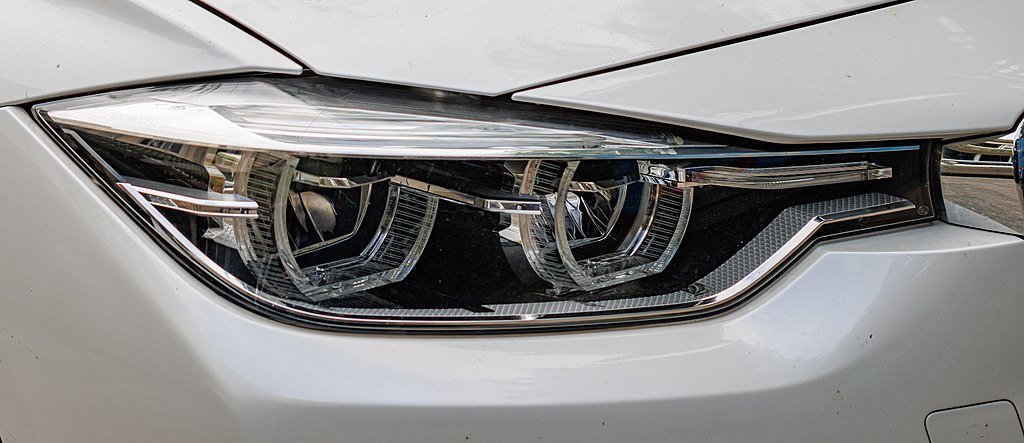
Moving up to the 2016–2019 LCI models, BMW went all-in with LED projectors as standard. These cars rock that sharper, hexagon-shaped DRL look, with more intense beams and tighter focus.
Quick Check: Spotting Your Headlight Type
Not sure which setup your car has? Here’s the fastest way to figure it out:
• Halogen: Basic reflector housing, no projector lens inside. The light looks dull yellow when turned on.
• Xenon (HID): Clear, round projector lens. Bright white or slightly bluish light. Usually paired with visible “angel eyes.”
• LED: Modern, crisp design with geometric DRL shapes (often hexagonal). The color output is bright white, almost bluish.
If you want to be sure, pop your VIN into a BMW build sheet decoder or check the housing itself for markings. Halogen units are usually stamped “H7,” while xenon will often show “D1S” or “D3S,” and LED units sometimes even say “LED” right on the label.
Electrical Basics: Why Starting Point Matters
This isn’t just about looks. Your car’s wiring, modules, and even the headlight mounting points are different depending on what it left the factory with.
• Halogen cars lack the ballasts and LIN-bus control modules that xenon and LED cars have.
• Xenon and LED cars have extra electronics to manage beam leveling, adaptive cornering, and more.
If you start throwing in headlights without matching the setup, you’re asking for error codes, flickering, or lights that flat-out don’t work.
Upgrade Paths: Finding the Right Fit for Your F30
Not all upgrades are created equal, and picking the wrong path can turn a simple refresh into a coding nightmare. Let’s break down your real-world options, from quick fixes to full-on transformations.
LED Bulb Swap: The Easy Way Out (Mostly)
If you’re looking for the fastest, cheapest upgrade, swapping your stock halogen bulbs for LED replacements sounds tempting. H7 LEDs for low beams, H15 LEDs for DRLs—simple enough.
Reality check: it’s a mixed bag. Sure, you’ll get brighter light and a cooler color, but halogen reflectors aren’t designed for LEDs. That means you risk a messy beam pattern, glare for oncoming drivers, and potential tickets in stricter areas.
Plus, BMW’s electrical system loves throwing “bulb out” warnings when it senses something it doesn’t like. You’ll probably need a resistor harness or coding tweak to stop the dashboard from lighting up like a Christmas tree.
Projector Retrofit Kits: Sharp Cutoffs, Better Control
Want the benefits of LED bulbs without blinding traffic? A projector retrofit kit is a serious step up.
These kits bake new lenses into your stock headlight housings, giving you the clean, sharp beam pattern you’re supposed to have.
It’s a big job—think opening up the headlights in an oven, resealing them after, and spending a Saturday afternoon swearing in your garage—but the results speak for themselves. Proper cutoff, no glare, and a huge jump in usable light.
If you’re handy and patient, it’s a killer middle ground between bulb swaps and full headlight replacements.
Aftermarket Projector Assemblies: Built-In Style Boost
Ready to ditch the stock headlights entirely? Brands like Spyder and AKKON offer full projector assemblies designed to bolt right in.
You’re not just getting better beams—you’re getting upgraded DRLs, sequential turn signals, and a fresher look. The install is usually plug-and-play or close to it, and prices run from $550 to about $1,000, depending on style and features.
Just be warned: aftermarket quality can be hit or miss. Some users report moisture inside the housings after rain or inconsistent light patterns. Stick with brands that have real-world reviews, not just flashy photos.
LCI-Style Full-LED Assemblies: The OEM+ Sweet Spot
If you’re chasing that clean, crisp factory LED look from the 2016+ F30 models, LCI-style aftermarket headlights are your answer.
Inline Six Auto, BayOptiks, and Depo all offer versions designed specifically for pre-LCI cars. They usually come with plug-and-play harnesses, adapter looms, and sometimes built-in error cancelers to make your life easier.
You’ll still need to code out some functions (like adaptive headlight errors if your car had AFS originally), but the fit, finish, and overall appearance are miles ahead of random aftermarket options.
Best part? No baking open your headlights, no worrying about weird beam patterns—it’s just about as close as you’ll get to a factory-level upgrade without mortgaging your house.
OEM Adaptive LED Swap: The Gold Standard (at a Price)
If budget isn’t a concern—and you refuse to settle for anything less than factory perfection—you can retrofit genuine BMW Adaptive LED headlights.
Expect to spend $2,500 to $3,400 on parts alone, plus a few hundred more on professional coding and installation. You’ll also need front leveling sensors, headlight washers, and possibly a new FRM/FEM module if your car didn’t come pre-wired.
But once it’s done? You’ve got the real deal: steering-linked cornering beams, automatic leveling, and the same headlights BMW charges five figures for when you order them on a new 3-Series.
Compatibility Check: Matching Parts to Your F30 Without Regret
Before you start buying parts and tearing into your headlights, there’s one brutal truth: not all F30 headlights fit all F30s. BMW made sure of that with wiring, mounting, and electronics differences that’ll trip you up if you’re not paying attention.
Let’s sort out the headaches before they happen.
Pre-LCI vs. LCI: A Battle of Mounting Tabs and Connectors
If your F30 is a 2012 to early 2015 model, you’ve got what’s called pre-LCI headlights.
From late 2015 onward, BMW gave the 3-Series a facelift—or “Life Cycle Impulse” (LCI)—including completely redesigned headlights.
They’re not a straight swap.
• Mounting tabs moved.
• Internal module layouts changed.
• Even the shape of the housing shifted just enough to make you scream if you try to bolt LCI headlights into a pre-LCI car without the right brackets.
Good news: Some aftermarket LCI-style headlights (Depo, Inline Six Auto) are purpose-built for pre-LCI cars, so you get the updated look without fighting with adapters.
Bad news: True OEM LCI headlights need custom work—brackets, harness changes, and sometimes cutting.
Halogen vs. Xenon/LED Wiring: The Hidden Trap
Halogen-equipped F30s use a simple 8-pin headlight connector. Xenon and LED-equipped cars run a 14-pin harness with way more electronic chatter (LIN bus control modules, adaptive motor signals, you name it).
If you’re upgrading a halogen car, you’ll need an adapter loom or you’ll be left with half-lit headlights and a parade of error codes.
Most quality aftermarket kits include these adapters, but always double-check.
Otherwise, you’re in for a frustrating wiring job—and trust me, you don’t want to start splicing BMW harnesses unless you really have to.
Adaptive Headlights: Code It or Cry
If your F30 came from the factory with Adaptive Headlights (AFS)—the kind that swivel into turns—you’re facing another hurdle.
Install non-adaptive lights without coding out the AFS feature, and your dashboard will bark at you with “Headlight Vertical Aim Control Failure” warnings until you fix it.
• You’ll need to code out option $524 in the FEM_BODY module using software like BimmerCode or ISTA+.
• No, just ignoring the warning won’t make it go away.
Adaptive functionality itself is almost never retained unless you go full OEM swap with all the right hardware, and that’s a deep rabbit hole.
Legal Curveballs: Don’t Get Burned
Thinking about HID or LED upgrades? Some regions (especially Europe and a few U.S. states) have strict rules:
• Headlights over 2,000 lumens must have automatic leveling and headlight washers.
• Illegal retrofits can technically fail inspections or get you pulled over.
OEM LED and high-end aftermarket LCI-style lights usually fly under the radar. Slap cheap LED bulbs into halogen reflectors without projectors, though, and you’re asking for attention from the wrong kind of authority.
Installation Overview: What It Really Takes to Swap F30 Headlights
So you’ve picked your headlights, checked compatibility, and you’re itching to start. Before you reach for your ratchet, let’s break down what you’re actually getting into—because some installs are an afternoon project, and some will leave you cursing at hidden clips and stubborn bumper tabs.
DIY Installation: The Bumper’s Coming Off—No Way Around It
If you’re doing it yourself, the bumper has to come off. No shortcuts here. BMW tucked the lower headlight bolts behind the bumper cover, and unless you’re Houdini with socket extensions, it’s gotta go.
Here’s the real-world flow:
• Disconnect the battery first. Modern BMW electronics hate surprises.
• Peel back the fender liners to get at the bumper bolts hiding behind the wheels.
• Pop the bumper cover carefully—hidden clips along the edges like to snap if you rush.
• Unplug the fog lights and parking sensors before you set the bumper aside.
• Remove the three T30 screws holding each headlight in place.
• Slide the headlights forward, swap the harness or module if needed, and bolt the new ones in.
When you reinstall the bumper, line it up perfectly before torquing things down. Misaligned bumpers on a BMW stick out like a sore thumb. First-time DIYers: budget about 3 to 5 hours, especially if you hit a stubborn clip or find unexpected wiring weirdness.
When It’s Smarter to Pay a Pro
Some upgrades cross the line from “tough DIY” into “just pay someone.”
Here’s when it makes sense to hand it off:
• Adaptive headlight coding (disabling $524) needs proper diagnostic software (ISTA+ or dealer-level tools).
• Halogen to Xenon conversions need wiring pin swaps, ballast mounting, and usually washer system retrofits.
• Moisture warranty protection for premium headlights often requires a professional shop to heat-seal the lenses after installation.
Shops familiar with BMWs will charge about $150 to $300 for a straightforward swap. Add more if coding, wiring extensions, or reprogramming is needed. And if something does go sideways? Way better for a shop to eat the cost than for you to foot a four-figure mistake.
Cost Breakdown Example: What It Really Costs to Upgrade Your 328i Headlights
Before you start dreaming about those crisp LCI LED eyes, let’s talk numbers—because even the cleanest install won’t matter if the price punches you harder than a pothole at 60 mph.
Breaking Down a Real-World DIY Swap on a 2014 328i
Let’s say you’ve got a 2014 BMW 328i rocking the sad halogen setup. You want full LED LCI-style headlights that don’t just light up the night but actually look like they belong in this decade. Here’s the bill you’re staring at:
| Item | Qty | Price | Sub-Total |
| Depo LCI-style LED housings (halogen spec) | 2 | $1,050 | $1,050 |
| CAN-bus error eliminators (optional but smart) | 2 | $35 | $70 |
| BimmerCode app + Vgate iCar OBD (for coding) | 1 | $50 | $50 |
| Shop labor (optional, ~2 hrs) | — | $240 | $240 |
| Total DIY / Shop | $1,170 / $1,410 |
DIY route? You’re in it for about $1,170 plus your own sweat and swearing.
Paying a shop? Expect closer to $1,410 once labor gets tacked on.
Hidden Costs That Can Sneak Up on You
• Coding apps and adapters if you don’t already have them.
• Resistor packs or error cancelers if your F30 throws bulb-out warnings after install.
• Sealant if you need to beef up the weatherproofing (butyl tape isn’t expensive, but forgetting it can cost you big with condensation issues later).
Bottom line: good upgrades aren’t cheap, and cheap upgrades aren’t good. Plan realistically, and your F30 will thank you every time you flip the switch at night.
Post-Upgrade Surprises: Common Issues and How to Handle Them
Swapping out your F30’s headlights feels like a huge win—until the warning chimes kick in or your new lenses fog up like a gym mirror. Here’s what you might run into after the upgrade and how to fix it without losing your sanity.
Parking Light Warnings That Just Won’t Quit
One of the most common headaches after a headlight upgrade is the dreaded “Parking light malfunction” error. It usually pops up because the car’s electrical system expects the load from halogen bulbs, not low-draw LEDs.
Quick fix: Use BimmerCode to turn off bulb checks for the parking lights. If you can’t code or prefer not to, small 50-ohm resistors wired into the circuit usually fool the system into thinking everything’s normal.
Condensation Creep: A Cloudy Situation
Even some brand-new aftermarket headlights can fog up inside, especially when the weather flips between hot and cold. A little mist that dries out quickly isn’t a big deal. But if water starts pooling inside the lens? That’s a problem.
The solution is almost always better sealing. Adding an extra butyl rubber bead around the edges or tightening the vent caps usually knocks out the issue for good.
High Beams That Flicker Like Haunted House Lights
If your high beams flash or flutter after an LED bulb swap, you’re likely seeing a PWM (Pulse Width Modulation) conflict. The car’s stock wiring pulses power, and some cheaper LEDs don’t play nice.
You can fix this by installing LED drivers designed to filter PWM signals—or again, coding the car to steady output if your tools allow it.
Low or Crooked Beam Patterns
When you bolt on new headlights, especially full assemblies, your beam aim will almost never be perfect out of the box. A misaligned beam isn’t just annoying—it can blind other drivers or wreck your night vision.
Always manually adjust the new headlights after install. The F30 has simple adjusters (usually T20 Torx screws). Park facing a wall, back up 25 feet, and tweak until the beam falls just below headlight height.
Strange Electrical Gremlins
Sometimes random warnings pop up even after you think you’ve installed everything right. Things like “adaptive headlight failure” or “high-beam assistant malfunction” can show up if your car originally had AFS (adaptive headlights) and you’ve swapped to non-adaptive aftermarket units.
Clearing these errors usually means coding out options like $524 (adaptive light control) from the vehicle order with BimmerCode or a more advanced tool like ESys or ISTA/P. If you skip this step, the warnings will just keep coming back.
Brands That Get It Right: Where to Trust Your Money
Once you dive into the F30 headlight upgrade world, the choices get overwhelming fast. Some brands nail the look and reliability. Others… not so much. Here’s a real-world breakdown of the names that consistently come up when owners want solid upgrades without dealing with endless issues.
Depo: The Go-To for OEM-Look Upgrades
If you’re chasing that clean LCI facelift look without wrecking your wallet, Depo pretty much owns this space. They’re not just slapping out cheap copies either—their housings fit like factory parts, the beam patterns are solid, and you’ll find fewer complaints about moisture getting trapped inside compared to most other aftermarket brands.
• Strength: OEM-style appearance, reliable sealing
• Warranty: 1 year (typically through resellers)
Inline Six Auto: Hassle-Free Installs and Support
What sets Inline Six Auto apart isn’t just the products—it’s that they pre-test a lot of their headlights before shipping. You’ll often get a guide for coding and setup, too, which is a lifesaver if you’re new to the DIY scene.
• Strength: Pre-verified fitment and coding help
• Warranty: 1 year
BayOptiks: Premium Custom Builds for Standouts
Want your F30 to have something no one else does? BayOptiks builds customized headlight sets with options like yellow DRLs, smoked lenses, and blackout internals. They’re not cheap, but if you want to flex some real individuality, this is the shop to watch.
• Strength: Bespoke options and finish quality
• Warranty: 2 years
Spyder: Flashier Looks, But Check Twice
Spyder makes aggressive-looking headlights, often with sequential turn signals and bold DRL designs. If you’re going for a sportier vibe over an OEM appearance, they can deliver. Just be warned—their sealing quality isn’t as consistent, and some users report condensation issues after a few months.
• Strength: Styling options that stand out
• Warranty: 1 year
OEM BMW: Factory Quality at Factory Prices
If you’re not willing to compromise at all and you’ve got the budget, OEM adaptive LED headlights still set the standard. You’ll get perfect beam patterns, long-term reliability, and full support for features like AFS. But between parts and coding, be ready for your wallet to take a hit.
• Strength: Fit, finish, and full functionality
• Warranty: 2 years through BMW
Decision Time: Matching Your Budget and Your Build
Upgrading your F30’s headlights isn’t just about throwing parts at the car—it’s about picking the right setup that fits your wallet, your goals, and how much effort you’re willing to put in. Let’s break it down so you can make a move without second-guessing yourself.
If You’re Rolling on a Tight Budget
If you’re trying to stay under $200, a solid LED bulb swap is your best friend. Stick with high-quality bulbs designed for halogen projectors—think AUXITO GF Series—and pair them with an anti-flicker harness if needed. You’ll get a whiter, brighter look without diving into a full teardown.
Sure, it won’t match the crisp beam pattern of a full projector retrofit, but for the price? It’s hard to beat.
If You Want That “New BMW” Look Without Going Broke
Got $600 to $1,000 to work with? You’re right in the sweet spot for aftermarket projector headlights. Brands like Spyder and AKKON give you modern DRLs, sequential turn signals, and a much sharper look over stock halogens.
Just keep in mind: fitment and weather-sealing can be hit-or-miss. It’s smart to buy from a trusted seller who offers some sort of warranty or return window.
If You’re All About OEM Looks and Zero Compromises
If you’re aiming for the cleanest, most factory-looking setup—and you’re okay dropping around $1,000 to $1,300—LCI-style LEDs from Depo or Inline Six Auto are the way to go. They’re designed specifically for pre-LCI cars, so you avoid most of the ugly wiring nightmares and weird coding glitches.
You’ll still need a little coding to shut off adaptive warnings if your car originally had AFS, but the end result is so close to OEM that most people won’t be able to tell the difference.
If You Want It All and Price Doesn’t Scare You
For those who want adaptive cornering lights, dynamic high-beam assist, and factory everything, nothing beats a full OEM Adaptive LED swap. But be ready for a serious hit to the bank account—think $2,500 to $3,400 all in, not counting labor if you can’t DIY.
It’s a monster of a project involving extra modules, sensors, washers, coding with ISTA/P… basically, not a job for a weekend warrior unless you’ve got serious tools and skills. But once it’s done? You’ll have one of the best lighting systems BMW has ever put on the road.
Final Thoughts: Upgrading Your F30 Without Regrets
If you’re serious about upgrading your F30 headlights, it really comes down to three things: your budget, your starting setup, and how much you’re willing to tackle on your own.
For quick wins, swapping to better LED bulbs can sharpen your night drives without busting your wallet. If you’re chasing that head-turning LCI look, aftermarket projector assemblies or true LCI-style LEDs bring a serious style boost—just make sure you’re buying from a reputable source, not some corner of eBay that’ll leave you with condensation and flickering nightmares.
And if you’re all in for top-shelf lighting? An OEM adaptive LED retrofit is unbeatable, but expect the price and complexity to match the performance.
Whatever route you pick, a little extra time upfront—checking compatibility, planning out the install, thinking through coding needs—can save you a ton of frustration down the road. Upgrade smart, and your F30 won’t just look better—it’ll drive safer too.