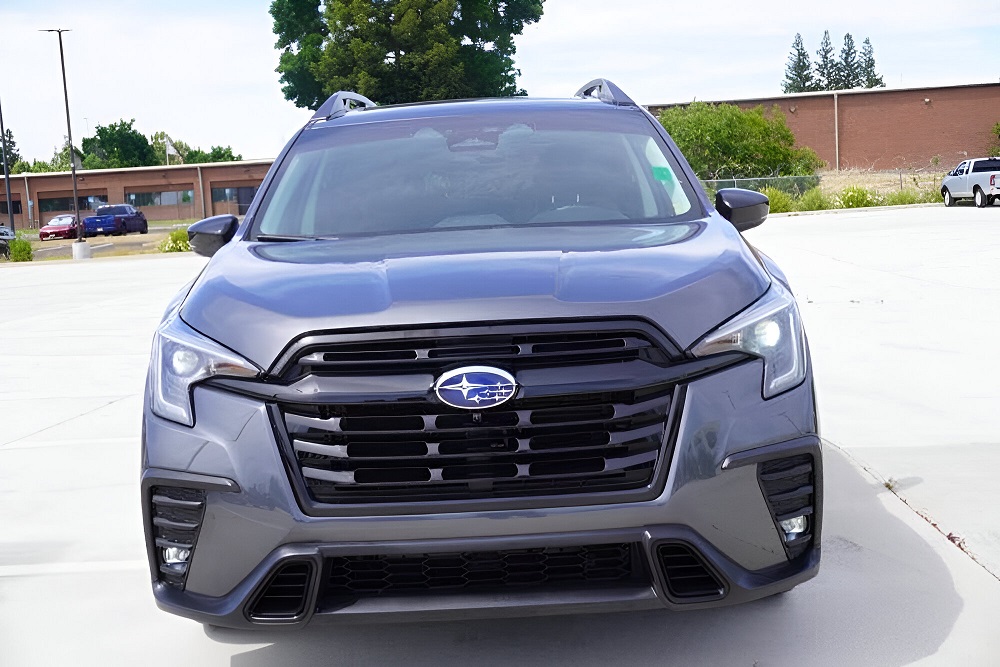
Back the Ascent down the ramp, 450 lb on the ball, rear squats hard. Specs say 5,000, but the real limiter is payload, heat, and whether the trailer actually stops with you. Miss the cooler, the 7-way, or the brake controller, and that shiny number turns into white-knuckle miles.
“A hitch is a towing package.” Wrong. Subaru’s charts still show a clean 2,000 vs 5,000 split from 2019 through 2024, with 2026 listings hinting at 5,000 across trims.
The rating only holds when the cooler’s installed, the receiver’s Class III, and tongue weight sits near 10 percent without blowing past payload.
This guide breaks down exactly what hardware makes those numbers real, how the CVT handles the strain, and what keeps the setup safe when the grade climbs or the crosswind hits.
1. Ratings that matter when a trailer’s on the ball
The two-tier badge that decides your ceiling
From 2019 to 2024, Base trim stops at 2,000 lb with 200 lb on the tongue. Premium, Onyx, Limited, and Touring reach 5,000 lb with a 500 lb tongue when properly equipped.
That split is baked into dealer guides and has shaped how these SUVs are sold. If the build sheet lacks the right hardware, the rating you saw on a banner does not apply to your VIN.
The 2025–2026 promise that needs proof
Marketing for 2026 shows 5,000 lb across trims. Treat that as a claim to verify, not a free upgrade. Pop the lower grille and confirm the integrated transmission cooler, then check for a 7-way path and brake-controller provision.
If a late Base has the cooler and the wiring path, it can live at 5,000 lb. If those parts are missing, plan around 2,000 lb.
Tongue, payload, and GCWR set the real limit
At a steady 10 percent, a 5,000 lb trailer drops 500 lb on the hitch. Add four people and trip gear, and you can burn 700 to 800 lb of payload before the trailer hooks up. Many owners end up in the 3,500 to 4,000 lb zone once they weigh people, cooler, stroller, and bikes.
Run the math against your door-jamb sticker, or you will chase sway and brake fade instead of miles.
A driveway check that keeps you honest
Find remaining payload on the tire-and-loading label. Subtract people and cargo from that number. What is left is your tongue allowance. If 420 lb remains, divide by 0.10 and you get about 4,200 lb as a smart trailer target.
Drop lower for tall campers, mountain grades, summer heat, or when you want the CVT to live a long life.
2. The hardware that turns a brochure number into real towing
Heat control that keeps the CVT alive
Load a grade at 55 and watch temps creep if the cooler is missing. The 2.4T and Lineartronic work hard under steady pull, so fluid shear and pump slip stack heat fast.
The integrated cooler, 45510XC000, widens the thermal window and lets the valve body hold ratio without flare. No cooler, no 5,000. Simple.
A receiver that carries real tongue weight
A true Class III, 2-inch receiver supports a 500 lb tongue without flex or noisy brackets. The factory kit ties into the rear structure and keeps ground clearance clean, which matters on ferry ramps and rutted launches.
Quality aftermarket Class III units are fine when torqued correctly and rust-proofed at the holes. Underspec hitches bend, and once it moves, sway grows.
Wiring that makes weight legal and controllable
Trailers over about 1,000 lb need electric brakes with a 7-way and a proportional in-cab controller. The 7-way adds a 12V charge line for the breakaway battery and a clean path for brake signal. A 4-pin only handles lights, so it leaves you without stopping help when the nose dives.
Run a fused battery feed, protect the loom, and mount the controller where your hand finds the manual slide on instinct.
The small parts that save trips
Use a weight-rated ball mount and match the ball to the coupler, 2-inch or 2-5/16 as stamped. Set height so the trailer rides level, then recheck after loading water and gear. Torque the ball nut, mark it with paint, and recheck after the first tow.
Cheap pins and soft bushings rattle, and rattle turns into wear.
Parts that unlock the Ascent’s stated rating
| Component | What it solves | Notes that matter |
|---|---|---|
| Trans cooler 45510XC000 | CVT fluid heat under sustained pull | Verify on Base trims, or retrofit with OEM-spec mounts and sealing rings. |
| Class III, 2-inch receiver | 500 lb tongue without flex | Factory kit keeps departure angle. Aftermarket must meet stamped rating. |
| 7-way RV wiring | Power for brakes and breakaway battery | Requires fused battery feed and clean grounds. |
| Proportional controller | Even, synced stops near 3,500–5,000 lb | Mount within reach, calibrate with the trailer fully loaded. |
| Rated ball and mount | Correct interface and ride height | Match size to coupler, set level, torque, and paint-mark the hardware. |
3. How the Ascent keeps sway and braking under control
Trailer brakes that do the real stopping
Once you’re past roughly 1,000 lb, the Ascent’s own brakes aren’t enough. Subaru mandates trailer brakes beyond that point, and for good reason.
A fully loaded SUV and 4,000 lb behind it can double stopping distance if the trailer’s just coasting. A proportional brake controller fixes that by sending power in sync with pedal pressure, letting the trailer pull its weight instead of pushing the rear axle around.
The payoff is straight, calm stops even when the grade steepens or the pavement’s wet.
Stability logic that catches sway early
Every modern Ascent carries Trailer Stability Assist, tied into the Vehicle Dynamics Control system. It reads yaw from onboard sensors, senses the first wiggle, and pinches individual wheels to cancel the swing before it builds.
When a gust from a passing semi or a bad load balance kicks the trailer, those quick brake taps from TSA pull it back in line. It’s quiet, automatic, and one of the reasons the unibody Ascent feels steadier than its size suggests when towing a tall camper.
What driver aids to leave off when you’re hitched
EyeSight’s radar and cameras aren’t tuned for 10,000 lb of combined weight. Adaptive cruise and lane keep can misread a trailer’s drag or the extra braking distance, and blind-spot sensors often go blind behind a trailer wall. Subaru’s manual calls these systems impaired or disabled when towing.
Run them off and drive with old-school spacing, brake early, keep steady throttle on grades, and let the CVT and controller share the work without interference.
4. Weight math that calls the shots
Payload is the choke point
Open the door and read the tire-and-loading label. That payload number covers people, cargo, hitch hardware, and the entire tongue weight. The Ascent often sits near 1,200 lb of payload on higher trims, so a family and trip gear can burn 700–800 lb before the trailer even touches the ball.
With tongue set near 8–11 percent, a full 5,000 lb pull needs about 400–550 lb on the hitch, which many builds simply do not have left.
The quick math that keeps you honest
A loaded Ascent has no room for guesswork. Start with the payload on the door sticker, subtract every pound that rides inside: people, cooler, stroller, tools. What’s left is your tongue allowance. At a 10 percent rule, 420 lb of leftover payload equals a 4,200 lb trailer.
A tall camper or gear-heavy setup needs more margin, so drop to around 3,800–4,000 lb. This rough math keeps you inside legal weight, off the guardrail, and out of the CVT’s red zone.
GCWR, axle ratings, and the scale check
Staying legal means staying under GVWR and both axle GAWRs while the combined rig stays within the platform’s limits. Rear axle load climbs fast with tongue weight and cargo stacked behind the third row, and tires carry that hit first.
Weigh the full setup with passengers, water, and bikes on a certified scale, then shift cargo forward or shed weight until the numbers sit under the stickers.
5. Powertrain under load, keep the CVT alive
Driving moves that cut heat fast
Hold lower ratios with the paddles on climbs and in slow pulls. That keeps pump flow high, trims slip across the belt, and lets the cooler dump heat instead of chasing speed. Feed steady throttle so the torque converter stays locked under load, then lift early before cresting to give the fluid a breather.
Short bursts beat long lugging, and a calm right foot keeps the valve body happy.
How to work grades, headwinds, and stops
Treat a long grade like a time trial, not a sprint. Pick a gear that holds 3,000–4,000 rpm and stick with it to stabilize temps. In wind with a tall camper, ease five to ten mph and watch how the engine settles and the CVT stops hunting.
At the bottom of a descent, roll a cool-down minute before shutting off, because baking fluid in a parked heat soak ruins seals.
What to expect from the turbo under tow
The 2.4T makes stout midrange, but constant boost on hot days spikes intercooler temps and drags timing. Keep airflow moving, leave grille blocks off, and avoid drafting tall traffic that starves the condenser and cooler stack.
If you feel pull fade after a long climb, back out a touch and let charge temps recover. Protecting intake air temperature protects the CVT right behind it.
6. What changed by model year, and what to double-check before towing
The 2019–2024 pattern every buyer should know
From launch, Subaru split the Ascent line in two. Base trims were capped at 2,000 lb, carrying no transmission cooler and often just a 4-pin lighting harness. Premium, Onyx, Limited, and Touring trims reached 5,000 lb when built with the full towing kit.
Dealer records confirm that early Base models were rarely upfitted, meaning most used listings in this bracket are still limited by heat, wiring, and legal brake control. When shopping used, lift the hood and look for the small heat-exchanger loop near the transmission lines; no cooler means no high-rating claim.
The 2025–2026 “all-trims” claim that needs verification
Subaru’s 2026 spec page lists 5,000 lb across the board, implying hardware standardization. Yet multiple dealer data sheets still show a 2,000 lb Base ceiling, suggesting the change may be marketing ahead of production.
Before treating a Base trim as a 5K tow rig, confirm the VIN build sheet or inspect the cooling and wiring hardware in person.
If the cooler, 7-way path, and controller lead are present, it meets the spec; if not, the real-world limit remains 2,000 lb regardless of brochure copy.
Why the split still matters for owners and buyers
The difference between 2K and 5K ratings isn’t a line in a brochure; it’s a hardware divide that drives value. A properly equipped Premium or higher holds its resale edge because the 5,000 lb badge signals cooler, wiring, and structural receiver fitment from the factory.
Base models without these parts might list the same curb weight and engine, but they carry lower resale and require retrofits to match capability.
Anyone planning to tow regularly should verify equipment rather than trim level before signing the paperwork.
7. Buying and installing without headaches
Factory kit or bolt-on steel, pick your trade
The OEM receiver, L101SXC005, ties into the rear structure and keeps the bumper line clean. It preserves departure angle and clears hands-free access panels, so nothing drags on ramps or ruts. Installed pricing usually lands around $650–$1,000, parts and labor, because the bumper beam swap takes time.
Quality Class III aftermarket hitches work fine when holes are deburred, coatings are sealed, and fasteners are torqued and paint-marked.
Wire the brains, not only the lights
A 4-pin harness lights the trailer, then stops helping. The 7-way adds a fused 12-volt charge line, a brake circuit, and a clean ground path the controller can trust. Run a dedicated battery feed with proper routing, grommets, and drip loops so water never sits in the loom.
Mount the proportional controller within easy reach, then tune gain with the trailer fully loaded so stops feel straight and even.
Warranty truth under Magnuson-Moss
Aftermarket parts do not void a warranty by themselves. If a hitch tears a mount because it was underspec or misinstalled, that related repair can be denied. Dealer-installed OEM gear moves responsibility back to Subaru for that accessory, which some owners prefer.
If you go aftermarket, keep invoices and photos of the install so any future claim shows the work met spec.
8. Keeping a towing Ascent alive under load
Fluids that define “severe duty”
Once a trailer hooks on, the maintenance clock runs faster. The CVT and differentials handle constant torque stress, so treat them as severe-use systems. Replace front and rear differential oil every 30,000 miles or 30 months, whichever comes first. Fresh hypoid fluid keeps shear film strong under the extra load that towing forces through the AWD clutch packs.
CVT fluid should also be changed early, 25,000 to 30,000 miles, because towing heat cooks it faster than normal city driving ever could. Skip that interval, and the first sign of trouble will be delayed engagement or a judder on takeoff.
Brakes that hold their edge downhill
Brake fluid breaks down fast when you’re pulling weight through mountain descents. It absorbs moisture, lowers its boiling point, and turns the pedal soft after a few long stops. Flush it every 30,000 miles to restore pressure and protect seals.
Pad wear accelerates too, so measure rotor runout and pad thickness at every rotation. The difference between normal and towing wear is dramatic once the rig’s near the 5,000 lb mark.
Hardware checks that keep things tight
Towing shakes everything, bolts, bushings, and alignment alike. Re-torque the hitch hardware after the first few heavy trips, and inspect the receiver welds for hairline cracks around the collar.
Tire pressures should sit at the top of the door-label range when loaded; underinflation swells heat into the sidewalls and ruins ride control.
If the rear tires show inner shoulder wear or the steering wheel drifts after repeated loaded runs, schedule an alignment. Keeping geometry true prevents rear camber from eating rubber when the tongue weight’s on.
What separates a capable Ascent from a cooked one
The Ascent can tow with confidence when it’s set up right, cooler in place, Class III hitch torqued, 7-way wired, and controller dialed.
The 5,000-lb badge only means something when the hardware and weight math line up. Skip one link in that chain, and the load turns from weekend fun to transmission risk.
The platform’s turbo engine and AWD give it solid pull, but the CVT’s lifespan depends on fluid temps staying in check and payload staying within the label.
Treat the maintenance schedule like law, fluids at 30K, brakes flushed on time, bolts re-checked, and the drivetrain will hold up long past the trip home. The Ascent rewards precision; guesswork is what ends it.
Sources & References
- Which Subaru Can Tow the Most? 2025 Subaru Towing Capacity by Model & Trim
- 2026 Subaru Ascent Features & Technology
- Subaru Ascent Towing Capacity | All Model Years
- 2024 Subaru Ascent Towing Capacity | Morrie’s Minnetonka Subaru
- 2025 Subaru Ascent Towing Guide
- 2025 Subaru Ascent Towing Capacity & Specs
- Find Your Subaru’s Towing Capacity
- 2025 Subaru Ascent Specs & Features – Edmunds
- Towing with the Ascent : r/SubaruAscent – Reddit
- Subaru Ascent Trailer Hitches – CURT
- 2019-2024 Subaru Ascent – Trans Cooler – Subaru (45510XC000)
- 2019-2025 Subaru Ascent Trans Cooler 45510XC000 | OEM Parts Online
- Class 3 Trailer Hitch, 2 Inch Square Receiver, Black, Compatible with Subaru Ascent
- 2019-2025 Subaru Ascent Trailer Hitch Kit L101SXC005 Towing Factory OEM Genuine
- 2019-2025 Subaru Ascent Trailer Hitch L101SXC005 | OEM Parts Online
- Is it worth it to pay dealership prices to have a hitch installed? : r/subaru – Reddit
- 4 PIN Trailer Hitch Wiring Harness For Subaru Ascent 2019-2020 2021 22 23 24 25 | eBay
- Trailer Hitch 7 Way RV Wiring Kit For 19-24 Subaru Ascent Plug Prong Pin Brake Control Ready – TrailerJacks.com
- 2024 Subaru Ascent Towing Capacity
- Towing near 5,000 weight limit safe? : r/SubaruAscent – Reddit
- 2021 Subaru Ascent Towing Capacity | AutoNation Subaru Spokane Valley
- EyeSight – Subaru Technical Information System
- EyeSight – Subaru Technical Information System
- Realistic Towing Capacity? : r/SubaruAscent – Reddit
- 2023 Subaru Ascent MPG | SUV Fuel Economy, Engine Specs
- 2022 Subaru Ascent MPG | Morrie’s Minnetonka Subaru
- Price for tow hitch install at dealer : r/SubaruAscent – Reddit
- Does Installing a Hitch Void the Warranty on a 2024 Subaru Outback? – etrailer.com
- When To Change Differential Fluid in a Subaru
- Subaru Ascent Maintenance Schedule | SUV Factory Service Intervals
- Subaru Ascent Maintenance Schedule
- Subaru Ascent Maintenance Schedule
- Subaru Ascent Maintenance Schedule | Oil, Brakes, Tires & More
- Subaru Maintenance Schedule: Informational Guide By Model
Was This Article Helpful?